
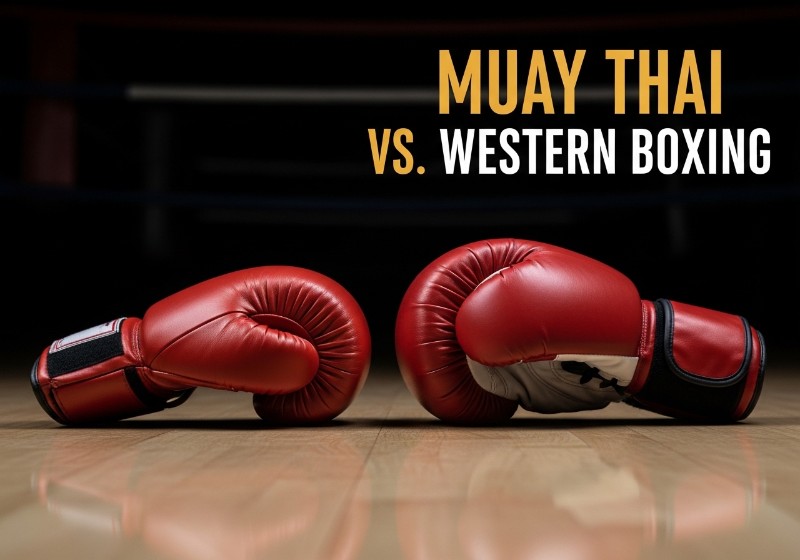

Walk into a busy American boxing gym on a weeknight and the glove wall tells a story before anyone throws a punch. Some gloves look compact and stiff, built like small shields for straight punches. Others look softer, rounder, and a little more willing to bend when clinch work starts getting messy.
That difference matters.
Combat sports gloves protect your hands, protect your training partners, and shape how your technique feels. Muay Thai gloves are built for punching, clinching, blocking kicks, and gripping. Western boxing gloves are built mainly for punching efficiency, wrist stability, and knuckle protection. For American consumers training fitness boxing, self-defense, MMA, or kickboxing, the right choice depends less on the label and more on what actually happens during class.
Combat sports participation keeps expanding in the United States through boxing gyms, MMA academies, boutique fitness studios, and cardio boxing chains. IBISWorld has tracked steady U.S. boxing gym market activity, while the Sports & Fitness Industry Association has reported millions of Americans participating in boxing-style fitness and martial arts activities [1][2]. That growth explains why glove choice now affects more than fighters. It affects office workers taking 6 p.m. bag classes, parents trying kickboxing, and beginners stepping into sparring for the first time.
What Are Muay Thai Gloves?
Muay Thai gloves are padded striking gloves designed for Thailand’s “art of eight limbs,” where punches, elbows, knees, kicks, and clinch control all matter.
Traditional Muay Thai developed in Thailand as both a fighting art and a cultural sport. In modern gyms, especially across the U.S., Muay Thai gloves show up in kickboxing classes, MMA training, and hybrid striking sessions.
The main thing you notice is flexibility. Muay Thai gloves usually open and close more easily than pure boxing gloves. That matters when you’re catching kicks, framing in the clinch, posting on an opponent’s shoulder, or hand-fighting during dirty boxing drills.
In practice, Muay Thai gloves feel more like multitools.
Common traits include:
- Wider padding across the back of the hand for blocking kicks
- More flexible palms for clinching and gripping
- Softer wrist structure than many boxing gloves
- Compact shaping that works for punches and defensive covers
That flexibility comes with a trade-off. You get more hand movement, but usually less locked-in wrist support.
What Are Western Boxing Gloves?
Western boxing gloves are padded punching gloves designed for efficient hand strikes, wrist alignment, and repeated impact on bags, mitts, and sparring partners.
Western boxing has deep roots in the United States and the United Kingdom. Modern boxing gloves reflect that history. They prioritize the punch: jab, cross, hook, uppercut, repeat. Nothing extra. No grabbing behind the head. No catching round kicks. No extended clinch battle unless the referee lets things get ugly for a second.
Boxing gloves usually feel more structured. The padding often sits heavily over the knuckles, and the wrist area tends to feel firmer. Lace-up boxing gloves offer the tightest fit, while Velcro gloves dominate fitness classes because they’re easy to put on without help.
Most American gyms use boxing gloves for:
- Heavy bag rounds
- Focus mitt work
- Technical sparring
- Fitness boxing classes
- Beginner boxing programs
Boxing gloves feel cleaner for punching. Less loose movement. More pop on the bag. More wrist confidence when fatigue hits.
Structural Differences: Design and Build
Muay Thai gloves distribute padding more evenly for multi-purpose striking, while boxing gloves concentrate structure around punching mechanics.
| Feature | Muay Thai Gloves | Western Boxing Gloves | Practical Commentary |
|---|---|---|---|
| Padding distribution | More even across knuckles, backhand, and sides | More focused over the knuckles | Muay Thai gloves feel better for blocking kicks. Boxing gloves feel sharper on straight punches. |
| Palm flexibility | More open and flexible | More closed and rigid | Clinch work feels awkward in stiff boxing gloves. Heavy bag work feels cleaner in boxing gloves. |
| Wrist support | Usually moderate | Usually stronger | Boxing gloves help beginners keep the wrist stacked during tired punches. |
| Thumb position | Often slightly more relaxed | Usually more locked in | Boxing gloves reduce accidental thumb movement during sparring. |
| Closure system | Mostly Velcro | Velcro or lace-up | Lace-ups feel elite, but Velcro wins for normal gym life. |
| Best training use | Muay Thai, kickboxing, MMA | Boxing, bag work, sparring | Hybrid athletes often end up owning both. |
The thumb position is easy to overlook until a bad punch lands weirdly. Boxing gloves generally secure the thumb more aggressively to reduce eye pokes and thumb injuries. Muay Thai gloves still protect the thumb, but they often allow a little more natural hand movement.
Wrist closure also changes the feel. Velcro works for nearly everyone because it’s fast. Lace-up gloves give a smoother, more secure fit, but they require another person or lace converters. For most U.S. fitness boxing classes, Velcro makes more sense. Nobody wants to spend 7 minutes fighting with laces before a 45-minute class starts.
Performance Differences in Training
Muay Thai gloves perform better in mixed striking, while boxing gloves perform better in punch-specific training.
During Muay Thai rounds, your hands do more than punch. They frame. They grip. They parry. They cover against kicks. They fight for inside control in the clinch.
That’s where Muay Thai gloves make sense.
During boxing rounds, your hands repeat impact patterns at high volume. A 3-minute heavy bag round can include 100 or more punches, especially in fitness classes. Boxing gloves usually handle that rhythm better because the wrist support and knuckle padding are built around repetitive punching.
For cardio boxing programs like TITLE Boxing Club-style classes, Everlast gym programs, and boutique heavy bag workouts, boxing gloves usually feel more natural. The work is punch-heavy, often bag-focused, and rarely includes clinching.
Fatigue changes everything. Early in class, almost any glove feels fine. After 6 rounds, weak wrist support becomes obvious. Loose gloves start sliding. Poor padding starts feeling thin. That’s when the difference between a $35 glove and a $120 glove stops being theoretical.
Comfort and Fit
Muay Thai gloves usually feel roomier and more flexible, while boxing gloves usually feel tighter and more anatomically locked in.
Fit is personal, but patterns show up fast. Muay Thai gloves often suit athletes who like hand mobility. Boxing gloves often suit athletes who want firm wrist control and a snug fist position.
The inside lining matters too. Cheap gloves often trap heat, absorb sweat, and develop that famous gym-bag smell faster than anyone wants to admit. Better gloves use smoother linings, denser foam, and stronger stitching. Leather still tends to last longer than synthetic material, although modern synthetic gloves have improved a lot.
Break-in periods differ. Muay Thai gloves often feel usable sooner because the structure is softer. Boxing gloves, especially premium Mexican-style or Japanese-style gloves, can feel stiff at first. After several sessions, the padding settles and the glove starts matching the hand better.
A few practical fit notes:
- Wider hands often feel better in Thai brands like Fairtex or Twins Special.
- Narrower hands often prefer snug boxing gloves from brands like Winning or Cleto Reyes.
- Hand wraps change fit dramatically, especially 180-inch wraps.
- Beginners often buy gloves too small because they judge fit without wraps.
Gloves should feel secure, not cramped. Numb fingers are a bad sign. So is a wrist that bends backward every time a cross lands.
Safety and Injury Prevention
Boxing gloves usually provide stronger wrist alignment, while Muay Thai gloves usually provide broader defensive coverage for kickboxing and clinch situations.
Hand injuries happen fast in striking sports. The wrist folds. The knuckle lands wrong. The thumb catches. A tired hook smashes into the heavy bag at a bad angle. It doesn’t look dramatic, but it can ruin training for weeks.
Glove weight matters because padding changes safety. Most American gyms use these rough categories:
| Glove Weight | Common Use | Typical User Context |
|---|---|---|
| 12 oz | Pad work, lighter bag work | Smaller athletes or speed-focused training |
| 14 oz | General training | Average-size beginners and fitness boxers |
| 16 oz | Sparring, heavy training | Larger athletes and most sparring classes |
Many U.S. boxing gyms require 16 oz gloves for sparring, especially for adults. Some lighter athletes use 14 oz with coach approval, but 16 oz remains the common safety standard.
Beginners usually benefit from more protection, not less. Bigger gloves slow the hands slightly, but they also reduce impact sharpness. Advanced fighters sometimes rotate glove weights based on the session. A boxer might use 12 oz gloves for mitts, 14 oz gloves for bag rounds, and 16 oz gloves for sparring.
The overlooked detail is hand wraps. Gloves don’t replace wraps. Wraps stabilize the wrist, compress the small bones of the hand, and reduce skin irritation. Even expensive gloves feel risky when worn over bare hands during hard bag work.
Price Comparison in the U.S. Market
Muay Thai and boxing gloves cost roughly $30 to $200+ in the U.S., with durability improving sharply once you move past the cheapest tier.
| Price Range | What You Usually Get | Common Buyer |
|---|---|---|
| $30–$60 | Basic synthetic gloves, limited durability | New fitness-class members |
| $60–$120 | Better padding, better stitching, stronger wrist closure | Consistent gym users |
| $150+ | Premium leather, refined fit, longer lifespan | Fighters, serious hobbyists, frequent sparrers |
Entry-level gloves work for testing the sport. No shame there. A beginner taking one class per week doesn’t need $200 gloves on day one.
But once training hits 2 to 4 sessions per week, cheap gloves age quickly. Padding compresses. Velcro weakens. The lining starts holding odor. The wrist support softens.
Premium Muay Thai brands like Fairtex and Twins Special often sit around the mid-to-premium range in the U.S. Premium boxing brands like Cleto Reyes, Winning, and Grant can cost much more, especially for lace-up sparring gloves. Winning gloves are especially known for hand protection, while Cleto Reyes gloves have a puncher-friendly reputation because of their compact padding profile.
Value depends on use. A $90 glove used 3 times per week for a year is often cheaper in real terms than a $40 glove replaced every 3 months.
Which Gloves Should You Choose?
Choose Muay Thai gloves for MMA, kickboxing, and clinch-heavy training. Choose boxing gloves for pure boxing, heavy bag work, sparring, and fitness boxing classes.
For most people in U.S. gyms, the decision looks like this:
- Training boxing only: boxing gloves make the most sense.
- Training Muay Thai: Muay Thai gloves feel more natural.
- Training MMA striking: Muay Thai gloves or hybrid gloves work better.
- Taking cardio boxing classes: boxing gloves are usually enough.
- Doing everything casually: a flexible Muay Thai glove can cover more ground.
Hybrid training creates the gray area. Many MMA gyms teach boxing combinations, Muay Thai kicks, clinch knees, and cage-style dirty boxing in the same week. In that environment, Muay Thai gloves give you more usable range.
Pure boxing gyms are different. Coaches notice sloppy wrist alignment, loose punches, and poor fist formation quickly. Boxing gloves support that cleaner punching structure.
Beginners usually do best with 14 oz or 16 oz Velcro gloves from a reputable brand. Advanced athletes eventually become pickier. They feel padding density, wrist shape, thumb angle, and balance. At that stage, glove choice becomes less about categories and more about personal rhythm.
Popular Brands in the United States
Fairtex and Twins Special dominate Muay Thai glove conversations, while Everlast, Winning, Cleto Reyes, and Rival are common names in boxing.
Muay Thai brands popular in the U.S. include:
- Fairtex: compact, durable, widely available
- Twins Special: cushioned, roomy, classic Thai feel
- Yokkao: stylish, popular with modern kickboxing crowds
- Top King: protective, especially around the wrist and backhand
Boxing brands popular in the U.S. include:
- Everlast: accessible and common in fitness boxing
- Winning: premium protection, expensive but respected
- Cleto Reyes: puncher-focused, traditional Mexican design
- Rival: modern fit, strong wrist systems
- Hayabusa: popular among hybrid and fitness athletes
Availability has changed the buying process. Amazon, Dick’s Sporting Goods, titleboxing.com, boxing specialty shops, and MMA retailers all carry gloves now. That makes comparison easier, but sizing still feels tricky online. Trying gloves in-store helps because hand shape matters more than product photos suggest.
Final Thoughts
Muay Thai gloves are better for versatile striking, clinching, and kickboxing. Western boxing gloves are better for punch-focused training, wrist support, and boxing-specific performance.
The difference isn’t cosmetic. It shows up when you grip in the clinch, block a kick, throw 200 punches on a heavy bag, or spar with tired shoulders.
For American fitness boxing, traditional boxing gloves usually fit the job. For MMA and Muay Thai training, Thai gloves handle the messy middle better. For mixed schedules, owning both eventually makes sense, although one solid pair can carry the first few months.
Try gloves on when possible. Wear hand wraps. Make a fist. Check the wrist. Open the palm. Then imagine round 6, not round 1. That’s where the right glove starts telling the truth.
Sources
[1] Sports & Fitness Industry Association, Sports, Fitness, and Leisure Activities Topline Participation Reports.
[2] IBISWorld, Boxing Gyms and Clubs in the U.S. industry research.
[3] Association of Boxing Commissions and Combative Sports, unified boxing and combat sports safety standards.