
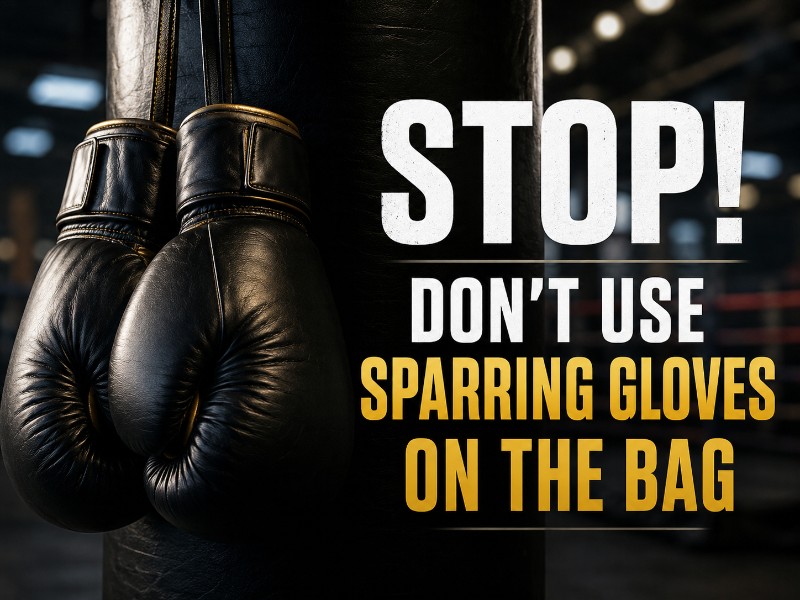

Walk into almost any boxing gym in the United States and the same thing shows up over and over again. Somebody buys a fresh pair of 16 oz sparring gloves, laces them up for everything, then starts hammering the heavy bag three or four nights a week. At first, it feels practical. One pair of gloves. Less gear. Less hassle.
Then the padding starts collapsing.
The wrists feel loose. Knuckles ache after combinations. The gloves smell like the inside of an old hockey locker. And eventually, sparring rounds feel different in a bad way.
Training gear matters more than most beginners realize. Gloves aren’t interchangeable just because they look similar sitting on a shelf at a sports retailer in Dallas, Los Angeles, or New York. Sparring gloves and bag gloves serve different purposes, and the difference becomes obvious after a few months of consistent training.
That distinction affects:
- Hand safety
- Punch mechanics
- Glove durability
- Training quality
- Hygiene inside the gym
A lot of experienced boxing coaches become almost obsessive about this topic. There’s a reason for that. The wrong glove in the wrong setting quietly creates problems over time.
And honestly, heavy bags expose weak equipment fast.
Sparring Gloves Are Built to Protect Your Partner
Sparring gloves exist for one main reason: reducing damage during live rounds.
That design changes everything about how the glove behaves.
Most sparring gloves feature:
- Softer foam distribution
- Extra knuckle padding
- Rounded striking surfaces
- More forgiving impact absorption
Brands like Winning USA, Cleto Reyes, Ringside Boxing, and Everlast engineer sparring gloves to soften contact against another person’s head and body. That softer impact protects both fighters during extended rounds.
The heavy bag doesn’t need protection.
That’s the key point beginners miss.
A heavy bag is dense static resistance. Whether it’s a leather heavy bag packed with textile fill or an aqua bag hanging in an MMA gym, the target absorbs punishment differently than a human body. Sparring gloves tend to “mute” the feedback from those strikes.
And feedback matters.
When punches land correctly on a bag, you can usually feel:
- Knuckle alignment
- Wrist positioning
- Power transfer
- Rotation through the shoulder and hip
- Timing consistency
Softer sparring gloves dull those signals. The punch still lands, but the tactile response becomes vague.
That may sound minor. It isn’t.
In practice, fighters preparing for amateur boxing bouts or Golden Gloves tournaments rely heavily on clean feedback to sharpen mechanics. Small adjustments become harder to notice when thick sparring foam absorbs everything.
The difference feels similar to driving a sports car with over-soft suspension. Technically functional. But disconnected.
Heavy Bags Destroy Soft Padding Faster
Heavy bags compress glove foam much faster than sparring rounds.
That’s just physics.
Most commercial boxing gyms use bags weighing somewhere between 70 and 150 pounds. Some Muay Thai bags run even heavier. Repeated impact against dense surfaces gradually flattens softer glove padding, especially around the knuckles.
And here’s the frustrating part. Damage doesn’t always look dramatic at first.
What usually happens is slower:
- Padding becomes uneven
- Foam hardens in certain areas
- Knuckle zones flatten
- Shock absorption becomes inconsistent
Eventually, punches start feeling “sharp” inside the glove.
Premium sparring gloves aren’t cheap either. Winning gloves regularly cost more than $400 USD. Cleto Reyes sparring gloves can run well above $200. Burning through that padding on bag work becomes an expensive mistake.
Bag gloves use denser impact foam specifically because they’re built for repetitive strikes against hard surfaces.
That difference matters over thousands of punches.
Now, here’s the interesting part. A lot of beginners assume softer gloves equal safer training. But softer foam actually breaks down quicker under heavy bag stress. Once compression starts, protection declines fast.
Especially during high-volume sessions.
Three-minute rounds on a heavy bag don’t sound brutal until the punch count adds up. A conditioning workout can easily include 700 to 1,000 strikes in one evening. That repeated compression wears sparring gloves down much faster than controlled partner work.
Hand and Wrist Injuries Become More Likely
Your hands contain 27 small bones. Boxing asks those bones to absorb force repeatedly at high speed.
Not ideal equipment for shortcuts.
Sparring gloves generally lack the compact support structure needed for repetitive heavy bag impact. That can increase stress on the:
- Metacarpal bones
- Wrist joint
- Thumb base
- Knuckle tendons
Common gym injuries include:
- Boxer’s knuckle
- Wrist sprains
- Joint inflammation
- Metacarpal stress reactions
- Boxer’s fracture
USA Boxing and amateur coaches consistently emphasize protective equipment because hand injuries tend to linger. A sore shoulder heals eventually. Hand problems often become recurring annoyances that interfere with training for months.
Bag gloves usually provide:
- Firmer wrist stabilization
- Tighter punch alignment
- Denser knuckle protection
- More compact impact resistance
That structure keeps the hand from shifting during impact.
And honestly, fatigue changes everything. Early rounds feel fine. Later rounds expose flaws fast. Once shoulders tire and technique slips slightly, unsupported wrists start taking abuse.
That’s usually the moment people realize why experienced fighters separate glove types.
Another thing worth mentioning: hand wraps matter too.
Even high-end bag gloves perform poorly without proper 180-inch hand wraps underneath. Wraps stabilize the wrist and help distribute force across the hand. Gloves alone can’t compensate for sloppy wrapping or poor alignment.
Sparring Gloves Reduce Technical Feedback
Heavy bag work develops more than conditioning.
Done correctly, it sharpens:
- Accuracy
- Timing
- Punch sequencing
- Defensive recovery
- Power generation
- Kinetic chain efficiency
Sparring gloves interfere with some of that development because softer padding dampens contact sensation.
The bag becomes less informative.
You stop feeling subtle mistakes clearly. Punches that land off-center still feel “fine” because thick foam hides poor alignment. Hooks lose crispness. Straight shots feel mushy. Torque through the hips becomes harder to measure.
Bag gloves create sharper contact feedback.
That sharper sensation improves awareness of:
- Knuckle positioning
- Wrist angle
- Shoulder rotation
- Weight transfer
- Balance during combinations
A lot of boxing coaches describe this as “hearing” the punch. Clean mechanics produce a sharp sound and clean response from the bag. Poor mechanics usually sound slappy or uneven.
Sparring gloves soften those cues.
And for developing fighters, feedback loops matter more than comfort.
Most people notice this difference during body-shot drills. Compact bag gloves let punches “bite” into the bag more directly. Sparring gloves absorb too much impact internally, which disconnects the striker slightly from the target.
It’s subtle. But over time, subtle things shape technique.
Heavy Bag Bacteria Ends Up Inside Sparring Gloves
This part gets ignored constantly.
Commercial gym heavy bags collect sweat from dozens of members every day. Shared training equipment in boxing gyms and MMA facilities sees nonstop contact. Even well-maintained gyms deal with bacteria buildup.
Using sparring gloves on heavy bags creates a hygiene problem fast.
Typical consequences include:
- Sweat saturation
- Odor retention
- Moisture trapped inside lining
- Bacterial buildup
- Faster material breakdown
Then those same gloves go directly into partner sparring rounds.
That’s rough gym etiquette.
Most experienced fighters separate equipment partly because sparring gear stays cleaner longer when it isn’t absorbing bag sweat constantly. Some gloves now include antimicrobial lining, but moisture still accumulates over time.
And honestly, old sweat smells never really disappear completely. Anybody who has trained in a crowded boxing gym during summer already knows that reality.
Separate gloves simplify things:
- Bag gloves for impact work
- Sparring gloves for partner rounds
Simple system. Better hygiene.
Separate Gloves Save Money Long-Term
At first glance, buying two glove types sounds expensive.
In practice, replacing destroyed sparring gloves costs more.
Quality boxing gloves in the United States typically range between $60 and $300 USD depending on the brand and construction. Premium models push beyond that. Constant heavy bag use shortens lifespan dramatically.
Especially for softer sparring foam.
Think about it like running shoes.
Some runners use one pair for treadmill workouts and another pair for outdoor pavement because the wear patterns differ. Boxing equipment works the same way. Heavy bags create concentrated impact stress that sparring rounds simply don’t replicate.
Dedicated bag gloves extend the lifespan of:
- Sparring padding
- Inner lining
- Wrist support
- Leather integrity
- Stitching durability
Most fighters eventually realize glove rotation saves money.
And there’s another overlooked factor. Worn sparring gloves become unsafe for training partners. Flattened foam transfers more force during exchanges, even if the exterior still looks clean.
That creates unnecessary risk during controlled rounds.
Coaches and USA Boxing Gyms Recommend Separation
There’s a reason experienced boxing coaches enforce glove rules aggressively.
They’ve already watched the consequences play out hundreds of times.
Many American gyms require:
- 16 oz gloves for sparring
- Dedicated bag gloves for heavy bag sessions
- Separate storage areas for clean equipment
Some facilities even use color-coded systems to distinguish sparring gloves from bag gloves.
USA Boxing emphasizes proper protective equipment standards for amateur athletes because repetitive hand trauma remains one of the most common gym-related injury categories.
And experienced trainers spot worn-out sparring gloves immediately.
Flattened knuckle foam changes the shape of the glove. Padding shifts. Impact hardens. Sparring quality declines.
The rule exists because it works.
Not because boxing gyms enjoy making training complicated.
Honestly, veteran fighters tend to become protective about equipment for good reason. Once hand injuries start interfering with training camps or amateur competition prep, gear quality suddenly matters a lot more.
What You Should Use Instead
For heavy bag sessions, dedicated bag gloves remain the best option for most athletes.
Bag Gloves
Proper bag gloves usually include:
- Dense foam construction
- Compact punch surface
- Reinforced wrist wraps
- Better impact resistance
These gloves absorb punishment without collapsing quickly.
Popular brands include:
- Everlast
- Title Boxing
- Hayabusa USA
- Ringside
- Rival Boxing
Expect solid bag gloves to cost roughly $70–$150 USD depending on materials and construction quality.
Hybrid Training Gloves
Some modern training gloves function as hybrids.
Manufacturers occasionally design models capable of handling both sparring and bag work safely. But quality varies heavily between brands. If a company specifically labels gloves as bag-safe training gloves, they can work reasonably well for recreational athletes.
Still, dedicated separation usually performs better long term.
Hand Wraps
Good gloves still require proper wraps underneath.
180-inch hand wraps help stabilize:
- Wrists
- Thumb position
- Knuckle compression
- Metacarpal alignment
Even expensive gloves feel unstable without decent wrapping technique.
When Using Sparring Gloves on the Bag Makes Sense
Short answer: not often.
There are a few situations where it’s acceptable temporarily.
Examples include:
- Light technical warm-ups
- Controlled movement drills
- Emergency equipment situations
- Very low-power shadow-bag sessions
But high-intensity bag work changes the equation fast.
Avoid using sparring gloves for:
- Power punching sessions
- Conditioning circuits
- High-volume combinations
- Heavy body-shot rounds
- Sprint intervals on the bag
That repetitive force accelerates foam breakdown and increases stress on the hands.
Most experienced fighters treat sparring gloves carefully because partner safety depends on glove condition staying intact.
Final Takeaway
Using sparring gloves on the heavy bag usually creates more problems than benefits.
Over time, what tends to happen is predictable:
- Padding wears down faster
- Wrist support weakens
- Technical feedback declines
- Injury risk increases
- Gym bacteria builds up
- Replacement costs climb
Separate gloves solve most of those issues immediately.
Bag gloves exist for impact durability. Sparring gloves exist for partner protection. Once training volume increases beyond casual workouts, that distinction becomes impossible to ignore.
Serious fighters protect their hands carefully because boxing is already demanding enough without unnecessary equipment mistakes.
Train smart. Protect the gear that protects you.