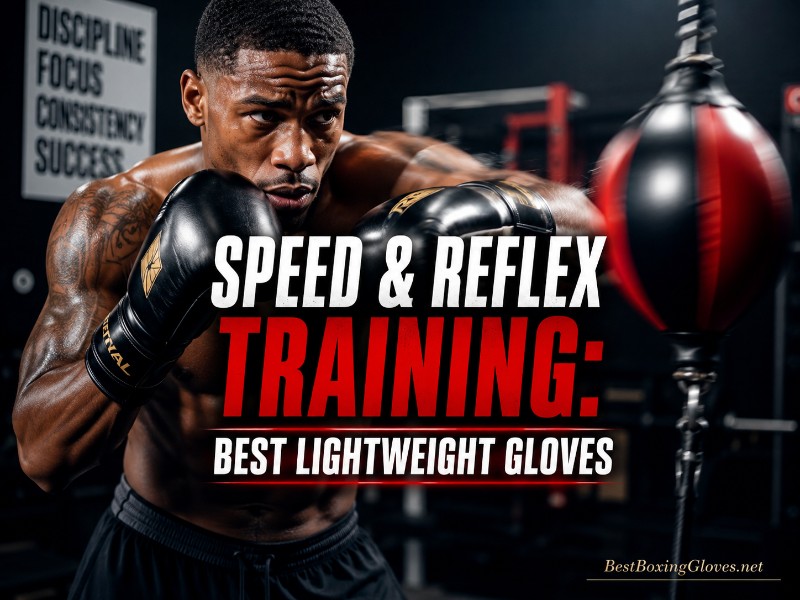

There’s a reason elite trainers don’t throw their athletes on the heavy bag with 16 oz gloves every single session. It’s not laziness. It’s neuroscience. The weight on your hands changes everything — your timing, your rhythm, your ability to fire combinations without thinking. And when you’re building speed and reflex instead of raw power, that weight becomes the variable that determines how fast your nervous system actually learns.
Lightweight boxing gloves have quietly become the go-to tool for fighters, kickboxers, MMA athletes, and fitness-focused boxers who want to develop technical precision rather than just brute force. USA Boxing-certified gyms across the country have incorporated lighter gloves into speed and skill-development sessions for years. The data-driven coaches have caught on: if you want faster hands, you need to train with a load that lets fast actually happen.
This guide breaks down everything you need to know — from how to choose the right weight for your goals, to which brands hold up in real training conditions, to the drills that actually transfer speed into fights.
What Are Lightweight Boxing Gloves?
Lightweight boxing gloves are generally defined as gloves in the 8 oz to 12 oz range, though the term is relative depending on context and body weight.
Here’s roughly how the weight categories break down in U.S. gyms:
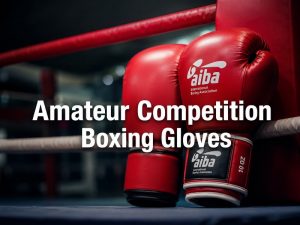
- 8 oz — Competition standard for lighter weight classes under USA Boxing and Golden Gloves rules; minimal padding, designed for amateur bouts
- 10 oz — Common for speed work, pad sessions, and lighter sparring; the sweet spot for many intermediate fighters
- 12 oz — Versatile middle ground; enough padding for technical sparring while still allowing fast combination work
- 14 oz — Moves into heavier training territory; better for sparring with larger partners
- 16 oz — Standard sparring glove for most adult fighters; prioritizes protection over speed
The glove padding, wrist support, and striking surface construction all vary significantly across these weights. A 10 oz Everlast training glove isn’t built the same way as a 10 oz Winning competition glove — hand protection and glove padding density differ, and that affects how long your hands hold up under volume work.
For most people doing speed and reflex training, the 10 oz to 12 oz range hits the right balance between hand protection and movement efficiency. Beginners tend to go too light too fast, which is one of the more common mistakes covered later in this article.
Ringside and Title Boxing both offer solid entry-level options in this range, while brands like Winning and Cleto Reyes sit at the premium end for fighters who train seriously and want gloves that last.
Benefits of Lightweight Boxing Gloves for Speed Training
The physics here are straightforward: less resistance on the end of your arm means faster acceleration. But the real benefit goes deeper than that.
Training consistently with lighter gloves improves punch mechanics at the neuromuscular level. Your body learns to fire the kinetic chain more efficiently — hips, core, shoulder, wrist — because the reduced weight allows full-speed repetitions without compensatory muscle activation slowing things down. Over time, that cleaner movement pattern becomes the default, even when you put heavier gloves back on.
Floyd Mayweather Jr. built his legendary punch output and defensive movement partly through high-volume speed work with lighter equipment. Manny Pacquiao’s explosive combination punching — that signature 10-punch burst — was developed through enormous training volume at speeds that heavier gloves simply don’t allow. These aren’t coincidences.
Practically speaking, here’s what lighter gloves do for your training:
- Faster punch delivery with cleaner hand speed between combinations
- Reduced arm fatigue during longer rounds, which means more quality reps
- Better shoulder endurance across a full training session
- Improved rhythm and flow when working the mitts or double-end bag
- More natural acceleration through each punch, reinforcing proper mechanics
The catch is that lighter gloves demand more from your technique. When the glove isn’t absorbing impact the same way a padded 16 oz does, your wrist alignment and punch mechanics have to be on point. That’s actually a benefit, not a drawback — it forces technical honesty in a way that heavily padded gloves sometimes mask.
How Lightweight Gloves Improve Reflex Training
Reflex training is fundamentally different from power training, and your equipment should reflect that.
When you’re doing slip drills, working the double-end bag, or running counterpunch timing exercises, the goal is to build defensive reflexes and visual tracking — not to condition your shoulders for impact absorption. A heavy glove creates drag on every movement, which slightly delays your reactions and builds the wrong kind of motor memory for reflex work.
Lighter gloves let your hands move at the speed your eyes are tracking. That synchronization — visual tracking feeding directly into fast defensive movement — is exactly what you’re trying to build through reaction training. Motor learning research consistently shows that skill acquisition happens fastest when the training conditions closely match the target movement speed.
In practice, this means:
- Slip drills feel more natural and reinforce faster defensive reflexes
- Double-end bag work becomes genuinely reactive rather than mechanical
- Counterpunch timing tightens up because your hands can actually fire at the speed your brain is processing
- Eye-hand coordination improves faster when glove weight isn’t artificially slowing the feedback loop
Ringside and Title Boxing both make reflex-specific training gloves designed for exactly this kind of work. Paired with a Reflex Ball or standard Double-End Bag, a quality 10 oz glove will transform how quickly your defensive reactions develop.
Choosing the Right Glove Weight for Your Training Goals
This is where most people get it wrong. They pick a glove weight based on what looks cool in the gym, or they buy what their training partner uses, without thinking about what they’re actually trying to develop.
Here’s a practical matching guide:
| Training Goal | Recommended Weight | Notes |
|---|---|---|
| Speed and reflex drills | 8–10 oz | Prioritizes hand speed and reaction time; use proper hand wraps |
| Pad work / mitt sessions | 10–12 oz | Good balance of speed and hand protection |
| Heavy bag conditioning | 12–14 oz | More padding reduces impact stress on knuckles and wrists |
| Technical sparring | 14–16 oz | Partner safety requires more glove padding |
| Competition prep | 8–10 oz (per sanctioning body rules) | Match your competition glove weight in final prep weeks |
Personally, the 10 oz range for speed work and 14–16 oz for sparring split is what most experienced trainers recommend for fighters who want to develop both attributes without overusing one glove in every session.
Cleto Reyes and Winning are the gold standard for premium gloves in the lighter training range — both brands hold up under serious volume, and the glove sizing tends to run consistent. Hayabusa sits at a strong mid-tier price point and offers excellent wrist support for athletes still refining their alignment. Everlast covers the accessible end without sacrificing too much on durability for recreational athletes.
Training intensity matters here too. If you’re doing high-volume impact absorption drills on the heavy bag, even a quality 10 oz glove with solid foam padding will wear faster than a 14 oz built for that purpose.
Best Lightweight Boxing Glove Brands in the United States
A quick breakdown of the brands worth knowing:
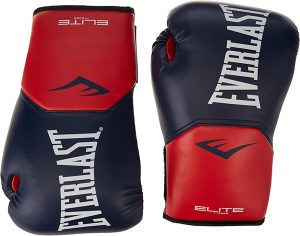
Everlast — The most widely available option in the U.S. market. Decent durability at an accessible price point ($50–$100 range for training gloves). Hook-and-loop closure versions work well for quick on/off during circuit training. Not the most premium leather, but reliable for recreational and intermediate athletes.
Title Boxing — Strong mid-range option favored by American gym-goers. Good foam padding density for the weight class, consistent sizing, and a solid range of lightweight training gloves. Roughly $60–$120 depending on the model.
Ringside — A staple in U.S. boxing gyms for decades. Known for durable synthetic leather construction and competitive pricing. Their lace-up gloves at the lighter weights are popular for competition training.
Cleto Reyes — Premium Mexican-made gloves used by professional fighters worldwide. Hand-stitched premium leather, excellent hook-and-loop closure on training models. Runs $150–$200+ but holds up for years under heavy use. The tighter fit and firmer padding suit technical speed work well.
Hayabusa — A favorite among MMA and kickboxing crossover athletes. The dual-strap wrist support system is genuinely useful for athletes still developing punch mechanics. Mid-to-premium pricing around $100–$150.
Common Mistakes When Training With Lightweight Boxing Gloves
A few things that tend to go wrong, especially with athletes who are newer to speed-focused training:
Going too light, too fast. 8 oz gloves on a heavy bag, without enough conditioning base, is a fast path to a wrist injury or knuckle strain. Build up to the lighter weights as your mechanics improve.
Skipping hand wraps. Lighter gloves have less built-in glove padding, which means your hands need the extra knuckle protection from proper wrapping. USA Boxing recommends 180-inch wraps as standard — don’t shortcut this.
Using speed gloves for everything. Overuse strain is real. If your entire training week runs through 10 oz gloves, including heavy bag rounds and sparring, you’re asking for impact force problems over time. Ringside’s heavier training gloves exist for a reason — use them on heavy bag days.
Poor wrist alignment through combinations. Lighter gloves are less forgiving of a crooked wrist. Winning and Everlast both make training gloves with solid wrist support, but the glove won’t fix bad technique. Focus on straight-line punch mechanics before adding volume.
Overtraining speed drills without recovery. Neuromuscular adaptation needs rest to consolidate. Running reflex drills at high intensity every single day works against the motor learning process you’re trying to build.
Speed and Reflex Drills That Work Best With Lightweight Gloves
The equipment only matters if the drills are right. Here’s what actually works:
Shadowboxing intervals — 3-minute rounds with intentional focus on hand speed and movement patterns. Keep the gloves light (10 oz), maintain punch accuracy, and focus on the kinetic chain firing correctly. USA Boxing coaches often use this as the first drill of a session.
Double-end bag routines — The double-end bag punishes bad timing and rewards reaction speed. With lightweight gloves, your hands can react at the speed the bag demands. Work 2-minute rounds and focus on visual tracking, not power.
Mitt work combinations — Work with a coach or training partner who can set the pace. Lightweight gloves let your pad holder see your actual speed without the weight masking slow mechanics.
Reflex ball drills — Underutilized by most recreational boxers. Clip-on reflex ball training with 10 oz gloves is one of the fastest ways to improve eye-hand coordination and reaction training simultaneously.
Agility ladder integration — Combining footwork patterns with punch combinations creates full movement efficiency training. The coordination demand doubles when your feet and hands have to work together.
Lightweight Boxing Gloves vs Heavier Training Gloves
Here’s the honest comparison most articles skip over:
| Factor | Lightweight (8–12 oz) | Heavier (14–16 oz) |
|---|---|---|
| Hand speed | Higher — less resistance allows faster acceleration | Lower — useful for building muscular endurance |
| Protective padding | Less — demands better technique | More — better for sparring and heavy bag |
| Shoulder endurance | Develops speed-endurance faster | Builds raw conditioning and punch output |
| Injury risk | Higher if used incorrectly on heavy bag | Lower for impact work; higher if used exclusively |
| Best for | Speed drills, reflex work, pad sessions | Sparring, heavy bag, conditioning rounds |
The training adaptation point is worth expanding. Heavier gloves build muscular endurance through resistance training-style loading on your shoulders and arms. That’s genuinely useful for conditioning. But it doesn’t transfer directly to neuromuscular speed — those are different adaptations built through different training stimuli.
Smart training periodization uses both. Winning and Cleto Reyes for speed and technical days; Everlast or Hayabusa 16 oz for sparring and heavy bag conditioning. The athletes who develop fastest tend to vary their equipment with intention rather than just grabbing whatever’s closest.
Final Thoughts on Lightweight Boxing Gloves for Speed and Reflex Training
The bottom line is this: lightweight boxing gloves are a specialized training tool, not a replacement for your full equipment setup. When used correctly — for speed drills, reflex training, pad work, and technical development — they accelerate skill acquisition in ways that heavier gloves simply can’t replicate.
Match the glove to the goal. Invest in quality from brands like Winning, Cleto Reyes, or Ringside if you’re training seriously, because the difference between a well-made 10 oz glove and a bargain option shows up after a few months of real use. Use hand wraps every time, build your mechanics before adding volume, and build a structured training routine that cycles lighter gloves with appropriate heavier equipment for sparring and conditioning work.
USA Boxing has resources on structured training progressions that complement speed-focused sessions if you’re looking for a more systematic approach to long-term athletic performance and boxing technique development.
Speed is a skill. It’s trainable, it’s measurable, and the right equipment gives that training a genuine edge.