

Walk into a busy boxing gym in the United States on a Monday evening and a pattern quickly appears. Heavy bags are swinging, fitness classes are packed, and borrowed gloves are changing hands throughout the day. More people than ever are punching for sport, fitness, stress relief, and competition.
That growth comes with a reality many beginners don’t notice until later: your hands absorb a tremendous amount of force.
According to sports medicine research cited by organizations such as the American Orthopaedic Society for Sports Medicine, hand fractures, wrist sprains, tendon irritation, and knuckle injuries remain common across combat sports. Whether training at a USA Boxing-affiliated gym, a UFC Gym location, or a home setup with equipment from Everlast or Century Martial Arts, repetitive impact creates wear and tear over time.
Extra protection layers such as inner gloves for boxing and gel hand wraps help address several problems at once:
- Improved wrist stabilization
- Additional knuckle padding
- Better impact distribution
- Enhanced sweat absorption
- Reduced contact with shared gym gloves
The popularity of at-home boxing training also surged after 2020, creating a new group of recreational athletes who train without daily coaching supervision. For that audience, simple protective gear often becomes the first line of defense.
What Are Inner Gloves and Gel Wraps?
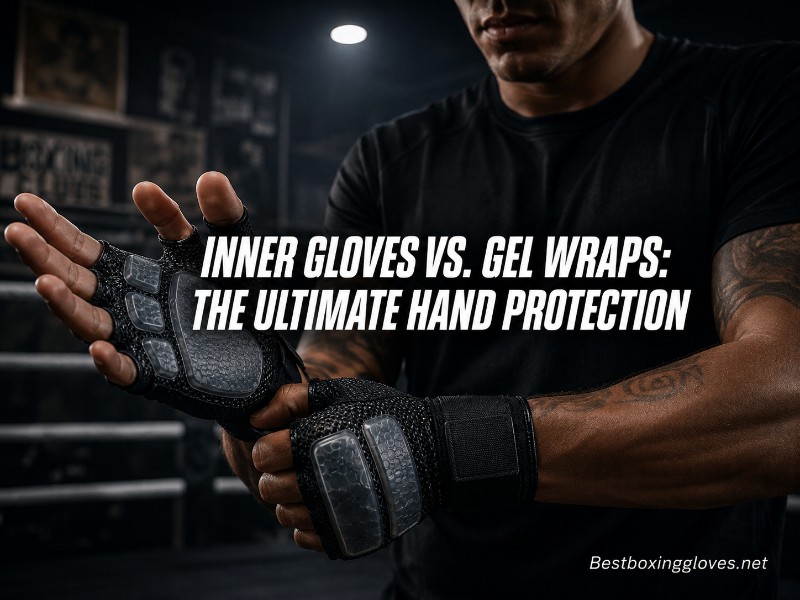
Inner gloves and gel wraps are protective liners worn underneath boxing gloves to provide additional cushioning, wrist support, and comfort.
Unlike traditional 180-inch cotton hand wraps that require a layered wrapping technique, most gel wraps use a slip-on design. You slide them on, secure the wrist, and start training.
Brands such as Everlast, Sanabul, RDX Sports, Venum, and Ringside offer variations that combine convenience with protection.
Key Features
Most modern boxing glove liners include:
- Compression fit construction
- Shock absorption gel around the knuckles
- Elastic mesh panels
- Breathable fabric materials
- Hook-and-loop wrist straps
- Quick-wrap system designs
Traditional wraps create customized support through multiple layers around the hand and wrist. Gel wraps take a different approach by building protection directly into the product.
For beginners, the appeal is obvious. A traditional wrap may take 2 to 3 minutes per hand. A pair of slip-on hand wraps often takes less than 30 seconds.
That difference matters when a boxing class starts in five minutes.
Why American Boxers Use Extra Protection Layers
The biggest reason is simple: hands were not designed to repeatedly strike dense objects.
During heavy bag training, impact force travels through the knuckles into the metacarpal bones, wrist joints, tendons, and connective tissue. Without adequate support, small stresses accumulate.
Common Training Injuries
The American Academy of Orthopaedic Surgeons identifies several injuries frequently associated with striking sports:
| Injury Type | Common Cause |
|---|---|
| Knuckle bruising | Repetitive bag work |
| Wrist sprains | Poor wrist alignment |
| Tendon strain | Excessive punching volume |
| Metacarpal fractures | High-force impact |
| Overuse injury | Frequent training without recovery |
Competitive fighters in USA Boxing and Golden Gloves programs often use traditional wraps because they provide maximum customization.
However, recreational athletes face different challenges.
Many “weekend warriors” train once or twice weekly. Others attend classes at Title Boxing Club after work. Youth boxing programs introduce new athletes who are still learning punching mechanics.
For these groups, additional boxing hand protection reduces exposure to unnecessary stress while technique develops.
What tends to happen after several months of training is that small aches become more noticeable than major injuries. Tender knuckles. Sore wrists. Lingering discomfort after bag sessions. Extra padding helps reduce those repetitive impacts.
Inner Gloves vs. Traditional Hand Wraps
Both options protect your hands, but they solve the problem differently.
Comparison Table
| Feature | Inner Gloves / Gel Wraps | Traditional Hand Wraps |
|---|---|---|
| Setup Time | About 20–30 seconds | About 2–3 minutes |
| Knuckle Protection | Built-in gel padding | Depends on wrapping technique |
| Wrist Support | Moderate to strong | Highly customizable |
| Beginner Friendly | Excellent | Requires practice |
| Washability | Easy | Easy |
| Competition Use | Limited | Widely accepted |
| Cost | $10–$30 | $8–$20 |
| Reusability | High | High |
Practical Differences
A quick wraps comparison often comes down to convenience versus customization.
Traditional boxing wraps create a compression wrap around the hand using a thumb loop and multiple overlapping layers. Experienced fighters appreciate the precise fit.
Gel wraps prioritize speed. The protection is already built in.
Now, here’s the interesting part. Many beginners assume thicker protection automatically means better protection. In practice, wrist stability often matters more than extra padding. A properly secured hook-and-loop closure that keeps the wrist straight can reduce strain more effectively than adding another layer of foam around the knuckles.
For most fitness users, gel wraps vs hand wraps isn’t really a battle. Many athletes eventually keep both and use each depending on the workout.
Benefits for Fitness Boxing and Group Classes
Fitness boxing changed the market.
Studios such as Title Boxing Club, UFC Gym, Equinox, OrangeTheory Fitness, and ClassPass partner locations introduced boxing workouts to people who had no intention of competing.
Those participants typically want three things:
- Fast setup
- Comfortable protection
- Better gym hygiene
Faster Class Preparation
Nobody enjoys spending several minutes wrapping hands while a class countdown clock is running.
Quick wraps simplify preparation and remove a common beginner frustration.
Better Hygiene
Shared gloves create obvious concerns.
Even well-maintained gloves accumulate sweat over time. Inner gloves create a sweat barrier between skin and glove lining.
Features such as antimicrobial lining, moisture management fabrics, and sweat absorption materials help improve overall gym hygiene.
Better Comfort During HIIT Sessions
Many fitness boxing programs emphasize cardio boxing and high-intensity intervals rather than pure punching power.
During these workouts, breathable fabrics and lightweight designs become valuable. Less time adjusting gear means more time moving.
The New Year fitness rush illustrates this perfectly. Every January, urban gyms fill with first-time participants looking for efficient workouts. Many choose fitness boxing hand protection because it feels approachable and easy to use.
How to Choose the Best Inner Gloves in the U.S.
The best product depends on training style, budget, and glove fit.
Consider Size First
A poor fit creates problems immediately.
Look for manufacturer size charts and measure hand circumference when possible.
Typical sizing includes:
| Size | Typical Hand Size |
|---|---|
| Small | Youth and smaller adult hands |
| Medium | Average adult hands |
| Large | Larger adult hands |
Evaluate Padding Thickness
More padding is not always better.
Heavy bag users often prefer thicker knuckle protection. Cardio-focused athletes usually prioritize comfort and flexibility.
Material Matters
Common materials include:
- Neoprene
- Elastic cotton blends
- Breathable mesh
- Moisture-wicking fabric
Breathable mesh helps reduce heat buildup during longer sessions.
Budget Tiers
| Price Range | Typical Features |
|---|---|
| $15 or less | Entry-level protection |
| $15–$25 | Better materials and support |
| $25–$30 | Premium padding and durability |
Popular options from Everlast, Sanabul, and RDX Sports frequently appear among top-rated products on Amazon and at Dick’s Sporting Goods.
Customer reviews often reveal details manufacturers don’t emphasize, particularly regarding durability and sizing accuracy.
For athletes seeking boxing gear under $30, the mid-range category typically delivers the strongest balance of value and protection.
Are Gel Wraps Enough for Sparring or Competition?
For most sanctioned competitions in the United States, gel wraps alone are not enough.
USA Boxing regulations and many professional commissions require specific hand-wrapping procedures.
Amateur Competition
USA Boxing events generally follow established wrapping requirements involving approved materials and inspection procedures.
Professional Competition
Professional organizations and regulators, including the Nevada State Athletic Commission, often require:
- Gauze
- Hand taping
- Pre-fight inspection
- Compliance with competition rules
The goal is protective compliance and consistency.
Gym Sparring
Gym policies vary significantly.
Some coaches allow gel wraps during light sparring. Others prefer traditional wraps because they offer more comprehensive wrist support and hand stabilization.
Athletes preparing for Golden Gloves events, Top Rank Boxing cards, or other sanctioned bouts typically train using competition-style wrapping methods long before fight night.
When discussing boxing hand wrap rules USA, the safest assumption is that traditional wraps remain the standard for formal competition.
Cleaning, Maintenance, and Longevity
Sweat is unavoidable.
The question is how long that sweat stays trapped inside the gear.
Cleaning Routine
Most washable gel hand wraps can be cleaned through:
- Gentle machine washing
- Hand washing
- Air drying
A mesh laundry bag helps prevent stretching and fabric damage.
Odor Prevention
Moisture retention drives most odor problems.
After training:
- Remove wraps immediately.
- Allow full air drying.
- Store gear in a ventilated area.
Many athletes also use antimicrobial spray products and odor-control solutions from brands such as Febreze.
Replacement Timeline
Training frequency affects longevity.
| Weekly Sessions | Expected Lifespan |
|---|---|
| 1–2 sessions | 12+ months |
| 3–4 sessions | 6–12 months |
| 5+ sessions | Around 6 months |
Fabric breakdown usually appears first around seams, wrist closures, and padding zones.
When compression weakens or padding becomes uneven, replacement becomes a smart investment.
Common Mistakes When Using Inner Gloves
Even quality gear loses effectiveness when used incorrectly.
Choosing the Wrong Size
Improper compression creates movement inside the glove.
That movement reduces support and increases friction.
Ignoring Wrist Tightness
A loose wrist strap undermines one of the main benefits of the product.
Boxing wrist support depends on secure stabilization.
Poor Glove Fit
Adding thick wraps inside already tight gloves creates pressure points.
Conversely, oversized gloves allow glove slippage and reduce control.
Using Worn-Out Padding
Padding displacement changes impact distribution.
A wrap that protected well six months ago may no longer provide the same level of protection.
Overreliance During Heavy Sparring
Gel wraps improve safety, but they do not replace proper hand preparation for intense sparring or competition.
Many injuries occur because athletes trust equipment more than technique.
Clean punching mechanics remain the foundation of hand safety.
Who Should Use Inner Gloves and Gel Wraps?
Several groups benefit significantly from this type of equipment.
Beginners
New boxers often struggle with traditional wrapping methods.
Beginner-friendly gear removes that learning curve.
Teens in Youth Programs
Youth boxing programs associated with USA Boxing and local clubs frequently introduce athletes to protective equipment early.
Busy Professionals
Time-saving equipment appeals to people fitting workouts into lunch breaks or evening schedules.
Women Entering Boxing Fitness
Women’s boxing participation continues to grow across commercial gyms and combat sports facilities. Fast, comfortable hand protection supports consistent training.
Home Gym Users
A home heavy bag setup often lacks direct coaching supervision.
Extra protection becomes especially useful when technique is still developing.
MMA Athletes
Many MMA inner gloves provide support during bag work, pad sessions, and conditioning workouts while remaining compact enough for mixed training environments.
Organizations such as UFC Gym and Century Martial Arts have helped expand awareness of these products among recreational athletes.
Conclusion
Inner gloves and gel wraps fill an important gap between convenience and protection.
They provide additional knuckle padding, improved wrist stabilization, enhanced sweat absorption, and better impact distribution during training. For fitness boxers, MMA athletes, beginners, and home gym users, they often make regular training more comfortable and more sustainable.
Traditional hand wraps remain the benchmark for sanctioned competition and advanced fight preparation. Yet for everyday training, particularly in group classes and recreational environments, modern gel hand wraps and padded inner gloves offer a practical solution that takes seconds to use and delivers meaningful protection.
When the goal is protecting hands while boxing consistently over months and years—not just one workout—the small layer sitting beneath the glove often becomes one of the most valuable pieces of gear in the entire gym bag