

Walk into almost any Muay Thai gym in the United States—small garage setups, crowded MMA academies, even those polished boutique studios—and a familiar glove keeps showing up. Fairtex BGV1. Usually hanging off someone’s bag, sometimes half-broken-in, sometimes brand new and stiff as cardboard.
At first glance, it’s easy to assume it’s just another popular glove riding brand reputation. But spend a few weeks actually training in them—pads, bag work, maybe a light spar—and things start to feel… different. Not dramatically different. Just enough to notice.
So the real question becomes: does that difference actually justify spending close to $100+ in 2026?
Key Takeaways
- Fairtex BGV1 delivers premium Thai leather construction with 2–3 years of durability under consistent U.S. gym use
- Dense padding provides strong feedback on bags and pads without sacrificing knuckle protection
- Compact fit favors average to narrow hands and feels tight for larger builds
- Price ranges from $89–$129 USD, placing it firmly in the upper mid-tier
- Performance leans Muay Thai, but versatility covers boxing and MMA training
1. Brand Overview: Who Is Fairtex?
Fairtex is a Thailand-based combat sports brand founded in 1958, known globally for Muay Thai equipment.
That heritage matters more than most people expect.
In U.S. gyms, comparisons usually land somewhere between Everlast, Hayabusa, and Title Boxing. But those brands come from a different design philosophy. Fairtex builds gear around Muay Thai first—clinching, elbows, pad work—not just straight-line boxing.
What stands out over time isn’t flashy design (because there really isn’t much of that). It’s consistency. Gloves feel like tools, not accessories.
And for anyone training 3–5 times per week, that distinction starts to matter more than branding.
2. Build Quality and Materials
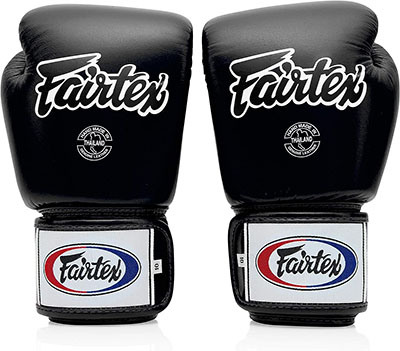
The BGV1 uses genuine Thai leather with dense multi-layer foam and tight stitching that holds up under mixed training conditions.
Right out of the package, the leather feels stiff. Not uncomfortable, but definitely rigid. Almost like it hasn’t decided to cooperate yet.
After about 1–2 weeks of regular sessions, though, the glove starts to loosen up. That break-in phase changes everything. The leather softens, the hand compartment molds slightly, and suddenly the glove feels… alive.
What You Actually Get
- Genuine leather exterior (not synthetic blends)
- Dense, impact-focused foam padding
- Wide Velcro wrist strap
- Handmade construction from Thailand
Compared to sub-$60 synthetic gloves, the difference shows up quickly. Cheaper gloves tend to crease, flatten, or lose structure within months. The BGV1 keeps its shape much longer.
Durability in U.S. Gyms
American classes often mix everything—heavy bag rounds, mitt work, partner drills, maybe even some light clinch work—all in one session.
That kind of variety usually wears gloves down fast.
The BGV1 handles it well. With basic care (air drying, occasional wipe-down), lifespan typically hits 2–3 years. That’s not marketing talk—that’s what tends to happen in real gym rotations.
3. Fit and Comfort for American Athletes
The BGV1 features a compact, snug fit designed for Muay Thai, not the roomier shape common in Western boxing gloves.
This is where opinions split.
Slip a hand in for the first time and the reaction is usually immediate: “These feel tight.”
And… yes, they are.
Hand Fit Breakdown
- Best suited for average or slightly narrow hands
- Tight for larger hands, especially with thick wraps
- Break-in period: roughly 1–2 weeks
Now, here’s the interesting part. That snugness becomes an advantage later. During pad work, the glove doesn’t shift around. Punches land cleaner. There’s less internal movement.
But if hands are on the larger side, or if bulky wraps are non-negotiable, the glove can feel restrictive longer than expected.
Thumb Position
The thumb sits in a natural angle—not forced, not overly tucked. That reduces strain during longer sessions.
It’s one of those small details that doesn’t stand out immediately… until switching back to a poorly designed glove and suddenly noticing the difference.
4. Wrist Support and Protection
The BGV1 provides balanced wrist support through a wrap-around Velcro strap that stabilizes without over-restricting movement.
Wrist support tends to be one of those things people ignore—until something starts hurting.
The BGV1 doesn’t go extreme in either direction.
- Not overly stiff like lace-up fight gloves
- Not loose or flimsy like entry-level models
Real-World Performance
- Stable during heavy bag sessions
- Secure on focus mitts
- Flexible enough for clinch transitions
For most gym situations, this balance works. But if someone prefers maximum rigidity (especially after past injuries), lace-up gloves still offer more lockdown.
That said, for everyday training, Velcro convenience usually wins out.
5. Performance on Heavy Bag and Pads
The BGV1 excels on heavy bags and pads due to dense padding that delivers both protection and impact feedback.
This is where the glove starts to justify its reputation.
Heavy Bag Experience
Punch a heavy bag with overly soft gloves and everything feels muted. Punch with overly hard gloves and knuckles start complaining.
The BGV1 lands somewhere in the middle—but closer to “responsive.”
- You feel the impact
- Knuckles stay protected
- Feedback improves punch accuracy
There’s a certain “pop” that develops, especially after break-in. Not exaggerated. Just clean.
Pad Work
On Thai pads and focus mitts, the glove really shines.
Coaches tend to notice it too. That sharp, crisp sound when punches land? It’s not just satisfying—it signals proper technique.
For anyone training toward smokers or amateur bouts, that kind of feedback matters more than expected.
6. Muay Thai vs. Boxing: Is It Ideal for Both?
The BGV1 leans toward Muay Thai design but remains versatile enough for boxing and MMA training.
The label says “Muay Thai/Boxing,” but the feel tells a slightly different story.
Why It Favors Muay Thai
- Compact glove shape
- Flexible wrist design
- Better control in clinch situations
Pure boxers—especially those used to heavier padding around the knuckles—might find it a bit minimal.
But hybrid athletes? This glove fits right into that world.
MMA gyms across the U.S. often blend striking styles anyway. And in that environment, versatility matters more than specialization.

7. Price and Value in the U.S. Market
Fairtex BGV1 gloves cost $89–$129 USD in 2026, positioning them as upper mid-range gear with strong long-term value.
Here’s how that price actually stacks up:
| Category | Price Range (USD) | What You Get |
|---|---|---|
| Entry-Level Gloves | $30–$60 | Synthetic materials, shorter lifespan |
| Mid-Range Gloves | $70–$120 | Mixed materials, moderate durability |
| Fairtex BGV1 | $89–$129 | Premium leather, high durability |
| Premium Gloves | $150–$200+ | Luxury build, brand prestige |
What stands out is the balance.
Some gloves in the $150+ range feel amazing—but the performance difference doesn’t always scale with price. The BGV1 hits a point where cost and performance align well.
Over time, especially training multiple times per week, cost per session drops quickly.
8. Pros and Cons
Pros
- Premium genuine leather construction
- Long-lasting durability (2–3 years typical use)
- Excellent feedback on pads and bags
- Trusted brand across Muay Thai gyms
- Balanced wrist support
Cons
- Tight fit for larger hands
- Requires break-in period
- Less padding than some boxing-focused gloves
- Not budget-friendly for beginners
9. Comparison: Fairtex BGV1 vs Popular U.S. Gloves
Fairtex BGV1 offers tighter fit and better pad feedback, while brands like Everlast and Hayabusa provide more padding and roomier comfort.
| Feature | Fairtex BGV1 | Everlast Powerlock | Hayabusa T3 |
|---|---|---|---|
| Fit | Snug, compact | Medium, slightly roomy | Tight but structured |
| Padding | Dense, responsive | Softer, more forgiving | Multi-layer, protective |
| Wrist Support | Balanced Velcro | Moderate | Very rigid system |
| Break-in | Required (1–2 weeks) | Minimal | Minimal |
| Best Use | Muay Thai, pads, bag | Boxing, general training | Boxing, wrist protection |
| Price | $89–$129 | $70–$120 | $120–$160 |
Personal Commentary on Differences
The contrast becomes obvious during real sessions.
- Everlast Powerlock feels more forgiving early on. Great for beginners, but slightly “pillowy” on impact.
- Hayabusa T3 locks the wrist down almost aggressively. Good for protection, but can feel restrictive.
- Fairtex BGV1 sits in between—but leans toward performance over comfort.
That tighter fit and denser padding? It doesn’t always feel better at first. But over time, it tends to feel more precise.
10. Who Should Buy Fairtex BGV1 Gloves?
Fairtex BGV1 suits intermediate to advanced athletes, consistent trainees, and hybrid fighters training Muay Thai, boxing, or MMA.
This glove fits best if training is consistent—not occasional.
Ideal Users
- Intermediate to advanced Muay Thai practitioners
- MMA athletes mixing striking styles
- Boxers who prefer compact gloves
- Fitness-focused trainees attending classes regularly
For someone training once every few weeks, the value gets harder to justify. The glove is built for repetition—daily bag rounds, constant pad work, long sessions.
And that’s really where it earns its reputation.
11. Final Verdict: Are Fairtex BGV1 Gloves Worth It?
Yes—Fairtex BGV1 gloves are worth it for most U.S.-based fighters due to durability, performance, and balanced pricing.
Not perfect. The fit can feel tight. The break-in phase requires patience. And some boxers will still want more padding.
But over time—especially after weeks of consistent training—the glove starts to make sense in a way cheaper options don’t.
It becomes less about how it feels in the first five minutes… and more about how it performs after 50 sessions.
And that’s usually where most gloves fall apart.