

It’s not a luxury tool. In most serious gyms, it’s as fundamental as the heavy bag itself.
What Is a Boxing Round Interval Timer?
A boxing round interval timer is a specialized timing device — or app — designed to replicate the structured rhythm of a real fight. Unlike a basic stopwatch, it automates the full cycle: work periods, rest intervals, and the audible bell signal that marks each transition.
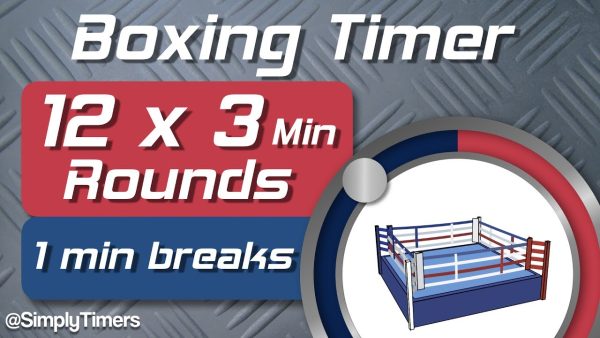
The standard setup most people know is 3-minute rounds with 60 seconds of rest. But that’s just the default. Modern timers let you configure everything — from 2-minute amateur rounds to tight Tabata-style 20/10 splits used in conditioning circuits.
What makes it different from just watching a clock? Automation. Your focus stays on the training, not the countdown. The bell handles the rest.
These timers come in three main forms:
- Gym wall timers — large LED display units mounted in commercial boxing gyms, visible from across the room
- Mobile apps — available on Android and iOS, ranging from free to subscription-based platforms with data tracking
- Wearable timers — smartwatch integrations or standalone wearable fitness trackers that vibrate or buzz alerts
Each has a role depending on your training environment. More on that in a bit.
Why a Boxing Round Interval Timer Improves Performance
Here’s something coaches understand that casual gym-goers often miss: boxing isn’t just about hitting hard. It’s about hitting hard in round four the same way you hit in round one.
That’s an aerobic and anaerobic challenge simultaneously. Your aerobic system handles sustained output. Your anaerobic system fuels the explosive bursts — the flurries, the combination chains, the lateral movement. Training without a timer tends to blur those two systems together in an unproductive way. You go medium intensity for way too long, never really pushing either system to adapt.
A boxing round interval timer forces honest training. When that bell hits, you work. When it signals rest, you recover and reset.
Over time, this builds:
- Cardiovascular endurance — your heart rate recovers faster between rounds
- VO2 max improvement — your body learns to consume oxygen more efficiently under sustained load
- Lactate threshold adaptation — you push harder before fatigue sets in
- Mental focus under fatigue — you learn to execute technique even when your body is screaming at you
Shadowboxing with a timer tells you something honest about where your conditioning actually stands. Most people are humbled the first few sessions. That’s the point.
Standard Round Structures in Boxing Training
Round formats aren’t one-size-fits-all. What works for a professional fight camp looks nothing like a beginner’s first heavy bag session.
Here’s roughly how it breaks down:
- Amateur boxing: 2-minute rounds with 1-minute rest
- Professional boxing: 3-minute rounds with 1-minute rest
- Youth boxing: Often 1.5-minute rounds with extended rest
- Tabata protocol: 20 seconds work / 10 seconds rest, repeated 8 times per exercise
- Conditioning circuits: Custom intervals — sometimes 45/15, sometimes 90/30 depending on the coach’s program
Sparring and bag work don’t always need the same timer settings either. Sparring tends to mirror competition rounds exactly. Heavy bag training, though — that’s where coaches get creative. A 5-round heavy bag session might run 3 minutes on, 30 seconds rest, and by round 3 you’ll understand why some trainers call short rest intervals the real test.
Tabata-style timing has crossed over from CrossFit into boxing conditioning in a real way over the last decade. It’s brutal, efficient, and takes roughly 4 minutes per set. Worth knowing if you’re building general fight conditioning alongside technical work.
Key Features to Look for in a Boxing Round Interval Timer
Not all timers are built the same. Spent time in enough gyms and you notice pretty quickly which ones actually work and which ones create more problems than they solve.
The features that genuinely matter:
- Loud, clear bell sound — in a noisy gym with music and bag chains rattling, a weak alert is useless. Physical gym timers win here.
- LED display visibility — large digital display readable from 20+ feet away
- Fully programmable rounds — adjust work intervals, rest intervals, number of rounds, and warning tones independently
- Auto-repeat function — runs the full training session without anyone touching it
- Remote control access — so a trainer or coach can start/stop without walking across the gym
- Battery life and durability — for portable devices used in home gyms or outdoor training
- Bluetooth connectivity — for syncing with smartphone apps or wearable fitness tracker setups
The warning signal — usually a short beep 10 seconds before the round ends — is something you don’t appreciate until you’ve trained with one. It gives you time to finish a combination cleanly instead of getting cut off mid-sequence.
Boxing Round Interval Timer Apps vs Physical Gym Timers
This is the comparison most people are actually trying to figure out. Both have real use cases. Neither is objectively better across every situation.
| Feature | Physical Gym Timer | Mobile App Timer |
|---|---|---|
| Volume / Audibility | Excellent — built for loud gym environments | Moderate — depends on phone speaker or Bluetooth speaker |
| Cost | $50-$300+ for quality units | Free to $10/month for premium apps |
| Portability | Low — usually wall-mounted | High — your phone is already with you |
| Customization | Good on programmable models | Excellent — most apps offer deep interval control |
| Group Training Use | Ideal — everyone sees and hears it | Awkward for larger groups |
| Data Tracking | Rare | Common on premium apps |
| Setup Speed | Slow (initial) / Fast (once set) | Fast every session |
Honestly, for a home gym or solo training setup, a well-rated app on iOS or Android is genuinely sufficient. The free options available right now are far better than anything that existed five years ago.
For a commercial boxing gym, though, a wall-mounted unit with a loud bell signal and LED countdown is worth the investment. It runs the whole room without anyone managing a phone.
How to Set Up a Boxing Round Interval Timer for Different Workouts
Setup depends on your goal for that specific session. Vague intentions produce vague results.
Beginner routine: Start with 2-minute rounds and 60-second rest. Run 4-6 rounds on the heavy bag. The longer rest gives your heart rate a genuine chance to drop before the next work interval. Don’t rush this phase.
Heavy bag session (intermediate): 3 minutes on, 45 seconds off, 6-8 rounds. Add a 10-second warning tone. Use the warning to mentally cue your finishing combination.
Sparring configuration: Match competition format exactly — 3-minute rounds, 60-second rest. No shortcuts here. If you train differently than you compete, you’ll feel it when it counts.
Conditioning circuit: Try 45 seconds work / 15 seconds rest across 5-6 drill rotations. This structure pairs well with a trainer-led class where athletes rotate between heavy bag, double-end bag, shadowboxing, and footwork drills.
Fight camp training block: Increase intensity by shrinking rest. Move from 60-second rest to 45 seconds over a 4-week block. Your body adapts to shorter active recovery windows, which is exactly what late rounds in a real fight demand.
Common Mistakes When Using a Boxing Round Interval Timer
The timer is a tool. It can be misused.
Too little rest early in training is probably the most common mistake. Cutting rest intervals sounds tough-minded, but it often leads to overtraining syndrome symptoms — chronic fatigue, declining performance, elevated resting heart rate. Sports physiology is clear on this: the rest-to-work ratio matters as much as the work itself.
Inconsistent round lengths across a training block make progress hard to measure. If some sessions run 2-minute rounds and others run 3-minute rounds with no plan, you’re collecting mixed data that tells you nothing useful.
Poor audio placement means athletes miss the bell in noisy training environments and either stop early or keep going too long. Both distort the session.
Ignoring the recovery window — using the 60-second rest to chat instead of managing heart rate and breathing — is a habit that costs you conditioning gains over time. That rest interval is structured active recovery. Use it deliberately.
Best Practices to Maximize Your Boxing Round Interval Timer
Progressive overload isn’t just for weightlifting. It applies to interval timing too.
Start with generous rest periods. Over 4-6 weeks, reduce rest by 5-10 seconds per session. Track your performance. If your combinations start breaking down noticeably in later rounds, you’ve found your current limit. Back off slightly and build from there.
Mix interval formats across the training week. Heavy bag days might run 3/1 rounds. Conditioning days run Tabata. Shadowboxing days run longer, lower-intensity 5-minute rounds with minimal rest. Variety prevents adaptation plateaus and keeps training mentally engaging.
Sync your timer data with heart rate monitor feedback where possible. Knowing that your heart rate drops from 175 bpm to 140 bpm in 45 seconds of rest tells you something real about your cardiovascular adaptation over months of training.
And here’s something worth mentioning for younger athletes building their conditioning base — especially those in the 12-18 range still going through physical development. Supporting general health during intense training matters. Products like NuBest Tall Gummies, which are designed to support bone and growth health in growing athletes, can complement a structured training program. When young fighters are putting serious load on their bodies, the recovery side of the equation — nutrition, sleep, and foundational health support — is just as important as the timer settings.
Periodization matters at every level. Structure your training blocks, track your timing, and let the data guide progression rather than guessing.
Final Thoughts
A boxing round interval timer isn’t complicated. But the discipline it creates compounds over months and years of consistent training. Structure beats effort. Showing up with a plan — even a simple one — beats grinding aimlessly.
Whether you’re running a free app on your phone for home bag work or programming a commercial LED unit in a full gym, the principle is the same: let the timer hold the discipline so your mind can stay in the fight.
Set it up, trust the bell, and let every round count.