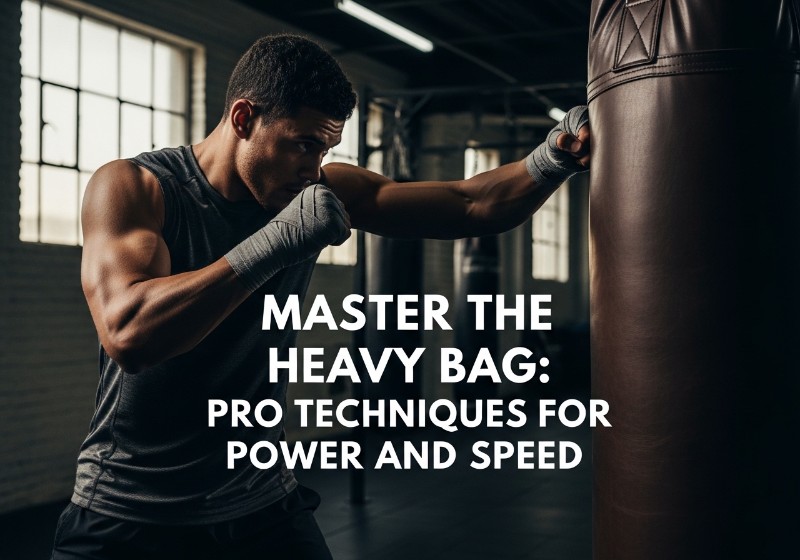

Heavy bag training looks simple from across the room. Then the first real round starts, the shoulders light up, the feet get messy, and the bag swings back like it has an opinion. That’s usually the moment people realize a heavy bag isn’t just for hitting hard. It teaches rhythm, balance, impact control, and conditioning all at once.
In the U.S., that matters. Home setups in garages, basements, and spare rooms have become a normal part of fitness, and a solid heavy bag setup often lands in the $100 to $300 range for many buyers. Whether training for boxing, stress relief, weight loss, or MMA conditioning, the bag can cover a lot of ground.
Start With Safety and Basic Form
Before power enters the picture, form has to make sense. You’ll get more from a clean jab and stable stance than from wild shots that shove the bag but wreck your wrists.
Core principles that matter early
- Pick a goal first: boxing skill, weight loss, stress relief, or Muay Thai and MMA conditioning.
- Choose a stance that feels natural. Orthodox usually places the left foot forward; southpaw flips that.
- Keep your guard high, chin tucked, and feet active.
- Build rhythm before force. That’s where real control starts.
In practice, boxing and Muay Thai both rely on rotation, but the bag tells the truth fast. Bad footwork kills power. Poor hip torque leaks energy. Sloppy impact control turns a round into arm-punching, and that gets old quickly.
Choose the Right Heavy Bag for the Job
Not every heavy bag trains the same way. A traditional hanging bag, usually 70 to 100 pounds, gives the most classic boxing feel. A freestanding bag fits apartments better. A longer Muay Thai bag opens up kicks and knee strikes. An aqua bag feels easier on the joints and changes the impact response.
| Bag type | Best for | Main trade-off |
|---|---|---|
| Traditional hanging bag | Boxing combinations, movement, power shots | Needs strong mounting hardware |
| Freestanding bag | Apartments, renters, flexible placement | Base can shift on harder rounds |
| Muay Thai bag | Kicks, knees, full striking mix | Takes more vertical space |
| Aqua bag | Joint-friendly impact, punch accuracy | Usually costs more |
Brands like Everlast, Ringside, and Century Martial Arts are common picks in the U.S. Most people do well with a bag around half their body weight, give or take. A 180-pound person often lands in the 80 to 100-pound range.
Set It Up the Right Way
At home, setup decides whether training feels smooth or annoying. Hanging bags need ceiling joists or a load-bearing beam, plus a mount rated for 100 pounds or more. A swivel mount helps the bag move naturally. Rubber mats help with impact distribution and cut down vibration.
For city renters, especially in places like New York City, freestanding models usually create fewer headaches. No drilling. No landlord calls. Less noise traveling through the ceiling, too.
Learn the Basic Strikes
The heavy bag rewards fundamentals. Start with the jab, cross, hook, and uppercut. For Muay Thai or MMA work, add the front kick, roundhouse kick, and knee strike.
Think about fighters like Mike Tyson and Canelo Alvarez. Tyson’s hooks showed how brutal torque generation can be. Canelo’s combinations show what precision looks like when every shot returns to guard. That defensive reset matters more than most beginners expect.
Exhale on impact. Rotate hips and shoulders. Then bring everything back under control.
Use the Bag for Conditioning and Power
A heavy bag session can burn roughly 400 to 700 calories per hour, depending on body weight and pace. A simple 20-minute workout works well:
- 3-minute rounds
- 1-minute rest
- one round for jab-cross work
- one round for hooks and body shots
- one speed round
- one controlled power round
For strength and explosive output, short intervals tend to work better than endless slugging. Twenty seconds hard, forty seconds controlled. Add push-ups or squats between rounds, and the whole thing turns into serious metabolic conditioning.
Avoid the Mistakes That Slow Everything Down
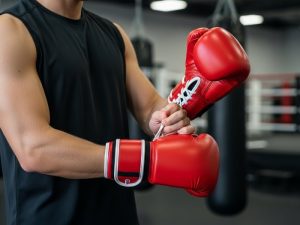
The common errors are predictable: hitting too hard too soon, locking the elbows, dropping the hands, ignoring footwork, and skipping hand wraps. Good gloves matter too. Most beginners do better with 12 to 16 oz boxing gloves.
A basic three-day split works well for U.S. beginners: Monday for technique and light conditioning, Wednesday for power and strength, Saturday for longer conditioning rounds. Track rounds, combinations, heart rate, and recovery time in an app like MyFitnessPal or a simple notes log.
A heavy bag stays brutally honest. Skill, stamina, and power all show up there, but not on the same timeline. Form tends to arrive first. Power usually shows up later. Consistency keeps the whole thing moving.