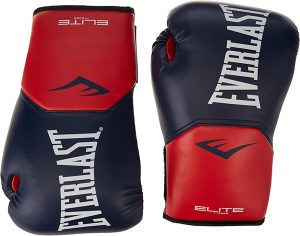


There’s something about slipping on a pair of Grant boxing gloves that hits differently. Before you even throw your first jab, you can feel it — the weight distribution, the leather quality, the way they seem to hold your hand rather than just cover it. It’s not a feeling that’s easy to explain to someone who hasn’t tried them, but any serious gym rat who’s cycled through enough gloves will get it immediately.
Grant has carved out this interesting space in the boxing world — not the loudest brand, not the one plastered on every beginner’s gear bag, but quietly dominant in gyms from Philadelphia to Las Vegas. Pros who’ve spent years figuring out what actually works tend to gravitate toward them. That’s not a coincidence. It says something about a glove when fighters who could wear anything still reach for the same pair every training session.
So what actually makes Grant worth the conversation? Let’s dig into that — including some honest breakdowns of alternatives worth knowing about in the same tier.
Top 4 Grant Boxing Gloves Review
Below are the gloves covered in this review:
| Name | Rating | Price |
|---|---|---|
| Meister Pro Boxing Gloves w/Wrist Support | ⭐⭐⭐⭐⭐ | Check Price |
| Pro-Force Leatherette Boxing Gloves | ⭐⭐⭐⭐ | Check Price |
| Revgear Deluxe Boxing Gloves | ⭐⭐⭐⭐ | Check Price |
| Grant Boxing Professional Pro Fight | ⭐⭐⭐⭐⭐ | Check Price |
1. Meister Pro Boxing Gloves w/Wrist Support (Pair)

For bag work specifically, the Meister Pro tends to hold up in ways that surprise people who write it off based on price alone. The multi-layered high-density foam isn’t just marketing — you’ll notice it after an hour on the heavy bag when your knuckles still feel fine. That matters more than most people realize until they’ve trained without proper padding and paid for it the next morning.
The wrist enforcement is where this glove earns its reputation. It keeps your hand aligned during impact, which sounds basic until you’ve rolled a wrist mid-combo and had to sit out two weeks. The molded thumb and finger form is a nice detail too — ergonomic in the truest sense, not just a buzzword on the box. Your fist actually sits the way it’s supposed to.
A few things worth knowing about the Meister Pro:
- The synthetic leather holds up surprisingly well through consistent use — no cracking at the seams after a few months of bag work
- Double stitching throughout means the construction doesn’t start unraveling at high-stress points the way cheaper gloves do
- Works for both beginners figuring out their technique and more experienced fighters who just need a reliable bag glove
- Not ideal for sparring — these are built for bag work and pad work, and they perform best in that lane
- The price point is on the higher end for what is, functionally, a training glove
The one downside — and it’s legitimate — is cost. For a training glove that won’t see competition use, some fighters balk at the price. That hesitation is understandable. But after going through two or three cheaper pairs in the same time span, the math usually works out differently.
- Ergonomic molded design
- Extra high-density padding
- Double stitching throughout
- Built for serious bag work
- Price is higher than comparable training gloves
2. Pro-Force Leatherette Boxing Gloves

The Pro-Force gloves are interesting because they try to cover a lot of ground — boxing, cardio, martial arts, general fitness — and mostly succeed. That’s actually harder to pull off than it sounds. Most gloves optimized for one thing perform poorly at another. These strike a reasonable balance, which makes them a solid option if your training isn’t purely boxing-focused.
The pre-curved form fit is noticeable from the first session. Your hand naturally settles into a relaxed fist position, which reduces fatigue during longer rounds. The thumb-lock feature is a real benefit too, especially for people still developing punching mechanics. It limits the kind of errant thumb movement that causes sprains — the sort of injury that seems minor until it lingers for months.
Here’s what stands out about the Pro-Force design:
- The vented palm is genuinely useful — sweaty palms inside a glove get uncomfortable fast, and decent airflow keeps things manageable through long sessions
- Hook and loop closure makes these easy to get on and off solo, which matters more during solo training than it sounds
- Available in weights from 10 to 24 oz, so there’s flexibility depending on your training goals
- The foam core with cotton lining creates a comfortable fit that doesn’t feel stiff or restrictive
- Padding is functional but not exceptional — if heavy bag power work is your main focus, you’ll probably want something with more knuckle protection
The padding criticism is valid. It’s adequate for lighter work and cardio-focused training, but if you’re going hard on a heavy bag regularly, the protection level starts to feel like a compromise after a few weeks. Know what you’re buying it for.
- Thumb lock for better punching mechanics
- Versatile across boxing and martial arts
- Vented palm for breathability
- Padding could be denser for power work
3. Revgear Deluxe Boxing Gloves

The Revgear Deluxe occupies a useful spot in the market — serious enough for aspiring competitors, accessible enough for people who don’t want to spend premium money before they know how far they’re taking the sport. The five-layer protection is the headline feature, and it does deliver genuine shock dispersion that you’ll actually feel the difference from on the heavy bag.
The vinyl coating that people sometimes dismiss visually is actually what makes these durable. It holds up through the kind of high-volume bag work that eats through lesser gloves. The side thumb protection is a quiet feature — you don’t think about it until you’ve jammed a thumb, and then you think about it constantly.
A realistic look at what the Revgear Deluxe offers:
- Five-layer palm and fist protection that legitimately absorbs impact across extended sessions
- Thumb protection built into the side panel — underrated, especially for sparring
- Affordable relative to similar protection levels in other brands
- The black vinyl construction is durable and maintains its shape well over time
- Fingers aren’t molded, which some fighters find affects fist formation during precision work
- Won’t perform the same as a top-tier competition glove, but for sparring and training, it holds its own
The non-molded fingers are the main functional trade-off. For sparring sessions where you’re not exclusively focused on power output, it’s rarely a dealbreaker. For pad work requiring precise technique, some fighters notice the difference. It depends heavily on what your training currently emphasizes.
- Affordable price point
- 5-layer protection on palm and fist
- Side thumb protection
- Fingers are not molded
4. Grant Boxing Professional Pro Fight

This is where Grant’s reputation is built. The Pro Fight glove is handmade — not in a marketing sense, but genuinely constructed by hand from specially tanned leather with a water-repellent satin lining. When you examine the stitching up close, you understand why professionals pay what they pay. There’s a precision to the seams that machine production doesn’t replicate, and it shows in how long these gloves hold together under serious use.
The knuckle padding is dense in a way that lets you throw with real power without second-guessing your hand safety. The long padding sleeve on the wrist is worth specific mention — it provides genuine blocking protection, not just wrist wrap support. During defense-heavy sparring, the difference between a padded sleeve and a standard wrist closure is the kind of thing you notice the first time you catch a hard jab on the forearm block.
What makes the Grant Pro Fight worth serious consideration:
- Hand-stitched leather construction with virtually no flaws in the seaming — this is the detail that separates Grant from mass-produced alternatives
- Water-repellent satin lining means sweat doesn’t seep into the leather, which extends the glove’s lifespan considerably
- Knuckle padding dense enough to throw with full power without compromising hand safety
- The extended wrist sleeve works for blocking, not just support — useful in actual sparring situations
- Lacing design channels airflow toward the palm, keeping the interior noticeably drier during long sessions
- Priced for professionals — this isn’t a casual purchase, and it’s clearly not designed to be
These gloves are built for people who are in the sport seriously. If you’re still figuring out whether boxing is a long-term commitment, starting here is probably getting ahead of yourself. But if you’ve put in the time and want equipment that matches your level — and that won’t embarrass you in a room full of serious fighters — the Pro Fight is the glove Grant built its reputation on.
- Superior knuckle and fist protection
- Exceptional hand-stitched leather construction
- Designed specifically for professional fighters — not ideal as a beginner glove
FAQ’s – Frequently Asked Questions
Grant makes gloves across different experience levels, though their flagship Pro Fight models are clearly built with serious competitors in mind. Beginners can start with the Meister or Pro-Force options in this tier — both offer solid wrist support and protection without requiring the investment of a full professional glove. The pillow-style padding across the line generally does its job well regardless of experience level.
The construction is where the cost lives. Grant uses stiffer, denser padding than most competitors, which translates to better hand protection over long training periods. The handmade leather construction and thumb-lock features aren’t common at lower price points — and the craftsmanship gap becomes obvious when you compare them side by side with mid-range gloves.
Entry-level Grant professional gloves typically start around $400, which is a real number that catches people off guard. Some variations — depending on customization and leather grade — run higher. Occasionally the stitching on lower-tier production runs shows inconsistency, though the core construction is generally reliable.
For most people uncertain about sizing, 12oz is a reasonable starting point. It works well for light sparring and pad work with a trainer, and it’s versatile enough to function across different training contexts without being too heavy or too light. If your training focus narrows over time, sizing up or down from there makes more sense once you know what you actually need.
Roughly one to three years for most gloves, Grant included — though training frequency matters a lot. Heavy hitters going hard every day will wear through a glove faster than someone training three times a week at moderate intensity. Spending more on a glove doesn’t change that physics. What it does change is construction quality at the failure points — seams, thumb attachment, padding compression. Grant tends to hold together longer at those specific spots.
Wrapping Up
Grant sits in a specific category — not the entry-level option, not the most commercially visible brand, but the one that experienced fighters tend to return to once they’ve worked through enough alternatives to know what they actually want. That positioning isn’t accidental.
For anyone starting out, the Meister Pro is where the value proposition makes the most sense — durable enough for serious training, protective enough that your hands aren’t paying for bad gear choices six months in. For sparring-focused training where budget matters, the Revgear Deluxe covers a lot of ground without pretending to be something it isn’t.
The Grant Pro Fight is for people who’ve already made their decision about the sport. At that point, the craftsmanship justifies the investment in a way that’s genuinely hard to argue with once you’ve trained in them.