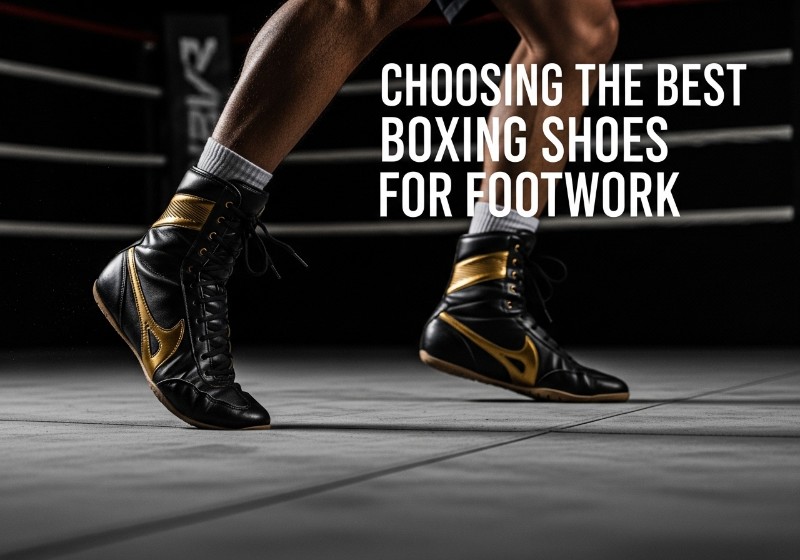

A lot of fighters obsess over gloves first. That makes sense on the surface. Gloves look like performance. Gloves feel like power. But movement starts lower, and once that clicks, boxing shoes stop looking like an accessory and start looking like equipment.
The connection is simple. Your shoes affect speed, balance, and lateral movement every second you’re in the ring. They influence how cleanly you pivot, how sharply you cut an angle, and how confidently you shift weight from lead foot to rear foot. A poor sole can drag. A bulky heel can delay reactions. A slick outsole can wreck defensive rhythm in one ugly moment.
That matters even more in American boxing culture, where agility gets rewarded early. USA Boxing amateurs, Golden Gloves competitors, and gym sparring regulars all live in a system that values ring control, in-and-out movement, and clean defensive exits. Floyd Mayweather Jr. became the obvious reference point for that style, not because shoes created the style by themselves, but because footwear supported it. Quick feet need the right surface contact.
And yes, shoes matter more than gloves for mobility. Gloves change how punches land. Shoes change how everything happens before and after the punch.
Street sneakers usually fail here. Running shoes often have thick midsoles, raised heels, and cushioning designed for forward motion. Boxing footwear strips that down. You get a flatter platform, lighter build, better ring traction, and more honest feedback underfoot. It feels less plush. It performs better.
In the U.S. market, most boxing ring shoes land somewhere between $60 and $200, with entry-level pairs at the low end and premium lightweight builds at the high end. That spread covers beginners, frequent gym users, and serious amateurs preparing for competition.
What Makes Boxing Shoes Different from Regular Sneakers?
Boxing shoes are built for movement on a ring surface, not for pavement, treadmills, or all-purpose workouts. That’s the dividing line.
The biggest difference is the sole. Boxing shoes use thin rubber soles, often with a flat sole shape and minimal heel drop. That design keeps you closer to the floor, which improves weight distribution and makes pivots feel more immediate. Regular sneakers, especially running models, add cushioning that can blur that connection. Comfortable for miles. Annoying for fast footwork.
The outsole matters just as much. Most ring-ready shoes use non-marking rubber that grips canvas without feeling sticky. That balance is harder to find than people expect. Too much bite and pivots get jammed. Too little and lateral movement turns sloppy.
The upper also changes. Brands such as Everlast, Reebok, Under Armour, ASICS, and Title Boxing have all leaned into lightweight builds with breathable mesh or synthetic support zones. The goal isn’t plush comfort. The goal is controlled movement with less excess material.
A few structural differences show up fast in real use:
- Thin soles create better ring feel. You notice cleaner pivots and sharper directional changes.
- Minimal heel drop improves balance. Your stance stays more level, which helps with defensive positioning.
- High-tops and low-tops change ankle behavior. One offers more wrap, the other gives freer mobility.
- Breathable uppers reduce heat build-up. Long sessions feel less swampy, even when the gym air is rough.
- Non-marking outsoles suit indoor surfaces. That matters in boxing gyms that don’t want street tread on the canvas.
In a boxing footwear comparison, sneakers usually win on walking comfort and lose on movement precision. Professional boxing shoes do the opposite. That trade-off is the whole point.
Key Features That Improve Footwork
Not every boxing shoe helps footwork equally. Some pairs feel quick for ten minutes and clumsy after an hour. Some grip beautifully in straight lines but fight against pivots. That difference usually comes down to a handful of performance features.
Grip Without Sticking
The best grip boxing shoes don’t glue you to the mat. They let you rotate. Shoes such as the Nike HyperKO, Adidas Box Hog, and Everlast Elite tend to get attention because they balance traction with release. On canvas or gym flooring, that translates into smoother angle changes and cleaner defensive slips.
A good outsole creates controlled friction. In plain language, your foot catches when it needs to catch and slides just enough when it needs to turn. That’s what pivot control actually feels like.
Forefoot Flexibility
The forefoot does more work than many buyers expect. Shuffles, feints, and quick exits depend on that front section bending naturally. Too stiff, and the shoe feels late. Too soft, and it can feel unstable once fatigue sets in.
Mizuno models often get praised for this balance, while certain Ringside pairs lean toward durability over finesse. Neither approach is wrong. Training volume changes the answer.
Ankle Height and Stability
Ankle stability isn’t only about injury prevention. It’s also about movement confidence. Shoes with slightly more structure around the ankle can help newer fighters move more decisively because the foot feels contained. For experienced fighters with cleaner mechanics, too much material can feel restrictive.
Lace Lockdown
A weak lacing system ruins good design. Lace lockdown keeps the heel planted and stops internal sliding during fast direction changes. That internal slip is subtle, but once it starts, speed disappears in small pieces.
Shock Absorption
This one gets oversold. Boxing shoes don’t need running-shoe cushioning. They need enough shock absorption to keep repetitive training from feeling harsh on the feet and calves, especially during bag work and long gym sessions. Past that point, more foam often means less precision.
High-Top vs Low-Top: Which Is Better for Footwork?
This debate never really goes away, and for good reason. Both styles work. Both styles also create trade-offs that show up quickly once training gets serious.
High top boxing shoes usually suit beginners better. That added ankle wrap gives a stronger sense of joint stabilization, especially during awkward pivots, rushed resets, and first attempts at lateral cuts. In practice, that extra structure can clean up messy movement simply because the foot feels more secure.
Low top boxing shoes often fit experienced movers better. They open up range of motion and reduce the feeling of restriction around the ankle. Fighters who rely on constant rhythm shifts, bounce steps, or movement efficiency often prefer that freer feel.
The split usually looks like this:
| Style | Footwork Strength | Main Trade-Off | Typical Fit for U.S. Fighters |
|---|---|---|---|
| High-top | Better ankle support, stronger planted feel | Slightly less ankle mobility | Beginners, heavy sparring, cautious movers |
| Low-top | Faster-feeling movement, easier pivots | Less wrap and support | Experienced fighters, competition use, agility-focused styles |
Nike Machomai and Adidas Combat Speed often come up in this conversation because they represent opposite ends of the feel spectrum. Machomai models tend to feel sleek and competition-friendly. Combat Speed pairs often feel more stripped-down and movement-oriented. Venum sits somewhere in the middle depending on the model.
At USA Boxing Nationals or in Olympic boxing settings, both categories show up. There’s no universal winner. The real pattern is simpler: newer fighters often move better when the shoe provides more structure, while advanced fighters often move faster when the shoe gets out of the way.
Best Boxing Shoe Brands in the United States
In American gyms, a few names keep showing up because availability, sizing, and reputation matter almost as much as design.
Nike
Nike boxing shoes usually lean toward lightweight performance and strong visual appeal. Models such as HyperKO and Machomai are common in amateur circuits and serious training rooms. Prices often run from about $120 to $200. The premium is real, but so is the footwork feel.
Adidas
Adidas has a strong foothold in U.S. boxing because Box Hog and Combat Speed models have been around gyms for years. The brand often sits in the $90 to $160 range. Many fighters like the balance between flexibility and support.
Everlast
Everlast covers the lower and middle price bands well, often around $60 to $130. The brand tends to be easier for beginners to access, especially through Amazon and sporting goods retailers. Some models feel less refined than premium options, but the value is usually strong.
Ringside
Ringside remains popular in traditional boxing gyms because the gear has been part of the U.S. market for a long time. Shoes often land in the $70 to $140 range and generally emphasize practicality over hype.
Title Boxing
Title Boxing stays relevant through direct retail distribution and gym familiarity. The price spread is usually beginner-friendly, and sizing is often built with U.S. buyers in mind.
A few working observations matter here:
- Brand reputation affects resale confidence and review volume. Nike and Adidas dominate that side.
- Gym popularity shapes buying habits. Fighters often buy what they keep seeing on better movers around the room.
- Retail distribution matters more than people admit. Amazon, Title Boxing, and major sporting goods stores make replacements easier.
- Customer reviews help, but model-specific feedback matters more than brand loyalty.
For many buyers, the sweet spot sits under $120, where performance still feels real and regret stays manageable.
How to Choose the Right Fit and Size
Fit can make a great shoe feel wrong in one session.
Boxing shoes should fit closer than casual sneakers, but not so tight that toe box space disappears. You want a secure heel lock, a wrapped midfoot, and enough room for the toes to spread slightly during stance shifts. That sounds precise. In reality, it feels obvious once the fit is right.
Nike and Adidas can differ slightly in arch contour and width, so sizing charts matter [2][3]. U.S. buyers with wide feet often notice that some slim-profile boxing shoes feel excellent for drills and miserable after an hour. Narrow shoes can create hot spots fast.
A few fit realities usually show up:
- True-to-size works for some brands, not all. Reviews often reveal whether a model runs narrow or long.
- Compression socks change the fit. A shoe that feels perfect barefoot can tighten up once training gear goes on.
- Break-in periods vary. Some lightweight boxing shoes feel ready immediately, while stiffer builds need several sessions.
- Return policies matter. Amazon, Zappos, and Dick’s Sporting Goods earn attention here because trying boxing shoes at home is often the only practical test.
Sizing conversion becomes more important with international brands or imported models. That’s where mistakes start. A half-size error in boxing footwear feels larger than a half-size error in lifestyle sneakers because the fit is meant to stay close.
Boxing Shoes by Skill Level
Not every fighter needs the same shoe, and buying too advanced too early can feel surprisingly bad.
Beginners
Beginners usually benefit from stability, moderate ankle support, and forgiving price points. Entry-level shoes under $80 from Everlast or Title Boxing often make sense here. The goal is learning stance, balance, and movement patterns without overspending before preferences are clear.
Amateur Fighters
Amateur boxers training for local shows, USA Boxing events, or Golden Gloves usually need better traction, lower weight, and more durable construction. This is where Adidas Box Hog and selected Nike models start making more sense. At this stage, training intensity exposes weak shoes quickly.
Advanced and Professional Fighters
Pro-level footwear prioritizes speed, lightweight build, and efficient response. Durability can become a trade-off. Some premium shoes feel amazing in competition prep and wear down faster than expected in daily gym use. That’s not a design failure. That’s the price of performance in many cases.
The hard truth is that training frequency changes everything. A shoe used three times a week lives a very different life than a shoe used six days a week on bag rounds, drills, sparring, and road-to-ring transitions.
Boxing Shoes for Different Training Environments
Surface type changes traction more than most buyers realize.
A traditional boxing ring has canvas surface characteristics that reward classic boxing outsoles. Shoes designed for ring use usually perform best there. On gym mats, the same shoe can feel slightly grabby or slightly loose depending on the tread pattern.
At places such as Title Boxing Gym, LA Fitness, or UFC Gym, flooring varies a lot. Some spaces use firmer indoor flooring. Others rely on puzzle mats or hybrid training areas. That changes slip resistance and outsole wear.
Home setups create another wrinkle. If training happens on garage mats or basement flooring, ring traction may not behave the same way. Outdoor surfaces, meanwhile, wear boxing shoes down fast and usually ruin the outsole much sooner than expected. That’s one of the easiest ways to shorten lifespan.
Cross-training is where things get messy. Boxing shoes are not ideal for heavy strength sessions, treadmill work, or general athletic classes. They’re too specialized. That specialization is the benefit and the limitation at the same time.
Common Mistakes When Buying Boxing Shoes
A lot of purchase regret follows the same pattern.
The first mistake is buying based on style alone. Nike and Adidas make good-looking shoes, and that can blur judgment. Sharp visuals don’t guarantee the right ankle support, fit, or traction balance for your style.
The second mistake is choosing running shoes instead of real boxing footwear. The cushioning feels better in the store, then the heel gets in the way once pivots and exits start speeding up.
The third mistake involves sizing conversions. Imported models and inconsistent brand cuts create trouble here. The wrong fit can lead to improper support, heel movement, and traction failure that feels like a technique problem.
The fourth mistake is skipping product reviews. Amazon listings, Reddit Boxing discussions, and boxing-specific retailer feedback often reveal issues that official product pages won’t emphasize, especially around narrow fits, sole wear, and return-window headaches.
What tends to happen is simple: the wrong shoe doesn’t fail dramatically at first. It chips away at movement quality a little at a time.
Care, Maintenance, and Longevity
Boxing shoes last longer when they stay dry, clean, and off rough surfaces.
Air drying matters. After hard sessions, moisture builds up fast inside the upper. Leaving shoes in a sealed bag invites odor problems and fabric wear. Pulling them out, loosening the laces, and letting them dry fully helps more than any spray.
Sole inspection matters too. Small signs of sole separation or uneven outsole wear often show up before performance drops noticeably. Catching that early can save a few more weeks of use.
Basic care keeps things moving:
- Air dry after every session. Moisture control protects the upper and reduces odor.
- Use odor prevention lightly. Overdoing sprays can leave residue inside the shoe.
- Store shoes indoors. Heat and damp spaces break materials down faster.
- Check the outsole regularly. Worn traction changes footwork before it looks dramatic.
- Replace shoes when response changes. Lifespan expectancy depends on training volume, but frequent fighters often notice decline well before the upper looks destroyed.
For most regular gym users, one pair can last many months. For competitive fighters training hard, replacement timelines come sooner than expected.
Final Buyer Checklist for Choosing the Best Boxing Shoes for Footwork
The best boxing shoes for footwork usually get one thing right above everything else: they match how you move.
Before buying, run through this checklist:
- Budget: Roughly $60 to $200 covers most options in the U.S.
- Skill level: Beginner stability feels different from pro competition speed.
- Ankle preference: High-top for more structure, low-top for more freedom.
- Surface type: Ring canvas, mats, and home floors all change traction behavior.
- Fit: Secure heel, close midfoot, enough toe space.
- Weight: Lightweight boxing shoes usually favor fast footwork, but not every light shoe feels stable.
- Durability: Premium performance models sometimes trade lifespan for speed.
- Brand reputation: Nike, Adidas, Everlast, USA Boxing gym popularity, and Golden Gloves familiarity all provide useful signals.
- Review quality: Look for comments about traction balance, ankle height, and comfort fit rather than star ratings alone.
A boxing shoe doesn’t create footwork on its own. It reveals what’s already there, then either sharpens it or gets in the way. The right pair makes movement feel cleaner, quieter, and a little less forced. The wrong pair keeps asking for compensation.
That difference shows up fast once the rounds start.
References
[1] USA Boxing, competition and equipment resources.
[2] Nike, official footwear sizing guidance.
[3] Adidas, official footwear sizing guidance.