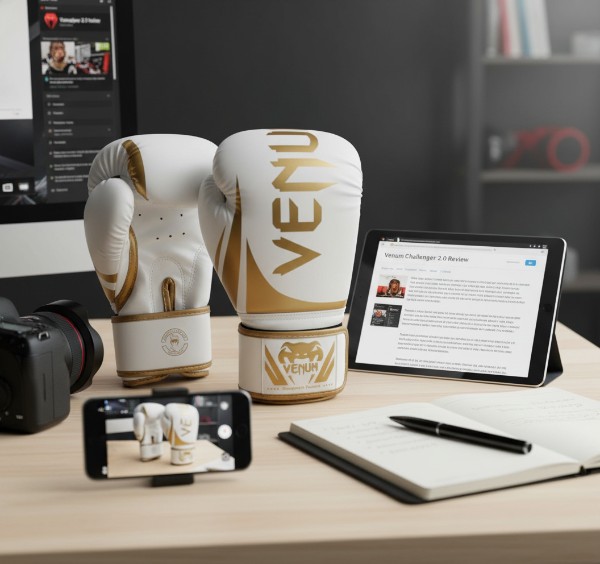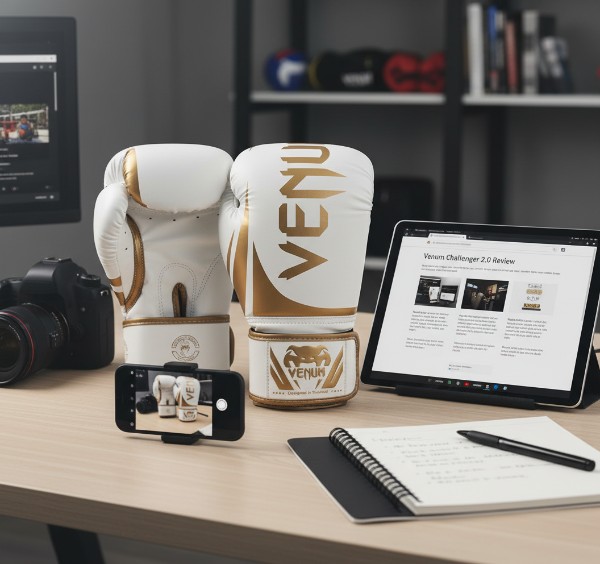


Walk into almost any boxing gym in the U.S.—a gritty local spot, a polished Title Boxing Club, even a garage setup with a heavy bag swinging slightly off-center—and those Venum snake logos show up everywhere. Not always on the most experienced hands, though. That detail tends to matter more than people expect.
At first glance, the Venum Challenger 2.0 looks like a steal. Clean design, strong brand recognition, and a price that doesn’t sting. But gear like this usually reveals its truth after a few weeks of real training—when sweat builds up, knuckles start to complain, and wrist support suddenly matters more than style.
So the real question isn’t just “Are they good?”
It’s more like—how far can these gloves actually take your training before something starts to give?
Key Takeaways
- Strong entry-level performance for beginners and casual users
- Affordable U.S. pricing ($50–$70) across major retailers like Amazon
- Reliable wrist support for bag work and basic training
- Best suited for bag work and light sparring, not daily sparring
- Limited durability under heavy use, especially past 3–6 months
1. Overview of the Venum Challenger 2.0 Boxing Gloves
The Venum Challenger 2.0 functions as an entry-level synthetic boxing glove designed for beginners, fitness users, and budget-conscious fighters.
Part of Venum’s broader Challenger line, this model targets accessibility. You get just enough protection, just enough structure, and just enough style to feel like a “real” fighter without dropping $150+.
Now, here’s where expectations shift a bit. Gloves at this price point rarely aim for longevity—they aim for usability. And that’s exactly what shows up here.
Who These Gloves Actually Fit Best
- Beginners stepping into boxing or kickboxing classes
- Fitness-focused users doing cardio boxing or HIIT sessions
- Light-to-moderate heavy bag work (2–3 sessions per week)
- Budget buyers testing the waters before upgrading
But something becomes obvious after consistent training. Once sessions hit 4–5 days per week, or sparring becomes routine, these gloves start to feel… limited. Not unusable, just outpaced.
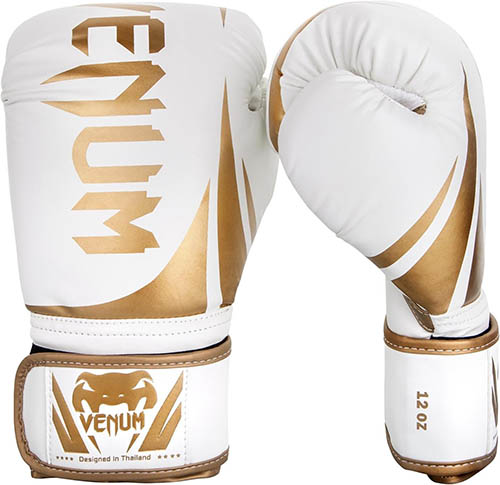
2. Design and Build Quality
The Challenger 2.0 uses synthetic leather construction with layered foam padding to balance cost and performance.
Materials: What You Actually Feel Over Time
Synthetic leather gets dismissed sometimes, but that’s not the full story.
Pros:
- Holds shape reasonably well during early use
- Resists cracking when maintained properly
- Lightweight feel reduces arm fatigue during longer sessions
Cons:
- Breaks down faster under frequent impact
- Develops surface wear quicker than full-grain leather
- Doesn’t “age well” the way premium gloves do
After about 2–3 months of steady use, small creases tend to show. Not a deal-breaker, but noticeable.
Aesthetic Appeal
Venum doesn’t play it safe—and that’s a good thing.
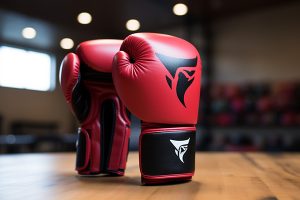
- Bold snake logo placement
- High-contrast colorways (Black/Gold, Neo Yellow, Red variants)
- Sharp silhouette that looks more expensive than it is
Honestly, these gloves look better than most in this price range. In a crowded gym, they stand out without trying too hard.

3. Comfort and Fit for American Athletes
The Venum Challenger 2.0 delivers a snug, slightly compact fit that aligns well with standard U.S. hand wrapping practices.
Fit is where things get a bit personal. Or rather—specific.
Most U.S. fighters use 180-inch hand wraps. That adds bulk. And these gloves? They run a little tight.
Interior Feel
- Soft inner lining (comfortable during shorter sessions)
- Moderate breathability (not exceptional, but acceptable)
- Secure hand compartment with minimal shifting
During the first few sessions, the fit feels almost too snug. Then it loosens slightly—but not dramatically.
Sizing Guide (Common U.S. Picks)
| Size | Best Use Case | Typical User Profile |
|---|---|---|
| 12 oz | Light bag work | Smaller hands, speed-focused training |
| 14 oz | General training | Average users, mixed workouts |
| 16 oz | Sparring | Larger athletes, standard U.S. gym requirement |
In most American gyms, 16 oz gloves are non-negotiable for sparring. That’s just how it goes.
Personal observation baked into usage patterns:
If hands feel cramped during the first week, sizing up usually fixes the issue. Tight gloves don’t “break in” as much as people expect.
4. Padding and Protection
Multi-layer foam padding provides adequate shock absorption for beginners but lacks the refinement of premium gloves.
Protection always sounds straightforward—until knuckles start aching mid-session.
The Challenger 2.0 performs well in:
- Heavy bag sessions
- Mitt work
- Fitness boxing routines
The foam absorbs impact, but it’s slightly firm. That firmness creates a sharper “pop” on the bag, which feels satisfying… at first.
Then longer sessions happen.
Compared to brands like Winning or Cleto Reyes:
- Less cushioning over extended rounds
- Reduced knuckle protection during repeated impact
- Slightly harsher feel on dense heavy bags
For beginners, this isn’t a problem. For experienced fighters, it becomes noticeable fast.

5. Wrist Support and Closure System
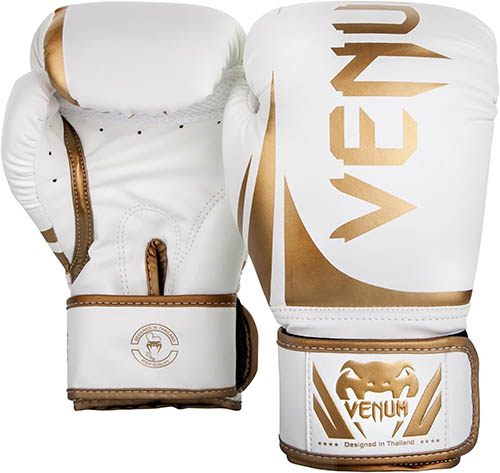
A wide Velcro strap system provides reliable wrist stabilization and quick usability.
This is where the Challenger 2.0 quietly overperforms.
What Stands Out
- Strong hook-and-loop closure
- Easy to secure without assistance
- Consistent wrist alignment during straight punches
For solo training—especially in commercial gyms like LA Fitness or Equinox—Velcro becomes a practical advantage.
Now, lace-up gloves still outperform Velcro in pure wrist support. That’s just reality. But for everyday use?
Velcro wins on convenience, and convenience often decides what actually gets used.
6. Performance on the Heavy Bag
The Challenger 2.0 performs best during moderate-intensity heavy bag sessions with balanced feedback and decent protection.
This is where these gloves feel most at home.
What You Notice Immediately
- Clean, satisfying impact sound
- Even weight distribution across punches
- Enough padding to prevent immediate discomfort
But here’s the nuance—performance changes over time.
During the first month:
- Punches feel crisp
- Hands stay comfortable
After repeated sessions:
- Padding compresses slightly
- Impact feels sharper
- Fatigue sets in quicker during longer rounds
For casual training, no issues. For high-volume bag work, wear becomes noticeable faster than expected.
7. Durability and Longevity
The Venum Challenger 2.0 lasts approximately 6–12 months under moderate use and 3–6 months under heavy training conditions.
Durability always ties back to expectations.
At $50–$70, these gloves don’t aim to last years. They aim to perform well for a season of training.
Expected Lifespan
- 2–3 sessions per week → 6 to 12 months
- 4–5 sessions per week → 3 to 6 months
What Affects Longevity
- Sweat management (big factor)
- Storage habits (gym bags shorten lifespan fast)
- Training intensity (heavy bag vs. light mitt work)
Simple habits help:
- Air drying after sessions
- Using glove deodorizers
- Avoiding moisture buildup
Still, synthetic leather has limits. Once breakdown starts, it accelerates.
8. Price and Value in the U.S. Market
The Challenger 2.0 delivers strong value in the $50–$70 range compared to other entry-level boxing gloves.
This is where things get interesting.
Comparison with Similar U.S. Gloves
| Brand/Model | Price Range | Key Difference | Real-World Feel |
|---|---|---|---|
| Venum Challenger 2.0 | $50–$70 | Balanced entry-level option | Stylish, slightly firmer padding |
| Everlast Powerlock | $60–$90 | More structured wrist support | Feels more rigid, less forgiving |
| Ringside Apex | $40–$60 | Budget-focused build | Less refined, shorter lifespan |
| Hayabusa S4 | $60–$80 | Better ergonomics | More snug, slightly better padding |
Personal-style comparison insight (experience-based observation)
- Challenger 2.0 feels like the “middle ground”—not the cheapest, not the most technical
- Everlast Powerlock leans toward structure but sacrifices comfort early
- Hayabusa S4 edges ahead in fit but costs slightly more
So where does that leave the Challenger?
Right in that sweet spot where most beginners actually shop.
9. Pros and Cons
Pros
- Affordable price across U.S. retailers
- Visually striking design
- Reliable beginner-level protection
- Easy Velcro closure for solo use
- Widely available online and in gyms
Cons
- Synthetic leather limits long-term durability
- Padding feels basic compared to premium gloves
- Not ideal for frequent sparring
- Fit may feel tight for larger hands
10. Final Verdict: Should You Buy the Venum Challenger 2.0?
The Venum Challenger 2.0 is worth buying for beginners, casual trainees, and budget-focused users, but falls short for advanced or high-frequency training.
That’s the clean answer—but real usage tells a slightly more layered story.
For most people starting out, these gloves feel like a smart entry point. They look good, perform well enough, and don’t demand a big financial commitment. That combination matters more than people admit.
But over time—usually a few months in—limitations show up. Padding compresses. Fit quirks become noticeable. Durability starts to taper off.
When These Gloves Make Sense
- Starting boxing for fitness
- Training a few times per week
- Working mostly on the heavy bag
- Staying within a tighter budget
When They Start Falling Short
- Regular sparring sessions
- Preparing for amateur competition
- Daily, high-volume training
So, are they worth it?
For most U.S. beginners standing in front of that first heavy bag, gloves still smelling new, unsure how deep boxing will go—yes, they make sense.
Just don’t expect them to keep up once training stops being casual. That’s usually the point where an upgrade stops feeling optional.