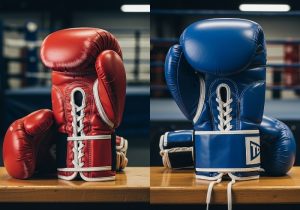


At first glance, glove weight sounds like a sizing issue. It isn’t. What actually changes is padding, density, and protection. That distinction matters more than most people expect.
The average weight of official boxing gloves ranges from 8 oz to 16 oz, with 8–10 oz used in professional fights, 10–12 oz in amateur bouts, and 14–16 oz in training and sparring.
That range defines how boxing operates across gyms, amateur circuits, and high-stakes title fights.
1. What Does “Official Boxing Glove Weight” Mean?
Glove weight refers to total glove mass in ounces (oz), including padding, not hand size or glove dimensions.
Here’s where confusion usually creeps in. You might assume a 16 oz glove looks bigger because the hand compartment is larger. In reality, the hand space changes only slightly. The real difference sits in the padding wrapped around the knuckles.
In practice, that means:
- A 16 oz glove cushions impact more
- An 8 oz glove transfers force more directly
Regulation plays a big role here. In the United States, several governing bodies define what counts as “official”:
- USA Boxing
- World Boxing Association (WBA)
- World Boxing Council (WBC)
- Nevada State Athletic Commission
Each organization adjusts glove requirements depending on weight class and competition level. So the same fighter might use different gloves moving from amateur to professional ranks. That shift feels noticeable—almost like switching from running shoes to track spikes.
2. What Is the Average Weight of Official Boxing Gloves?
Official glove weights in U.S. boxing typically fall into three ranges: 8–10 oz (professional), 10–12 oz (amateur), and 14–16 oz (training).
That sounds clean on paper. In reality, it feels more layered.
Professional Boxing Gloves
In professional fights, glove weight gets stripped down to the essentials.
- 8 oz gloves: used in lighter divisions (e.g., flyweight, bantamweight)
- 10 oz gloves: used in heavier divisions (e.g., welterweight and above)
These gloves prioritize speed and impact. Less padding means punches land sharper. You’ll notice it especially in televised fights—those quick combinations carry a different kind of snap.
Organizations like the IBF, WBC, and WBO follow similar standards. Even across different promotions, this consistency holds.
Amateur Boxing Gloves
Amateur boxing shifts the balance toward safety.
- 10 oz gloves: lighter amateur divisions
- 12 oz gloves: heavier amateur divisions
Under USA Boxing rules, padding increases to reduce cumulative damage. Scoring also emphasizes clean hits rather than raw power, so glove design supports visibility and control.
Olympic-style boxing follows this same logic. Cleaner punches, clearer scoring, less long-term wear.
Training and Sparring Gloves
Now, this is where most people spend their time.
- 14 oz gloves: general training
- 16 oz gloves: sparring
Heavier gloves slow punches slightly. That’s not a drawback—it’s part of the process. Over time, those extra ounces build endurance in shoulders and arms. Then, when lighter gloves come on, everything feels faster.
That contrast… it’s noticeable.
3. Why Boxing Glove Weight Matters
Glove weight influences four things directly:
- Hand protection
- Punch speed
- Endurance
- Impact force
Heavier gloves increase padding and reduce impact force, while lighter gloves increase speed and punch sharpness.
But that’s only part of the story.
In actual training, heavier gloves fatigue the shoulders faster. After a few rounds, punches lose snap—not because of technique, but because of accumulated weight. That fatigue forces cleaner mechanics. Sloppy punches just don’t hold up.
Lighter gloves do the opposite. They reward speed but expose mistakes. Poor defense shows up quickly when padding drops.
There’s also a trade-off most beginners don’t expect: heavier gloves protect hands better, but they don’t eliminate injury risk. Repeated impact still adds up, just in a different way.

4. Official Boxing Glove Weights by Competition Level
Professional Boxing (United States)
State athletic commissions regulate glove weight.
- 8 oz: lighter weight classes
- 10 oz: middleweight and above
For example, the Nevada State Athletic Commission enforces these standards in major Las Vegas fights. Consistency matters here—fighters prepare months in advance knowing exactly what glove weight they’ll use.
Amateur Boxing (USA Boxing)
USA Boxing sets clear divisions:
- 10 oz gloves: lower weight classes
- 12 oz gloves: higher weight classes
This structure prioritizes safety while maintaining competitive fairness.
Youth & Junior Divisions
Younger fighters use:
- 10 oz gloves
- Additional padding requirements
Safety becomes the dominant factor. Reduced force, stricter supervision, and controlled environments define youth boxing in the U.S.
5. Training Gloves vs Official Fight Gloves
Training gloves feel different for a reason.
Training gloves (14–16 oz) contain more padding and distribute impact more evenly than fight gloves (8–10 oz).
In everyday gym settings, you’ll notice patterns:
- 14 oz gloves for bag work and mitt drills
- 16 oz gloves for sparring
The added weight builds durability. Over time, punches become more efficient because wasted motion costs more energy.
Popular U.S. brands include:
- Everlast
- Cleto Reyes
- Winning
- TITLE Boxing
Each brand distributes weight differently. For example, some gloves feel “front-heavy,” pushing weight toward the knuckles, while others balance it across the hand. That subtle difference changes timing more than expected.
And yes, switching brands can throw off rhythm for a session or two.
6. How Weight Classes Affect Glove Size
Glove weight aligns closely with fighter weight class.
- Flyweight, bantamweight: typically 8 oz gloves
- Welterweight and above: typically 10 oz gloves
This alignment keeps competition balanced. Smaller fighters generate less absolute force, so lighter gloves maintain speed without excessive padding. Larger fighters produce more force, so slightly heavier gloves reduce extreme impact differences.
Major organizations like the WBO and WBC enforce these standards consistently.
There’s an interesting side effect here. Fighters moving up in weight classes don’t just face bigger opponents—they also adjust to slightly heavier gloves. That combination changes timing, distance, and even defensive habits.
7. Ounces vs Pounds: Understanding the Measurement
Boxing gloves are measured in ounces (oz), where 16 oz equals 1 pound.
Quick breakdown:
| Glove Weight | Equivalent | Typical Use |
|---|---|---|
| 8 oz | 0.5 lb | Professional fights (light divisions) |
| 10 oz | 0.625 lb | Professional fights (heavier divisions) |
| 12 oz | 0.75 lb | Amateur competition |
| 14 oz | 0.875 lb | Training |
| 16 oz | 1 lb | Sparring |
Retail pricing in the U.S. usually ranges from $40 to $300, depending on materials like synthetic leather or full-grain leather.
And here’s something that tends to surprise people: a 2 oz difference sounds small, but after 6–8 rounds, it feels significant. Those extra ounces accumulate with every punch.
8. How to Choose the Right Glove Weight in the U.S.
Choosing glove weight depends on a mix of body weight, training goals, and gym culture.
General recommendations look like this:
| Body Weight | Recommended Training Gloves |
|---|---|
| Under 150 lbs | 14 oz |
| 150–200 lbs | 16 oz |
| Over 200 lbs | 16 oz or heavier |
But in practice, things vary.
Some gyms require 16 oz gloves for everyone during sparring, regardless of size. Others allow lighter gloves for smaller fighters. It depends on how the gym prioritizes safety versus realism.
A few factors shape the decision:
- Training type (bag work vs sparring)
- Hand durability (some hands bruise easier)
- Coach or gym rules
- Competition goals
Checking with a coach or sanctioning body before competition avoids mismatches. Gloves must meet specific standards, and showing up with the wrong pair isn’t just inconvenient—it can prevent participation.
9. Frequently Asked Questions About Official Boxing Glove Weight
Are heavier gloves safer?
Yes, heavier gloves provide more padding and reduce impact force.
That said, safety isn’t absolute. Repeated impacts still carry risk, just spread differently across sessions.
Do professionals ever use 12 oz gloves?
No, 12 oz gloves are rarely used in professional championship bouts.
Most sanctioned fights stick to 8 oz or 10 oz for consistency and performance.
Can training gloves be used in official fights?
No, official competitions require approved gloves that meet sanctioning standards.
These gloves undergo regulation checks for weight, padding distribution, and construction.
Conclusion
Glove weight shapes boxing more than it first appears. It influences speed, power, endurance, and even long-term durability in the sport. From 8 oz fight gloves under bright arena lights to 16 oz sparring gloves in a local gym, each weight serves a specific purpose.
Understanding that range—8 oz to 16 oz—creates clarity. It explains why punches feel different across settings, why training demands heavier gear, and why competition rules stay strict.
And honestly, once glove weight starts to make sense, a lot of boxing starts to make more sense with it.