
Walk into almost any serious boxing gym in the United States and one pattern appears immediately: the jab gets more attention than any other punch.
That’s because the jab is the highest-volume punch in elite boxing. According to CompuBox punch-tracking data from countless championship fights, lead-hand punches consistently account for a significant percentage of total punch output. Fighters such as Muhammad Ali and Floyd Mayweather Jr. built entire systems around controlling opponents with the lead hand before landing anything heavier.
The jab does far more than score points.
It manages range control, dictates tempo setting, manipulates ring geography, and elevates fight IQ. A well-timed jab can stop forward pressure, create openings for combinations, and force opponents into predictable reactions.
Modern American combat sports rely heavily on this principle. In boxing, the jab establishes dominance. In MMA, it disrupts entries and takedown attempts. In self-defense situations, it creates distance and buys valuable time.
For many fighters, mastering the jab is the fastest route to becoming difficult to beat.
The Biomechanics of a Perfect Jab
A perfect jab begins from the ground and travels through the body via the kinetic chain.
USA Boxing coaches and Olympic boxing programs emphasize that punching power is not created exclusively by the arm. Instead, force moves sequentially from the feet, through the hips and torso, and finally into the fist.
Ground Reaction Force and Foot Drive
The lead foot initiates the movement.
As the foot presses into the canvas, ground reaction force travels upward through the body. This process creates the foundation for efficient force transfer and linear acceleration.
Fast jabs rarely look powerful at first glance. Yet the speed generated through proper mechanics creates substantial impact.
Hip Rotation and Torque Generation
Although the jab uses less rotation than a cross, subtle hip engagement generates valuable torque.
The movement resembles cracking a whip. Small motions build upon one another until maximum speed arrives at the end of the chain.
Shoulder Snap and Scapular Protraction
Elite boxers extend the shoulder forward during impact.
This action, known as scapular protraction, adds several inches of reach while increasing penetration. Combined with rapid neuromuscular activation, the punch arrives faster and from farther away.
Proper Alignment
The ideal alignment follows a straight path:
Ankle → Knee → Hip → Shoulder → Fist
Any break in that chain leaks energy.
The National Strength and Conditioning Association frequently highlights alignment efficiency as a critical factor in athletic force production.
Why Minimal Telegraphing Matters
A technically sound jab leaves almost no visual clues.
No exaggerated shoulder twitch. No loading motion. No obvious weight shift.
The less information an opponent receives, the less time exists to react.
Stance and Guard: The Foundation of the Perfect Jab
Before learning advanced boxing jab technique, the platform underneath the punch needs attention.
Orthodox vs. Southpaw
An orthodox stance places the left foot forward for right-handed fighters.
A southpaw stance places the right foot forward for left-handed fighters.
Both stances can produce elite jabs. The difference lies in angle creation and tactical application.
Weight Distribution
Most fighters perform best between a 50/50 and 60/40 weight distribution.
A balanced stance improves:
- Base stability
- Defensive readiness
- Mobility
- Punch recovery
Excessive weight on the front foot often reduces retraction speed.
Chin Position and Shoulder Shield
The chin remains tucked behind the lead shoulder.
As the jab extends, the shoulder naturally rises and acts as a protective shield.
This small detail dramatically reduces counter opportunities.
Rear Hand Guard Integrity
One of the most common mistakes in boxing fundamentals is allowing the rear hand to drift away from the face.
A disciplined rear hand protects against overhands, hooks, and straight counters.
Amateur vs. Professional Variations
At events such as the Golden Gloves and USA Boxing Nationals, fighters often employ higher guards and greater punch volume.
Professional fighters training in major Las Vegas fight camps frequently adopt slightly lower, more relaxed positions to improve vision, rhythm, and counterpunching opportunities.
Step-by-Step Execution: How to Throw a Perfect Jab
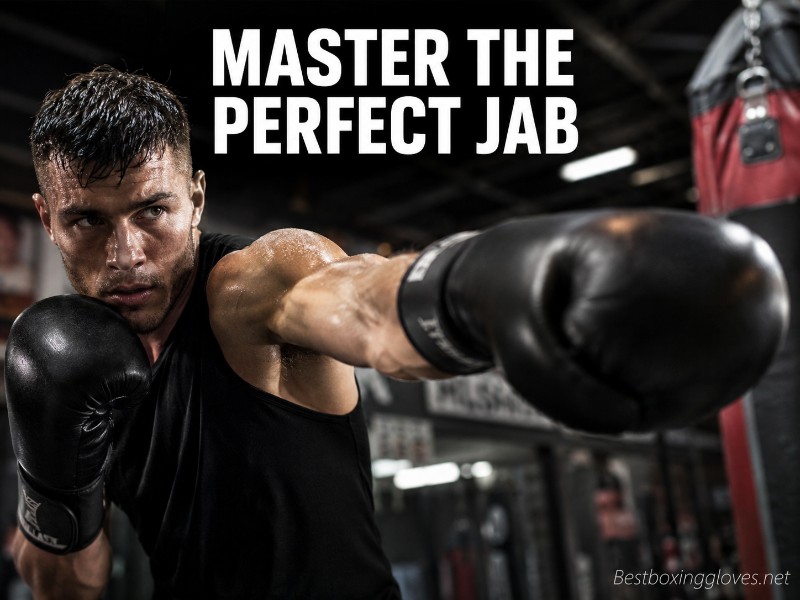
The perfect jab extends directly from the guard, lands with full alignment, and returns immediately to position.
Step 1: Initiate a Small Lead-Foot Movement
A subtle micro-step helps close distance.
The step remains short. Large steps disrupt balance and slow recovery.
Step 2: Extend the Lead Hand
The arm travels in a straight line.
At the same moment, the lead shoulder projects forward to maximize extension.
Step 3: Align the Wrist
Proper wrist positioning protects the hand and transfers force efficiently.
The knuckles, wrist, and forearm stay connected on one line.
Step 4: Rotate the Fist
Most professional boxing gyms teach slight fist rotation during extension.
This rotation improves impact mechanics and helps the punch slip through defensive openings.
Step 5: Exhale Sharply
A short breath release improves breath control and body tension.
Many elite fighters synchronize impact timing with a brief exhale.
Step 6: Retract Immediately
The punch returns to guard as quickly as it left.
Great jabs are often defined by retraction speed, not merely extension speed.
Muhammad Ali demonstrated this beautifully. Floyd Mayweather Jr. refined it into an art form.
CompuBox data repeatedly showed how elite fighters accumulated points through rapid, repeatable lead-hand accuracy rather than isolated power shots.
Speed vs. Power: Optimizing the Jab for Different Fight Goals
Not every jab serves the same purpose.
The Measuring Jab
This version gathers information.
It identifies distance, reaction patterns, and defensive habits.
The goal isn’t damage. The goal is data.
The Power Jab
The power jab includes greater body commitment and stronger force generation.
It disrupts balance, creates visible damage, and slows aggressive opponents.
The Up-Jab
Popular against taller opponents.
The punch travels upward and often slips beneath the opponent’s line of sight.
The Body Jab
A body jab attacks the midsection while changing levels.
Over multiple rounds, this contributes to fatigue accumulation and reduces mobility.
Setting Up Bigger Punches
A jab often functions as the key that unlocks everything else.
Common sequences include:
- Jab-cross
- Jab-overhand
- Double jab-cross
- Jab-hook
Amateur vs. Professional Application
| Element | Amateur Style | Professional Style | Practical Observation |
|---|---|---|---|
| Punch Volume | Higher | Moderate to high | Amateur scoring rewards visible activity |
| Power Emphasis | Lower | Higher | Professionals invest more in damage creation |
| Distance Management | Constant movement | Strategic positioning | Ring control becomes more important over 12 rounds |
| Jab Purpose | Score quickly | Score, damage, and set traps | Professional jabs carry more tactical layers |
| Tempo Control | Fast exchanges | Controlled pacing | Championship boxing often rewards patience |
Events governed by the Olympic boxing scoring system often prioritize clean scoring touches, while professional bouts at venues such as Madison Square Garden reward cumulative damage and ring control.
Defensive Integration: Jab Without Getting Countered
A jab becomes dangerous only when combined with defense.
Keep the Head Off the Center Line
A slight head movement reduces counter opportunities.
Even a few inches can change the outcome of an exchange.
Use the Shoulder Roll
The Philly shell defense, made famous by Floyd Mayweather Jr., integrates naturally with a jab.
The lead shoulder helps protect the chin during extension and recovery.
Slip After the Jab
A simple jab-slip sequence forces opponents to miss while creating countering opportunities.
This movement narrows the opponent’s counter window dramatically.
Jab to Angle Pivot
Many fighters jab and remain stationary.
Elite fighters jab and pivot.
The angle change creates fresh attacking lanes while maintaining defensive posture.
Common American Gym Mistakes
In many New York boxing gyms and Golden Gloves programs, coaches repeatedly correct the same errors:
- Standing tall after punching
- Leaving the head centered
- Pausing after extension
- Failing to move the feet
Small defensive lapses become expensive against skilled opposition.
Conditioning for an Elite-Level Jab
A dominant jab requires specialized conditioning.
Shoulder Endurance Circuits
High-volume punching taxes the shoulders quickly.
Three-minute rounds of continuous jab variations improve muscular endurance and punching consistency.
Resistance Band Shadowboxing
Resistance bands increase activation throughout the kinetic chain.
The exercise develops acceleration while reinforcing proper mechanics.
Speed Bag vs. Double-End Bag
The speed bag improves rhythm and endurance.
The double-end bag develops timing, accuracy, and strike precision.
For jab development, the double-end bag often produces greater direct carryover.
Plyometric Push-Ups
Explosive push-ups enhance upper-body power output.
The exercise targets fast force production similar to punching actions.
U.S.-Style Strength and Conditioning
Many programs influenced by the National Strength and Conditioning Association combine:
- Interval training
- Medicine ball throws
- Sprint work
- Explosive lifting
- Recovery cycles
Organizations such as USA Boxing, CrossFit affiliates, Everlast training centers, and Title Boxing Club locations frequently integrate these methods.
Tactical Use of the Jab in American Fight Strategy
The jab evolves throughout a fight.
Opening Rounds: Information Gathering
Early rounds focus on observation.
The jab measures reactions, footwork tendencies, and defensive habits.
This stage builds the foundation for later adjustments.
Mid-Fight: Tactical Adaptation
Once patterns emerge, the jab becomes more targeted.
It disrupts rhythm, creates hesitation, and supports strategic combinations.
This is where ring generalship becomes visible.
Championship Rounds: Control and Dominance
Late rounds often reward the fighter who controls pace.
A disciplined jab conserves energy while maintaining scoring opportunities.
At major venues from Madison Square Garden to Las Vegas fight nights, championship fighters repeatedly use the jab to manage risk while accumulating points.
Psychological Pressure
A consistent jab affects more than physical performance.
It creates frustration.
It interrupts plans.
It forces hesitation.
This form of mental warfare often influences decision-making under pressure.
Common Advanced Mistakes and Technical Corrections
Even experienced fighters make technical mistakes.
Overcommitting Weight Forward
Excessive forward lean reduces mobility and increases counter exposure.
A balanced center of gravity improves recovery.
Dropping the Rear Hand
The rear hand protects the head during extension.
When it drops, openings appear immediately.
Telegraphing With a Shoulder Twitch
Many fighters unknowingly reveal intent before punching.
Opponents read these telegraphing cues and react early.
Failing to Retract
Some punches land effectively but return slowly.
The delay creates defensive vulnerability.
Poor Wrist Alignment
Improper joint alignment increases injury risk.
Orthopedic sports medicine specialists regularly identify wrist injuries caused by repeated impact with poor structure.
USA Boxing coaches often prioritize alignment drills before increasing punching intensity.
Equipment and Training Tools for Jab Mastery
The right equipment accelerates improvement.
Heavy Bag
The heavy bag develops:
- Power
- Endurance
- Impact tolerance
Double-End Bag
The double-end bag develops:
- Strike accuracy
- Timing
- Reflexes
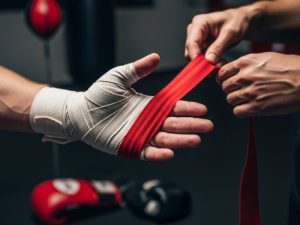
Hand Wraps and Gloves
Quality hand wraps and 16 oz gloves improve impact absorption and training longevity.
Popular options include products from Everlast and Century Martial Arts.
Reflex Balls
Reflex balls improve visual tracking and hand-eye coordination.
They’re particularly useful for home training.
Digital Punch Trackers
Modern trackers provide measurable data regarding:
- Punch count
- Speed
- Training frequency
Objective feedback often reveals patterns that aren’t obvious during workouts.
Typical U.S. Training Costs
| Resource | Approximate Cost (USD) |
|---|---|
| Boxing Gym Membership | $80–$250/month |
| Title Boxing Club Membership | $60–$200/month |
| Quality Gloves | $50–$250 |
| Double-End Bag | $30–$120 |
| Heavy Bag | $80–$400 |
| Digital Punch Tracker | $100–$400 |
Many products remain widely available through Amazon and major sporting goods retailers.
Conclusion
A perfect jab combines speed, power, precision, timing, and defensive awareness into a single weapon.
The best examples in American boxing history—from Muhammad Ali’s range management to Floyd Mayweather Jr.’s tactical control—demonstrate that the jab is far more than a setup punch. It’s a complete strategic system.
When proper jab form aligns with efficient biomechanics, disciplined guard positioning, intelligent conditioning, and advanced fight strategy, the lead hand becomes the engine behind everything else.
Master the jab, and distance becomes easier to control. Master the jab, and combinations arrive more naturally. Master the jab, and the entire fight begins to move at your pace rather than your opponent’s.