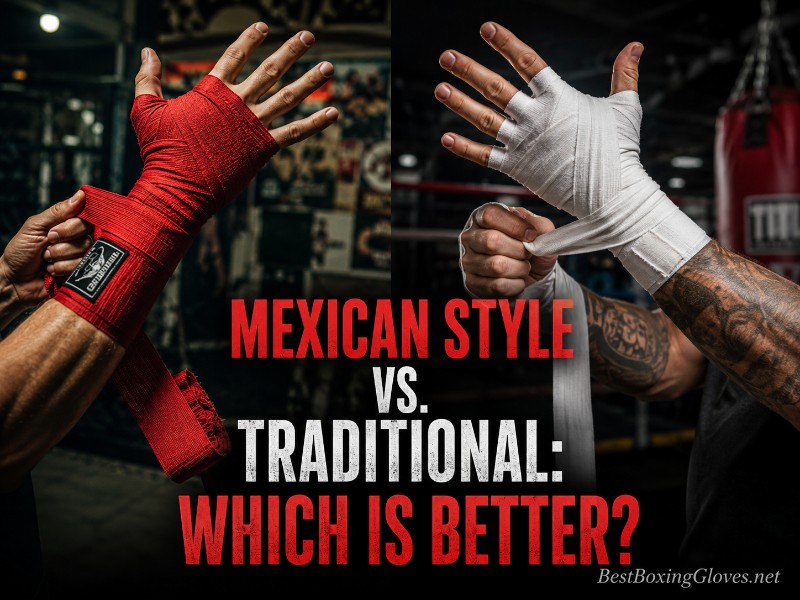

Walk into any boxing gym in the U.S. and you’ll see two types of fighters at the wrap station: those who swear by the snug, stretchy feel of Mexican style wraps, and those who won’t touch anything but good old cotton. Both camps have valid reasons. But if you’re newer to training — or you’ve been wrapping without really thinking about it — choosing the right hand wrap makes more of a difference than most people realize.
This guide breaks down the real differences between Mexican style and traditional cotton hand wraps, so you can pick the one that actually fits how you train.
What Are Boxing Hand Wraps and Why Do They Matter?
Hand wraps aren’t just boxing tradition. They’re functional protection for some of the most vulnerable structures in your body.
The Main Functions of Hand Wraps
Your hands contain 27 bones, and when you throw a hard punch — especially on the heavy bag — those metacarpal bones absorb a sharp, concentrated force. Hand wraps distribute that force more evenly across the hand. They also stabilize the wrist joint, compress the knuckles, and keep the small bones from shifting on impact. Think of it like bracing a building before an earthquake. You’re reinforcing the structure before stress hits.
They also protect the tendons running across the back of the hand. Repetitive impact training is surprisingly hard on those tendons over time.
Common Training Injuries Hand Wraps Help Prevent
The injuries that show up most often from training without wraps (or with wraps applied poorly) include wrist sprains, boxer’s fractures along the fourth and fifth metacarpals, and chronic tendon inflammation. Heavy bag training is especially demanding — you’re throwing full-power shots hundreds of times in a session, and the cumulative load adds up fast.
What Are Mexican Style Hand Wraps?
Mexican style wraps are made from a blend of cotton and elastic material, which gives them a slight stretch. That stretch is the whole point — it lets the wrap conform to your hand as it opens and closes during training.
Key Features of Mexican Style Wraps
The elastic blend creates a compression fit that moves with your hand rather than against it. When you open your hand between combos, the wrap doesn’t pull or bunch. It just follows the shape of your hand naturally. Most Mexican style wraps are 180 inches long, which is the standard for adult hands.
Advantages of Mexican Style Wraps
The biggest advantage is comfort over long sessions. If you’re doing 45-minute pad rounds or extended sparring, you’ll notice the difference in how your hands feel at the end. The stretch also makes them more forgiving if you’re still learning to wrap — a slightly imperfect wrap still conforms reasonably well. Brands like Hayabusa, Rival Boxing, Ringside, and TITLE Boxing all make solid Mexican style options. Meister is another worth looking at for the price.
What Are Traditional Cotton Hand Wraps?
Traditional cotton wraps use a non-stretch woven fabric. There’s no elasticity — what you wrap is what you get.
Key Features of Cotton Hand Wraps
Cotton wraps are stiffer and more rigid by nature. They don’t compress or conform the way Mexican style wraps do. The wrap job matters more here: if you apply them well, you get firm, consistent support. If you apply them poorly, you’ll feel it by the second round.
Advantages of Traditional Cotton Wraps
The rigidity is actually the point for some fighters. Cotton wraps provide a more structured, locked-in feel that some experienced boxers prefer for the firm feedback during punching. They also tend to be more durable across dozens of wash cycles. Everlast, Ringside, TITLE Boxing, Sanabul, and Pro Impact are the names you’ll see most often in U.S. gyms.
Mexican Style vs. Traditional Cotton Hand Wraps: Key Differences
Here’s a direct comparison across the factors that actually matter in training:
| Feature | Mexican Style Wraps | Traditional Cotton Wraps |
|---|---|---|
| Material | Cotton-elastic blend | Pure cotton (non-stretch) |
| Flexibility | High — conforms to hand movement | Low — stays rigid throughout |
| Wrist Support | Moderate compression | Firm, structured stabilization |
| Knuckle Protection | Good, flexible cushioning | Firm, less give |
| Comfort (long sessions) | Excellent | Depends on wrap application |
| Durability | Good — may loosen over time | Very good — holds shape longer |
| Best For | Everyday training, sparring, fitness boxing | Heavy bag work, competition prep, max rigidity |
| Learning Curve | Lower — forgiving for beginners | Higher — technique-dependent |
Personal take: Mexican style wraps are the everyday training standard for most people. Cotton wraps shine when you specifically want that stiffer, more traditional feel.
Stretch and Flexibility
Mexican wraps move with your hand. When you grab the heavy bag, clinch during sparring, or open your hand for a catch, the elastic material adjusts without creating pressure points. Cotton wraps don’t flex, which means hand movement can cause bunching or hot spots during longer sessions.
Wrist and Knuckle Support
Cotton wraps tend to feel firmer at the wrist — there’s a specific, locked-in sensation that some fighters genuinely prefer. Mexican wraps offer compression without that rigid feeling. Neither is objectively better; it comes down to what your hands respond to.
Comfort During Long Training Sessions
After an hour of training, sweaty cotton wraps can feel stiff and heavy. Mexican style wraps stay lighter and more breathable for most people, largely because the elastic blend manages moisture differently. This matters more in extended sessions than quick workouts.
Durability and Maintenance
Both types are machine-washable. Cotton wraps generally hold their shape longer over repeated washing. Mexican wraps can lose some elasticity over time, though this varies by brand quality. Either way, letting wraps air-dry rather than throwing them in the dryer extends their lifespan noticeably.
Which Hand Wraps Are Better for Different Training Styles?
Heavy Bag Training
Both work fine for heavy bag work. That said, if you’re throwing power shots in high volume, the firmer feedback of cotton wraps appeals to a lot of traditional boxers. Mexican style wraps are perfectly fine here too — it’s mostly a preference call.
Sparring Sessions
Mexican style wraps are the clear choice for sparring. The comfort and flexibility matter more when you’re moving your hands constantly — catching punches, clinching, adjusting grip mid-round. You don’t want stiff, bunched-up wraps when you’re trying to stay relaxed and reactive.
Boxing Competitions
USA Boxing rules specify how wraps are applied for amateur competition, and most fighters use gauze-and-tape setups at actual bouts. For fight camp training leading up to competition, many fighters prefer cotton wraps to simulate that firm competition feel.
MMA and Muay Thai Training
MMA and Muay Thai involve constant transitions — grappling, clinching, switching between open-hand and closed-fist techniques. Mexican style wraps handle those transitions much better. The flexibility keeps your hands functional across all those positions.
How Beginners Should Choose Between Mexican and Cotton Wraps
When Mexican Style Wraps Make Sense
If you’re just starting out, Mexican style wraps are generally the more forgiving option. The stretch compensates for a less-than-perfect wrap job, and the comfort makes those early weeks easier on your hands. Fitness boxing classes and beginner boxing programs almost universally use them.
When Traditional Cotton Wraps Are a Better Choice
Some coaches specifically teach the wrap technique using cotton wraps because the non-stretch material forces you to wrap correctly from the start. If your gym has a structured beginner curriculum and your coach recommends cotton, trust that. The fundamentals built with stiffer wraps tend to carry over.
Top Hand Wrap Brands Popular in the United States
Best Mexican Style Wrap Brands
- Hayabusa — Premium quality, holds compression well over time
- Rival Boxing — Popular in serious training gyms, excellent build quality
- Ringside — Widely available, reliable mid-range option
- TITLE Boxing — Good variety, solid everyday training wrap
- Meister — Strong value option for newer fighters
Best Traditional Cotton Wrap Brands
- Everlast — The classic, widely available, consistent quality
- Ringside — Makes good cotton versions alongside their Mexican style line
- TITLE Boxing — Durable, trusted in U.S. gyms
- Sanabul — Affordable and surprisingly durable
- Pro Impact — Solid budget-friendly choice for beginners
Frequently Asked Questions About Boxing Hand Wraps
Can Beginners Use Mexican Style Hand Wraps?
Yes, and most coaches would say Mexican style wraps are actually easier for beginners to start with. The elastic material is forgiving of imperfect wrap technique, which is realistic for someone still learning the process.
Are Cotton Wraps Better for Wrist Support?
Cotton wraps offer a firmer, more rigid form of wrist support. Whether that’s “better” depends on what you’re looking for. Mexican wraps offer compression-based support that many fighters find equally effective. The difference is more about feel than measurable protection.
How Long Should Boxing Hand Wraps Be?
180 inches is the standard for most adult hands. That length gives you enough material to cover the wrist, knuckles, and thumb properly. Smaller hands or younger fighters sometimes use 120-inch wraps, but 180 is the go-to for serious training.
How Often Should Hand Wraps Be Washed?
Ideally after every session, or at minimum every two to three sessions. Wraps absorb sweat heavily, and bacteria builds up fast in gym environments. Leaving them damp and balled up in a bag between sessions is how you end up with wraps that smell permanently destroyed. Air-drying flat after washing helps them last.
Do Professional Fighters Use Mexican Style Wraps?
Most professional fighters use gauze and tape applied by their cutman during fights — that’s a different system entirely. But in training camp? The majority of professionals use Mexican style wraps for daily training because of the comfort advantage over long sessions. Cotton wraps appear more in fighters who specifically prefer the traditional feel.
Final Verdict: Mexican Style vs. Traditional Cotton Hand Wraps
For most people training in the U.S. today — whether that’s boxing, kickboxing, Muay Thai, or MMA — Mexican style wraps are the practical everyday choice. The stretch, compression, and comfort advantages add up across a week of serious training. They’re forgiving for beginners and comfortable enough for experienced fighters who prioritize feel during long sessions.
Traditional cotton wraps still have a place, particularly for fighters who want maximum rigidity, coaches who prefer teaching with non-stretch material, and anyone who specifically likes that firm, locked-in sensation during punching.
The honest answer is that both types protect your hands effectively when applied correctly. The difference comes down to how you want your hands to feel during training, and what your gym culture tends toward. Try both if you can — most wraps are inexpensive enough that having a pair of each on rotation isn’t a stretch