
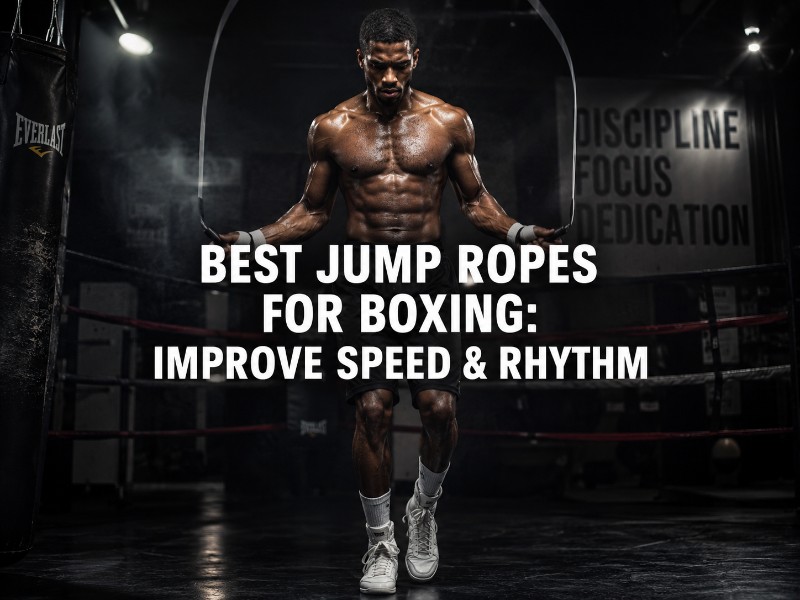

Walk into almost any boxing gym in the United States at 6 a.m. and the soundtrack stays the same. Leather gloves thudding against heavy bags. Old floorboards creaking. And somewhere in the background, the rapid snap of a boxing speed rope cutting through air.
That rhythm matters more than most beginners expect.
From USA Boxing amateurs preparing for Golden Gloves tournaments to professionals training through twelve-round camps, jump ropes for boxing remain one of the few tools that never disappear from a fighter’s routine. Muhammad Ali built legendary footwork partly through endless rope sessions. Floyd Mayweather still uses high-volume jump rope rounds for cardiovascular conditioning and timing. Even CrossFit athletes borrowed boxing rope drills because the conditioning transfer became impossible to ignore.
The wrong rope changes everything, though. Heavy handles slow rotational speed. Poor cable tension interrupts rhythm. Oversized ropes drag against the floor and punish footwork drills that rely on precision.
Most beginners buy the cheapest rope available at Walmart or Amazon, then wonder why double-unders feel awkward and timing never develops cleanly. In practice, the rope often becomes the limitation, not the athlete.
Quality boxing training ropes usually land between $15 and $80 USD depending on materials, bearing systems, and adjustment mechanisms. That gap sounds dramatic until cheap ropes start kinking after two weeks on concrete gym floors.
And honestly, rope selection gets underestimated because jump rope training looks simple from a distance. Then somebody attempts three uninterrupted 3-minute rounds with proper cadence control and suddenly the entire body feels exposed.
What Is a Speed Rope in Boxing?
A boxing speed rope is a lightweight jump rope designed for fast rotations, quick wrist movement, and efficient footwork training. Unlike weighted fitness ropes, a boxing speed rope prioritizes rotation efficiency over resistance.
The difference shows up immediately during high-intensity intervals.
Traditional fitness ropes often use thick PVC cords with slow turnover. A professional jump rope for boxing usually features a thin coated steel cable or streamlined nylon cable paired with ball-bearing handles. That combination creates high RPM rotation without forcing excessive shoulder movement.
Rogue Fitness, WOD Nation, and Title Boxing all build ropes around the same core idea: less drag, smoother spin, faster recovery between jumps.
Here’s where beginners get confused. Lightweight doesn’t mean flimsy.
A fast spinning jump rope relies on cable thickness, swivel mechanism quality, and balanced handle weight more than raw mass. Cheap ropes wobble during acceleration because the bearings lack stability. Better ropes stay tight during rotational speed changes, especially during lateral mobility drills.
Speed Rope vs Regular Rope
| Feature | Boxing Speed Rope | Regular Fitness Rope |
|---|---|---|
| Cable Type | Thin steel or nylon cable | Thick PVC |
| Rotation Speed | Very high | Moderate |
| Handle System | Ball bearing swivel | Fixed or basic bushing |
| Training Focus | Speed, rhythm, footwork | General cardio |
| Common Users | Boxers, HIIT athletes | Casual gym users |
The interesting part? Many beginners actually perform better with slightly slower PVC ropes during the first month. Extremely fast cables expose poor timing immediately. That learning curve frustrates people faster than expected.
Benefits of Jump Ropes for Boxing Training
Boxing conditioning rope sessions improve endurance, rhythm, coordination, and movement economy at the same time. Few training tools hit that many systems simultaneously.
American boxing gyms rely heavily on jump rope rounds because the transfer into sparring feels direct. Three-minute rope intervals mimic fight pacing surprisingly well. Heart rate spikes. Recovery windows shrink. Foot placement becomes automatic under fatigue.
That matters during later rounds.
According to the American Council on Exercise, jump rope training can burn roughly 10–16 calories per minute depending on intensity and athlete size [1]. During Olympic boxing camps and USA Boxing Nationals preparation, coaches often combine jump rope intervals with HIIT circuits to raise anaerobic threshold without excessive joint impact.
Several benefits show up consistently:
- Faster hand-eye coordination during combination punching
- Improved lateral mobility for defensive movement
- Better plyometric conditioning during explosive exchanges
- Increased rhythm awareness during counterpunching
- Reduced stiffness during warmups
A strange thing happens after several months of consistent rope work. Fighters stop looking down at the floor. The movement shifts into muscle memory. That timing eventually carries into ring movement and stance transitions.
Not every benefit appears immediately, though.
Most athletes expect dramatic cardio gains first. Instead, calf fatigue usually arrives before cardiovascular conditioning catches up. Early sessions often feel awkward because jump cadence depends heavily on wrist control rather than jumping height.
And that misconception wrecks progress for plenty of beginners.
Types of Jump Ropes Used in American Boxing Gyms
American boxing gyms rarely rely on one rope style. Different training goals usually demand different rope designs.
PVC Ropes
PVC ropes dominate beginner classes because they rotate slower and tolerate mistakes better. Everlast sells several affordable models under $20 USD that fit basic boxing cardio training.
The extra rope diameter creates more audible feedback too. Fighters hear the rope contact timing more clearly.
Steel Cable Speed Ropes
Steel cable ropes dominate advanced boxing gyms. RX Smart Gear and Crossrope models use coated steel cable systems for maximum speed consistency and durability rating.
These ropes excel during double-unders and rapid footwork drills.
Beaded Ropes
Beaded ropes look old-school because they are. Yet many amateur coaches still prefer them for rhythm development. The weight distribution feels predictable, especially during beginner classes.
Weighted Ropes
Weighted ropes build shoulder endurance and grip strength, but they don’t replicate true boxing speed. Problems usually appear when athletes attempt fast combinations immediately after heavy rope sessions. Wrist fatigue slows reaction timing.
Adjustable Systems
Adjustable cable systems remain the smartest option for most people because rope length needs change as technique improves.
| Rope Type | Best For | Typical Price |
|---|---|---|
| PVC Rope | Beginners | $10–$20 |
| Steel Cable Rope | Advanced speed work | $25–$80 |
| Beaded Rope | Rhythm drills | $15–$30 |
| Weighted Rope | Conditioning circuits | $30–$60 |
A surprising number of fighters keep two ropes in gym bags. One for speed. Another for conditioning volume.
How to Choose the Perfect Speed Rope for Your Skill Level
The best speed rope for boxing depends less on brand hype and more on training style.
Beginners usually benefit from moderate-speed PVC or lightly coated cable ropes with adjustable length systems. Extremely thin cables punish inconsistent timing and create frustration quickly.
Intermediate athletes often shift toward aluminum handles with better handle knurling and smoother bearings. Wrist control improves enough to benefit from faster rotation efficiency.
Advanced fighters care about tiny details:
- Grip texture during sweaty sessions
- Cable slack during directional changes
- Handle balance during high RPM bursts
- Bearing durability on concrete surfaces
Beginner Budget Range
Most beginner-friendly boxing ropes sit between $15 and $30 USD at Academy Sports + Outdoors, Walmart, or Title Boxing.
Intermediate Budget Range
Expect roughly $30–$50 USD for stronger bearings, coated steel cables, and improved grip materials.
Advanced Budget Range
Professional jump rope systems from Rogue Fitness or RX Smart Gear regularly exceed $70 USD because replacement cable systems and premium bearings increase long-term durability.
Training frequency changes the equation too. Somebody skipping rope twice weekly probably won’t notice premium bearing differences immediately. Fighters training six days weekly definitely will.
Speed Rope Length and Sizing Guide (U.S. Height Standards)
Improper rope sizing ruins efficiency faster than bad footwork.
Most boxers use the step-on method. Stand on the midpoint of the rope and pull handles upward. For standard boxing work, handles usually align near the armpits.
Here’s the common boxing rope size chart:
| Height | Recommended Rope Length |
|---|---|
| Under 5’2″ | 7 feet |
| 5’2″–5’6″ | 8 feet |
| 5’7″–6’0″ | 9 feet |
| Over 6’0″ | 10 feet |
CrossFit athletes sometimes prefer slightly shorter ropes for double-under speed, but boxing footwork drills usually benefit from a little more clearance height.
Common sizing mistakes happen constantly:
- Excess rope dragging behind heels
- Handles sitting above shoulders
- Overcompensating with exaggerated jumps
- Poor floor contact timing
A rope that’s too long creates sluggish wrist rotation arcs. Too short, and the rope clips shoes during lateral movement.
That balance feels annoyingly specific at first.
Handle Design and Bearing Systems: What Affects Speed
Handle mechanics separate premium boxing ropes from cheap department-store models.
Ball bearing systems reduce rotational friction dramatically compared to basic bushings. During extended sessions, smoother swivel joints preserve rhythm and reduce energy loss.
Aluminum handles generally outperform plastic designs because torque efficiency improves under fast transitions. Still, heavier handles can fatigue smaller wrists during long conditioning circuits.
Grip stability matters more than expected too.
Foam grips feel comfortable initially but absorb sweat over time. Knurled aluminum or textured PVC grips usually maintain better control during intense HIIT rounds.
Key Features Worth Paying Attention To
- Ball bearing swivel mechanism
- Corrosion resistance for steel components
- Anti-slip grip texture
- Secure cable attachment system
- Replaceable coated steel cable
Maintenance gets ignored constantly. Dust buildup inside bearings quietly destroys rotation speed over time. Even expensive ropes eventually lose smoothness without occasional cleaning.
Common Mistakes When Buying a Boxing Speed Rope
Most boxing rope buying mistakes start with marketing.
Cheap “professional” ropes on Amazon often advertise speed but use weak bearings and poor cable coating. They spin well for maybe two weeks. Then cable wear appears near the handles and consistency disappears.
Another common issue involves weighted ropes. Beginners assume heavier equals better conditioning. In reality, excessive resistance often damages rhythm development and creates unnecessary wrist fatigue.
Other mistakes happen repeatedly:
- Ignoring adjustable rope length
- Choosing price over durability
- Buying thick ropes for speed drills
- Skipping user reviews
- Using outdoor concrete surfaces without coated cables
Training plateaus sometimes come from equipment limitations rather than conditioning. A rope that kinks during acceleration interrupts timing every few rotations. Small issue. Huge effect.
Top U.S. Brands for Boxing Speed Ropes
Several American brands consistently dominate boxing gyms because durability actually holds up under heavy use.
| Brand | Strength | Typical Price |
|---|---|---|
| Rogue Fitness | Premium bearings and aluminum handles | $45–$80 |
| Everlast | Budget-friendly beginner ropes | $10–$30 |
| Title Boxing | Boxing-focused designs | $20–$50 |
| Crossrope | Weighted system versatility | $50–$120 |
| RX Smart Gear | Elite RPM performance | $60–$90 |
Rogue Fitness ropes feel especially smooth during high-speed intervals. Title Boxing products tend to balance affordability with practical gym durability. Everlast still dominates beginner markets because availability remains massive through Dick’s Sporting Goods and Walmart.
Crossrope systems work well for athletes mixing boxing with broader fitness training. Pure speed specialists often lean toward RX Smart Gear because rotational speed stays extremely consistent under pressure.
Speed Rope Workouts for Boxing Conditioning
Boxing jump rope workouts usually follow traditional round structures. Three-minute intervals still dominate because fight pacing shapes conditioning logic.
Standard Boxing Rope Circuit
- 3 minutes normal bounce
- 1 minute recovery interval
- 3 minutes lateral shuffle footwork
- 1 minute recovery
- 3 minutes high-speed sprint cadence
- 1 minute recovery
That session looks simple on paper. By round three, calves and shoulders often disagree.
HIIT Tabata Rope Session
- 20 seconds maximum jump cadence
- 10 seconds rest
- Repeat for 8 rounds
HIIT formats raise metabolic demand quickly without requiring long sessions. CrossFit athletes popularized this structure, but boxing camps adopted it aggressively during weight-cut phases.
Advanced Fighter Drill
- 3 minutes alternating double-unders
- 30 seconds active recovery
- 3 minutes stance-switch footwork
- 30 seconds recovery
- 3 minutes explosive movement intervals
Floyd Mayweather-style rope sessions often include nonstop rhythm changes rather than pure speed chasing. Watching experienced fighters reveals something subtle: efficient boxers barely leave the floor.
That detail changes everything.
Conclusion
The best speed rope for boxing rarely comes down to hype or branding alone. Training style, skill level, wrist control, and conditioning goals shape the decision far more than flashy marketing terms.
Some fighters prefer lightweight steel cable systems for rotational speed. Others stick with slower PVC ropes because rhythm develops more naturally there. Both approaches work when the rope matches the purpose.
Inside American boxing culture, jump rope training remains one of the few old-school methods that never faded away. Golden Gloves amateurs still use it. Olympic boxing programs still rely on it. Professional camps still schedule rounds around it.
And after enough sessions, the sound becomes familiar. Rope striking canvas. Shoes sliding lightly across the floor. Breathing settling into rhythm. Not glamorous. Usually repetitive. But incredibly effective once timing finally clicks.
Sources
[1] American Council on Exercise (ACE) – Jump Rope Calorie Expenditure Research
[2] USA Boxing Training and Conditioning Resources