
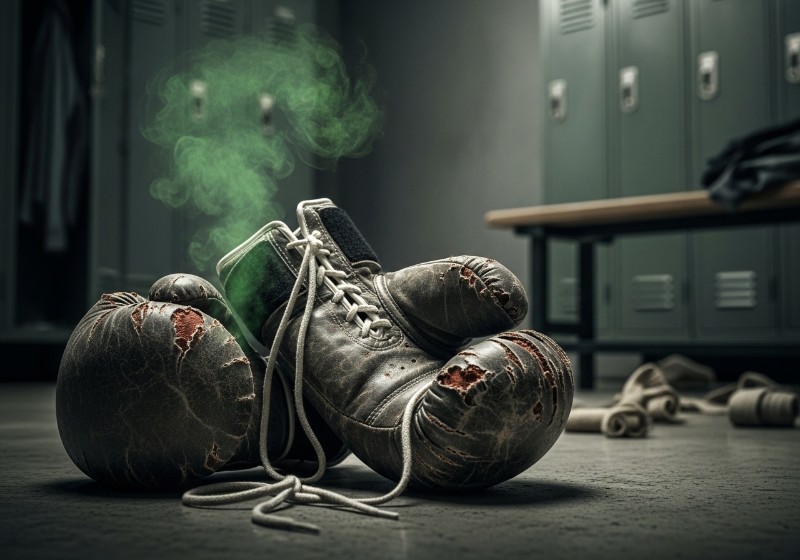

Boxing gloves rarely start out offensive. They start out fine, almost neutral, then a few hard sessions pile up, the lining stays damp, the gym bag gets zipped shut, and suddenly the gloves smell like something between old laundry and a forgotten locker. That slide happens fast in boxing gyms, garage setups, and cardio-boxing classes across the United States.
The fastest way to get rid of smelly boxing gloves is to dry them fully, absorb odor with baking soda or charcoal, kill bacteria with a light disinfecting treatment, and keep moisture from building up again with hand wraps and airflow. That is the real fix. Not perfume. Not stuffing them back into a bag and hoping for the best.
This guide breaks down what causes the smell, what removes it, what damages gloves, and when the odor means the gloves are probably finished.
Why Boxing Gloves Smell So Bad
The smell inside boxing gloves does not come from sweat alone. Bacteria create the odor by feeding on sweat and skin debris in a dark, damp space [1]. Boxing gloves are almost built to trap that problem. The padding holds warmth, the inner lining holds moisture, and the glove opening does not allow much air exchange after training.
That combination gets worse in real-life settings. A pair used in Florida humidity behaves differently from a pair dried in a cool, dry room in Colorado. A pair tossed into a sealed trunk after pad work in Arizona can turn bad in a hurry. And gloves used in busy commercial gyms pick up more than personal sweat. They also collect background bacteria from benches, shared equipment, and gym bags.
The main odor triggers
- Trapped moisture inside the finger compartment and palm area
- Poor ventilation after workouts
- Repeated use before the lining fully dries
- Synthetic interior materials that hold odor
- Shared gym environments and high-contact surfaces
Brands change the feel, shape, and leather quality, but the smell problem hits almost all of them. Everlast, Ringside, Title Boxing, Winning USA, and even premium gloves are still dealing with sweat, heat, and enclosed space. Expensive gloves are better built. They are not magically odor-proof.
How to Get Rid of Smelly Boxing Gloves Immediately
When gloves already stink, the first move is simple: get the inside dry before trying to cover the odor. A lot of athletes skip that part and jump straight to sprays. That tends to make the glove smell like floral chemicals on top of bacteria, which is somehow worse.
Air them out the right way
Open the wrist strap completely. Pull the opening apart as much as the glove design allows. Set the gloves near a fan, HVAC vent, or open window with indirect airflow.
Direct sun looks like a smart shortcut, but in practice it can dry leather unevenly and make some glove shells stiff or cracked over time. That risk is higher with genuine leather models.
This works best:
- Open both gloves fully after every session
- Stand them upright or angle them so air can move inside
- Use a small household fan for 30 to 60 minutes
- Keep them out of sealed gym bags until the lining feels dry
A small fan in a garage gym is one of those low-cost fixes that ends up doing more than fancy cleaners. The difference is not glamorous, but it is obvious after a week.
Use baking soda overnight
Baking soda is one of the cheapest and most reliable odor absorbers for boxing gloves. It does not solve structural damage or mold, but it helps with regular funk.
How to use it:
- Pour baking soda into two clean socks.
- Tie or knot each sock securely.
- Place one sock inside each glove.
- Leave them overnight, or longer if the smell is strong.
A box of baking soda usually costs less than $5 at major US retailers, including Walmart, Target, and most grocery chains. That price-to-results ratio is hard to beat.
Try a diluted white vinegar spray
White vinegar helps because its acidity creates a less friendly environment for many odor-causing microbes. The key word is diluted.
Mix:
- 1 part white vinegar
- 1 part water
Lightly mist the interior. Do not soak the lining. Let the gloves dry completely before the next session.
This is where many people overdo it. Too much liquid drives the moisture deeper into the glove, which defeats the whole point. A light spray works. A wet glove does not.
Deep Cleaning Smelly Boxing Gloves
Some gloves need more than drying and odor absorption. When the smell has settled deep into the lining, deeper cleaning becomes necessary.
Antibacterial sprays that make sense
Sports gear sprays sold in the US can help reduce bacterial load inside gloves. Products such as Lysol Fabric Disinfectant and Microban are common options. These are practical because they are easy to find and designed for fabric or soft-surface odor control.
A comparison helps here.
| Method | Best for | Cost in the US | Main difference |
|---|---|---|---|
| Baking soda socks | Mild to moderate odor | $3 to $5 | Cheapest option, but slower and less aggressive |
| Diluted vinegar spray | Mild odor plus bacteria control | $3 to $6 | Works well when used lightly, but the smell of vinegar lingers for a while |
| Sports disinfectant spray | Moderate to strong odor | $8 to $15 | Faster and more convenient, especially for busy training weeks |
| Charcoal glove deodorizers | Ongoing prevention and mild odor | $15 to $25 | Cleaner and less messy than powder-based methods |
| Freezer method | Temporary relief | Minimal | Good for a short reset, not a lasting fix |
From a practical boxing-gear standpoint, baking soda is the value play, vinegar is the home-remedy middle ground, and sports sprays are the convenience option. Charcoal deodorizers feel the most polished for regular use, but they are still part of a routine, not a miracle.
The freezer method
The freezer method gets talked about a lot because it sounds clever. It can help, but only in a limited way.
Here is the process:
- Place the gloves in a sealed plastic bag.
- Leave them in the freezer for about 24 hours.
- Remove them and let them return to room temperature.
- Dry them thoroughly before use.
Cold temperatures can slow bacterial activity. They do not clean out built-up grime, dead skin, or moisture residue. So the freezer can reduce the smell for a bit, but it usually does not end the problem.
That is why this method feels better as a backup plan than a primary solution.
Best Glove Deodorizers Available in the US
When home remedies stop working well enough, glove deodorizers are worth the upgrade. Many US athletes buy these online because they are easy to drop into gloves after training and forget about until the next day.
Popular options include:
- Meister Glove Deodorizers
- Arm & Hammer Odor Absorbers
- GearHalo Sports Deodorizers
Most sell in the $15 to $25 range on major US marketplaces. Many use activated charcoal, cedar, silica, or antimicrobial fillers to absorb moisture and reduce odor.
A useful difference shows up over time. Charcoal models tend to perform better in humid conditions, while simple absorbent inserts are often enough for dry climates or lighter training schedules. Someone hitting mitts twice a week has a different problem from someone sparring, drilling, and bag-working five or six days a week.
What tends to make a deodorizer worth buying
- It fits deep into the glove
- It absorbs moisture, not just smell
- It dries quickly between uses
- It does not leave powder or residue behind
Cheap deodorizers that only mask odor usually disappoint. The smell returns because the moisture never left.
How to Prevent Smelly Boxing Gloves
Prevention matters more than rescue cleaning. Once odor really settles into the lining, the fight gets harder.
Wear hand wraps every session
Hand wraps reduce glove odor because they catch a large share of sweat before it reaches the glove interior. They also help with wrist support and knuckle protection, so this is one of the few habits that solves more than one problem at once.
The catch is simple: dirty wraps make everything worse. Wraps need regular washing. Ideally, after every session.
Dry gloves after every workout
This is the habit that changes everything. A pair left in a zipped gym bag for six hours can smell dramatically worse than a pair aired out right after training.
That matters even more during American summers. Interior vehicle temperatures can climb far beyond outdoor air temperature. According to NHTSA, cabin temperatures can rise rapidly in warm conditions, which turns a car trunk into a heat-and-moisture chamber [2]. For boxing gloves, that is about as bad as it gets.
Rotate between two pairs
Serious boxers often keep two pairs in rotation. One pair dries while the other gets used. That approach costs more upfront, but it extends glove life and cuts down the constant battle with odor.
This matters most for athletes who train 4 or more times per week, especially when sessions include bag work. Heavy bag rounds soak gloves faster than people expect.
Habits that help more than expected
- Clean hands before wrapping
- Keep nails trimmed to protect lining
- Wash wraps and glove inserts often
- Air out the gym bag after each use
- Disinfect the gym bag at least monthly
These are not flashy habits. They just work. And the glove usually tells the truth within a week.
Cleaning Mistakes That Ruin Gloves
A lot of odor advice online is technically possible and practically terrible. Gloves are not sneakers. What works for one piece of gear can wreck another.
Avoid these mistakes
- Putting gloves in a washing machine
- Soaking gloves in water
- Using straight bleach inside the lining
- Leaving gloves in direct sunlight for hours
- Spraying so much cleaner that the padding stays wet
These mistakes damage leather, adhesives, padding density, and inner lining. High-end gloves make the risk even more painful. A pair of Cleto Reyes gloves can cost roughly $150 to $250 in the US, and premium imports or competition-level models can go higher. Once the padding shape goes or the lining separates, the glove rarely comes back.
The real difference between cleaning and damaging
A safe cleaning method removes bacteria and moisture without saturating the glove. A damaging method pushes water or harsh chemicals deeper into the structure. That line gets crossed fast.
When to Replace Your Boxing Gloves
Sometimes the smell is not a cleaning issue anymore. It is a lifespan issue.
Replace boxing gloves when:
- Padding feels flat or uneven
- The inner lining is torn
- The smell returns immediately after treatment
- Mold spots appear inside or near the seams
- The glove feels damp almost all the time
For recreational US boxers training 2 to 3 times per week, boxing gloves often last around 1 to 2 years. Training intensity, climate, storage habits, and glove quality change that range a lot. A carefully maintained pair can last longer. A heavily used pair kept in a hot bag may fall apart far sooner.
And yes, smell can be the deciding factor. Once mold gets established inside the glove, salvage becomes less likely and less hygienic.
FAQs About Smelly Boxing Gloves
How long does it take to remove odor from boxing gloves?
Light odor often improves within 24 to 48 hours with airflow and baking soda. Strong odor usually takes several rounds of drying and treatment across a week.
Can boxing gloves go in the washing machine?
No. Machine washing damages the padding, shape, and structural support of the glove.
Is vinegar safe for leather boxing gloves?
Yes, when diluted and lightly sprayed. It is not safe when poured in or used as a soaking treatment.
Do expensive boxing gloves smell less?
Not necessarily. Premium gloves may use better materials and construction, but they still absorb sweat and still need drying.
What prevents boxing glove odor best?
Drying gloves immediately after training and wearing clean hand wraps does more than almost any deodorizer.
Conclusion
Smelly boxing gloves are fixable when the real problem gets treated: moisture first, bacteria second, odor third. That order matters. Airflow, baking soda, diluted vinegar, and sports-safe disinfectants all help when used with a dry-out routine. Hand wraps, glove rotation, and better storage keep the problem from rebuilding.
For US athletes training in commercial gyms, home garages, fitness chains, or local boxing clubs, the pattern is usually the same. Gloves smell when they stay wet. Gloves last longer when they dry fast. That sounds almost too simple, but boxing gear tends to reward simple habits more than clever hacks.
A clean pair feels better to wear, lasts longer on the bag, and causes fewer awkward moments when the gloves come off.
Sources
[1] CDC, general hygiene and microbial growth guidance on moisture, skin bacteria, and contaminated athletic environments.
[2] NHTSA, vehicle heat buildup guidance and cabin temperature risk data.