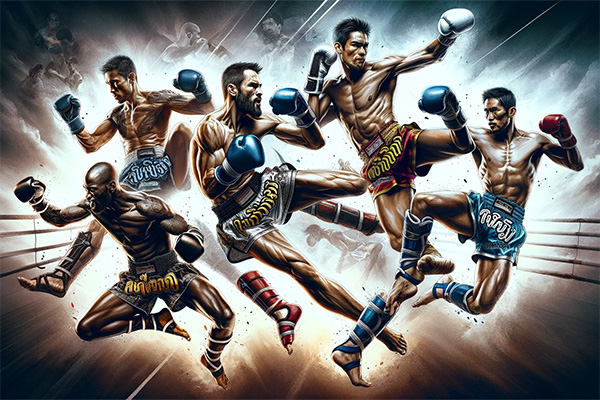

Most people first encounter Muay Thai through chaos—fast exchanges, elbows slicing through guards, knees landing with that dull, heavy thud. It looks wild at first. Then something shifts. Patterns start showing up. Timing, rhythm, control. That’s when the sport stops looking like a brawl and starts feeling like chess with consequences.
Muay Thai, the “Art of Eight Limbs,” didn’t grow into a global force by accident. Its legends built it—fighter by fighter, stadium by stadium, often under conditions that would break most athletes. What stands out isn’t just dominance. It’s how each of these fighters changed the way the sport is understood, especially once it reached American gyms and promotions.
This list focuses on 10 names that consistently surface when conversations turn serious. Not casual “top fighter” debates—but the kind that happen after hours in a gym, when people start arguing about timing, balance, and what actually works under pressure.
Key Takeaways
- 10 elite Muay Thai legends defined the sport’s technical and cultural evolution, especially during the Golden Era (1980s–1990s) and modern global expansion.
- Fighting styles like pressure, counter-striking, and clinch control directly shaped U.S. MMA striking systems, including UFC fighters’ stand-up approaches.
- Two major stadiums—Lumpinee and Rajadamnern—produced most elite champions, acting as Muay Thai’s proving grounds.
- Global promotions like ONE Championship and K-1 accelerated Muay Thai’s visibility in the United States, especially after 2005.
- Modern American gyms integrate Muay Thai as a core striking discipline, often combining it with wrestling and Brazilian jiu-jitsu.
1. Samart Payakaroon – The Technician King
Samart Payakaroon represents technical perfection under pressure, and that’s not exaggeration—it’s consensus across fighters and coaches.
Five Lumpinee titles across different weight classes. That alone would be enough. But what separates Samart is how fights unfolded. Everything looked slower when Samart was in control. Opponents rushed; Samart didn’t.
Key traits that stand out immediately:
- Elite timing that disrupts aggressive fighters
- Defensive awareness that reduces damage over long fights
- Seamless transition into boxing, winning a WBC title
In practice, watching Samart changes how you think about offense. You start noticing restraint. Shots not thrown. Openings ignored on purpose. That kind of patience feels uncomfortable at first—especially if your own style leans aggressive.
2. Dieselnoi Chor Thanasukarn – The Sky-Piercing Knee
Dieselnoi’s dominance feels almost unfair when viewed through a modern lens. An undefeated Lumpinee champion, largely because no one could solve the clinch.
Long frame. Endless pressure. Knees that didn’t just score—they drained opponents.
What defined Dieselnoi:
- Relentless clinch control over 5-round fights
- Knee strikes that accumulated damage round after round
- Physical advantages used with precision, not just force
Here’s the thing—fighters today rarely get away with that level of one-dimensional dominance. Rule sets changed. Fight pacing changed. But Dieselnoi made a single weapon feel like a full system.
3. Saenchai – The Living Legend
Saenchai fights like someone ignoring the rules of physics—until slow motion proves otherwise.
Multiple Lumpinee titles. Decades of competition. Still performing.
What makes Saenchai different:
- Creative striking (cartwheel kicks, angle shifts)
- Balance recovery that borders on absurd
- Fight IQ that adapts mid-round
You’ll notice something after watching a few Saenchai fights. Opponents hesitate—not because of power, but unpredictability. That hesitation creates openings. And Saenchai capitalizes instantly.
4. Buakaw Banchamek – The Global Superstar
If Muay Thai had a global expansion phase, Buakaw sits right at the center of it.
Two K-1 World MAX titles. Massive international exposure. A style that translates well to non-Thai audiences.
Core attributes:
- Explosive kicks with full hip rotation
- Forward pressure that breaks defensive fighters
- Conditioning that supports high-output fights
Buakaw fights feel intense even on replay. There’s very little wasted motion. Everything drives forward. For American audiences used to aggressive pacing, this style connects immediately.
5. Apidej Sit-Hirun – Fighter of the Century
Apidej Sit-Hirun holds a title that isn’t given lightly—“Fighter of the Century.”
Seven titles simultaneously. That alone places Apidej in a different category.
Key elements:
- Devastating kicks known for breaking arms
- Multi-division dominance
- Recognition from the Thai government
There’s an old story about Apidej’s kicks echoing through gyms before contact even landed. Whether exaggerated or not, it captures something real—power that changes how opponents behave.
6. Nong-O Gaiyanghadao – The Modern Champion
Nong-O represents precision in the modern era, especially under global rule sets like ONE Championship.
Former ONE Bantamweight Muay Thai World Champion. Consistent performances against elite competition.
Defining characteristics:
- Clean, efficient striking combinations
- Defensive positioning that limits counters
- Adaptability across rule variations
Modern Muay Thai often blends traditional rhythm with international pacing. Nong-O manages both without looking rushed, which is harder than it sounds.
7. Rodtang Jitmuangnon – The Iron Man
Rodtang fights like damage doesn’t register the same way.
Aggression. Durability. Constant forward motion.
Core traits:
- High-volume striking output per round
- Ability to absorb shots without retreating
- Crowd-driven fighting style
Rodtang’s appeal in the U.S. makes sense. The style is direct. No ambiguity. You know exactly what’s coming—and opponents still struggle to stop it.
8. Somrak Khamsing – Olympic Pioneer
Somrak Khamsing connects Muay Thai to Olympic-level boxing in a way few fighters have managed.
Gold medal at the 1996 Atlanta Olympics.
Key aspects:
- Smooth transition from Muay Thai to boxing
- Tactical movement that suits scoring systems
- Influence on cross-discipline fighters
Watching Somrak shifts how you view adaptability. Muay Thai fundamentals don’t disappear—they evolve depending on rules.
9. Ramon Dekkers – The Diamond from Holland
Ramon Dekkers changed how Western fighters approached Muay Thai.
Eight-time world champion. Multiple awards as “Best Foreign Fighter in Thailand.”
What stands out:
- Aggressive combinations that challenge traditional pacing
- Willingness to fight Thai champions on home ground
- Influence on European and American fighters
Dekkers didn’t just compete—he forced stylistic adjustments. That impact still shows up in gyms outside Thailand.
10. Giorgio Petrosyan – The Doctor
Precision reaches a different level with Giorgio Petrosyan.
Two K-1 World MAX titles. Reputation for near-perfect defense.
Defining elements:
- Minimal damage taken across fights
- Surgical counter-striking
- Strategic control of distance
Petrosyan fights feel calculated. Almost clinical. Opponents miss more than they land, which creates frustration—and mistakes follow.
Comparison Table: Fighting Styles and Influence
| Fighter | Primary Strength | Fighting Style | Global Impact | U.S. Influence |
|---|---|---|---|---|
| Samart Payakaroon | Timing & IQ | Technical counter-striker | High | Strong influence on defensive MMA striking |
| Dieselnoi | Clinch dominance | Knee-based pressure | Medium | Limited due to rule differences |
| Saenchai | Creativity | Unorthodox & agile | Very High | Popular in seminars and gyms |
| Buakaw | Power & pace | Aggressive striker | Extremely High | Major influence on kickboxing fans |
| Apidej | Raw power | Traditional Muay Thai | High | Historical influence |
| Nong-O | Precision | Balanced modern style | High | Growing influence via ONE |
| Rodtang | Durability | Pressure fighter | Very High | Strong fan appeal |
| Somrak | Adaptability | Hybrid boxing style | High | Influences crossover athletes |
| Dekkers | Aggression | Western Muay Thai | Very High | Foundational impact |
| Petrosyan | Defense | Counter-striking | Extremely High | Influences elite strikers |
Looking across this table, patterns start forming. Fighters who influenced the U.S. market tend to combine aggression with clarity—styles that translate well on broadcast and inside MMA cages.
Muay Thai’s Influence in the United States
Walk into a serious MMA gym in the U.S., and Muay Thai shows up everywhere. Not always labeled that way—but it’s there.
Pads. Clinch drills. Elbow entries.
Key developments driving growth:
- Integration into UFC training camps
- Expansion of promotions like Lion Fight
- Increased certification through USA Muay Thai
A typical gym in cities like Los Angeles or Miami blends Muay Thai with wrestling and jiu-jitsu. That hybrid approach didn’t exist at scale 20 years ago.
What stands out most? The shift in striking habits. Fighters now stay balanced after kicking. They check kicks instinctively. Small details—but they change outcomes.
How to Start Training Muay Thai in the U.S.
Starting Muay Thai sounds straightforward—until gym options start stacking up. Some focus on fitness. Others lean heavily into competition. That difference matters more than expected.
Typical monthly costs:
- $120 to $200 USD for standard memberships
- $200+ in major cities or elite gyms
Essential beginner gear:
- 16 oz gloves for sparring
- Hand wraps (180 inches standard)
- Shin guards for controlled training
- Mouthguard for sparring sessions
What tends to matter when choosing a gym:
- Active fight team presence (indicates real coaching experience)
- Structured classes rather than open-format sessions
- Controlled sparring culture (injuries derail progress fast)
Early training phases feel awkward. Timing is off. Conditioning dips faster than expected. Around the 6–8 week mark, something shifts—combinations start landing cleaner, and breathing stabilizes during rounds.
Final Thoughts
Muay Thai’s legends didn’t just win fights—they shaped how fighting is understood.
From Samart’s precision to Rodtang’s pressure, each style offers a different lens. And once you start recognizing those patterns, fights stop looking random. They start telling stories—about control, adaptation, and sometimes, calculated chaos.
For American fans and fighters, that influence keeps expanding. Gyms evolve. Fighters adapt. And the line between traditional Muay Thai and modern combat sports keeps getting thinner, which changes how the next generation learns the game.