
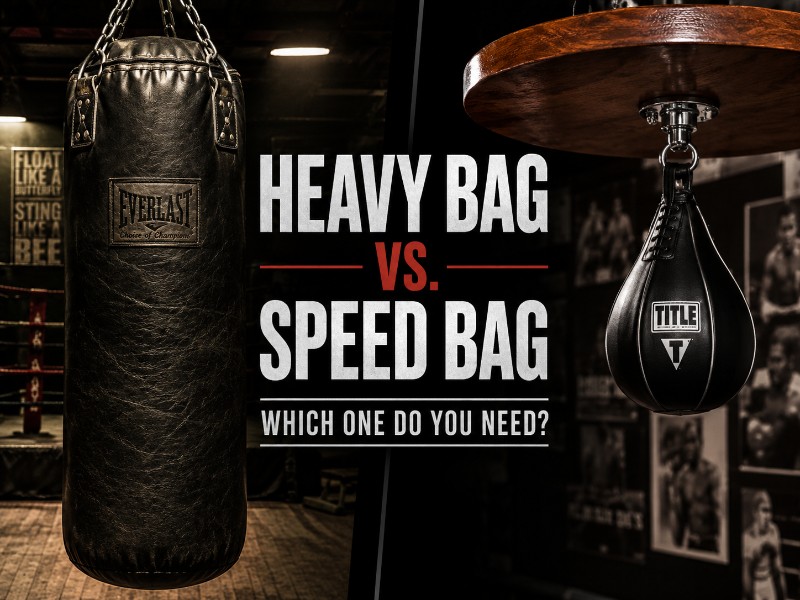

A lot of home boxing setups start the same way. Somebody clears space in a garage, looks at an empty basement corner, or stares at a spare apartment wall and thinks a punching bag will instantly turn that area into a serious training zone. Then reality kicks in. Heavy bags and speed bags feel completely different once training actually begins.
That difference catches many people off guard.
A heavy bag absorbs punishment. A speed bag fights back with rhythm, timing, and constant movement. One leaves knuckles buzzing and shoulders exhausted. The other exposes coordination flaws within about thirty seconds. Both belong in boxing culture, but they serve different purposes.
Home fitness equipment sales in the United States jumped sharply after 2020, according to data from the NPD Group and IBISWorld reports on home exercise trends [1][2]. Boxing gear followed that same wave. Heavy bags became common in garages across Texas, Florida, and California. Speed bag platforms started appearing in apartments where floor space barely allowed a yoga mat.
The choice usually comes down to three things:
- Your training goal
- Your available space
- Your patience level
And honestly, patience matters more than most people expect.
What Is a Heavy Bag?
A heavy bag is a weighted punching bag built for force, conditioning, and endurance work. Most versions weigh between 70 and 150 pounds, although professional gym bags often go heavier.
The experience feels physical immediately. Even beginners notice it during the first round. Every punch lands with resistance. Every combination demands body rotation and balance. Poor technique shows up fast because wrists, elbows, and shoulders absorb the mistake.
Common Heavy Bag Features
- Weight range: 70–150 lbs
- Height: usually 4–6 feet
- Filled with sand, fabric, foam, or synthetic blends
- Mounted from ceiling beams or bag stands
- Designed for punches, kicks, elbows, and knees depending on style
In practice, heavy bags become conditioning machines more than anything else. Ten minutes can feel manageable. Twenty minutes starts becoming work. Thirty minutes turns into one of those sessions where sweat hits the floor faster than expected.
That’s partly why heavy bags dominate garage gyms in the United States.
Popular Uses for Heavy Bags
- Boxing training
- MMA conditioning
- Weight-loss workouts
- Stress relief sessions
- CrossFit-style circuits
Many people buy heavy bags expecting technical boxing training and end up using them mostly for cardio. That shift happens naturally because heavy bag rounds elevate heart rate quickly.
Popular American Heavy Bag Brands
| Brand | Known For | Typical Price Range |
|---|---|---|
| Everlast | Affordable home setups | $80–$220 |
| Ringside | Durable training bags | $120–$300 |
| Century | Freestanding options | $150–$400 |
| Title Boxing | Boxing-focused equipment | $100–$350 |
Cheap bags exist online for under $60, but most of them swing awkwardly, settle unevenly, or lose shape after a few months. The frustration usually arrives slowly. First the bag twists. Then punches land oddly. Then training stops feeling satisfying.
That pattern shows up constantly in budget setups.
What Is a Speed Bag?
A speed bag looks simple until somebody actually tries using one. Then things get chaotic for a while.
The bag rebounds rapidly from a mounted platform, forcing your hands into a rhythm pattern that feels unnatural at first. Beginners often miss entirely or punch too hard and lose timing. That learning curve is part of the appeal, honestly. Speed bags reward consistency more than brute force.
Common Speed Bag Features
- Small pear-shaped design
- Air-filled bladder interior
- Mounted beneath a rebound platform
- Lightweight construction
- Fast rebound movement
Unlike heavy bags, speed bags don’t absorb aggression particularly well. They punish impatience instead. Swing too hard and rhythm disappears immediately.
Common Uses for Speed Bags
- Hand-eye coordination
- Punch timing
- Shoulder endurance
- Warm-up sessions
- Rhythm development
Professional boxing gyms across the United States still use speed bags heavily because they sharpen timing and upper-body endurance simultaneously. There’s also a mental side to it. Once rhythm clicks, the repetitive sound becomes weirdly hypnotic.
And loud.
That part matters more in apartments than people initially realize.
Typical Speed Bag Costs
| Equipment | Average Cost |
|---|---|
| Speed Bag | $30–$60 |
| Platform | $80–$200 |
| Full Entry Setup | $120–$250 |
A decent platform matters almost more than the bag itself. Weak platforms vibrate excessively, wobble during combinations, and produce enough noise to irritate neighbors through walls.
Heavy Bags vs. Speed Bags: Core Differences
The comparison sounds simple on paper. In reality, these tools create completely different training environments.
| Feature | Heavy Bag | Speed Bag |
|---|---|---|
| Primary Focus | Power and conditioning | Speed and rhythm |
| Size | Large, 4–6 ft | Small, compact |
| Mounting Style | Ceiling or stand | Platform mount |
| Workout Feel | Explosive and physical | Technical and repetitive |
| Noise Level | Moderate thuds | Loud rapid tapping |
| Learning Curve | Easier for beginners | Harder at first |
| Calorie Burn | Higher overall | Moderate |
| Space Needs | Large area required | Smaller footprint |
The emotional difference stands out too.
Heavy bags feel satisfying immediately because every punch creates impact. Speed bags rarely provide instant satisfaction. Most people spend several sessions struggling with timing before rhythm develops. That gap causes plenty of abandoned speed bag setups.
A heavy bag makes people feel powerful.
A speed bag makes people feel clumsy first.
That contrast says a lot.
Training Goals: Which Bag Fits Your Objective?
Fitness goals shape this decision more than equipment quality.
For Weight Loss
Heavy bags usually win here.
According to Harvard Health Publishing, a 155-pound person can burn roughly 372 calories during 30 minutes of vigorous punching bag work [3]. Higher-intensity sessions often push beyond 500 calories.
The reason feels obvious once training starts. Heavy bag workouts recruit legs, hips, shoulders, back muscles, and core rotation simultaneously. Movement never fully stops.
A lot of people underestimate the fatigue from rotational punching mechanics. The core soreness the next morning tends to surprise beginners.
For Coordination and Timing
Speed bags dominate this category.
The rhythm requirement develops reflexes and hand positioning faster than most standard cardio workouts. Athletes from baseball, MMA, and traditional boxing often use speed bags because the timing transfers into reaction speed.
Still, progress comes unevenly.
Some people catch rhythm within two days. Others spend two weeks chasing rebounds around the platform. There’s usually an awkward stage where the bag feels almost intentionally disrespectful.
For Stress Relief
Heavy bags generally provide a better emotional outlet.
That’s not psychology jargon. It’s simply the physical reality of impact training. Punching a dense bag after a frustrating workday creates a release that speed bags don’t replicate.
Many garage gym owners in the U.S. end up using heavy bags late at night for exactly that reason. Short sessions become part conditioning workout, part mental reset.
For Beginners
Heavy bags feel more accessible.
Basic punches land naturally within minutes. Footwork takes longer, obviously, but the equipment itself doesn’t demand perfect rhythm. Speed bags require timing immediately, and timing frustrates beginners fast.
That frustration doesn’t mean speed bags are bad for beginners. The process just tends to move slower than expected.
Space and Setup Considerations in American Homes
This part gets ignored constantly during online shopping.
A heavy bag may fit physically while still making the room unusable.
Heavy Bag Setup Requirements
- Ceiling joists or reinforced mounting point
- Roughly 6–8 feet of clearance
- Strong floor stability
- Enough surrounding space for movement
Garages and basements work best because swinging bags need room. Tight spaces create awkward footwork patterns and accidental wall collisions. Those collisions happen more often than people admit.
Freestanding heavy bags solve some installation problems but introduce others. Many slide across smooth flooring during hard combinations. Sand-filled bases help, although those units become difficult to move afterward.
Speed Bag Setup Requirements
- Wall-mounted or stand-mounted platform
- Smaller footprint overall
- Stable mounting surface
- Sound tolerance from neighbors
Speed bags technically fit apartments better because they consume less floor space. The noise issue complicates things though. That rapid-fire tapping echoes surprisingly far, especially in older buildings around cities like Chicago or New York.
Apartment management policies sometimes restrict mounted fitness equipment entirely. That realization usually appears after purchase instead of before.
Budget Comparison in USD
Cost matters, especially once mounting hardware enters the conversation.
| Equipment | Average Cost (USD) |
|---|---|
| Entry-Level Heavy Bag | $80–$150 |
| Heavy Bag Stand | $120–$250 |
| Premium Heavy Bag Setup | $300–$700 |
| Entry Speed Bag | $30–$60 |
| Speed Bag Platform | $80–$200 |
| Full Speed Bag Setup | $120–$250 |
Heavy bags almost always cost more long term. The bag itself weighs more, shipping costs increase, mounting systems become heavier, and gloves usually enter the purchase list immediately afterward.
Speed bags look cheaper initially, although quality platforms narrow the gap pretty quickly.
One detail surprises many buyers: installation often costs nearly as much as entry-level equipment if professional mounting becomes necessary.
Injury Risk and Safety
Boxing equipment markets itself aggressively, but repetitive impact still stresses joints and connective tissue.
That reality matters.
Common Heavy Bag Injuries
- Wrist strain
- Shoulder irritation
- Knuckle bruising
- Elbow discomfort
Poor technique causes most issues. Beginners often hit too hard too early because adrenaline takes over. Wrists bend slightly. Shoulders overextend. Then soreness lingers for days.
Hand wraps and boxing gloves reduce those risks significantly. Cheap gloves, though… those create problems of their own. Thin padding compresses quickly during repeated impact.
Common Speed Bag Issues
- Shoulder fatigue
- Forearm tightness
- Frustration-related overtraining
Speed bags rarely produce major impact injuries because force output stays low. Instead, the repetitive circular motion fatigues shoulders and upper back muscles gradually.
The learning process can also become mentally draining. People expect immediate rhythm and end up swinging wildly after ten minutes.
That phase usually passes eventually, although not gracefully.
Which One Should You Choose?
The answer depends less on boxing identity and more on how training realistically fits into your life.
Choose a Heavy Bag If:
- You enjoy high-intensity workouts
- Weight loss matters heavily
- Stress relief feels important
- You have garage or basement space
- Full-body conditioning sounds appealing
Heavy bags create a more physical experience overall. Sessions feel athletic immediately, even when technique still needs work.
Choose a Speed Bag If:
- Coordination interests you
- You enjoy skill development
- Space remains limited
- Boxing technique matters more than calorie burn
- Repetitive rhythm training sounds enjoyable
Speed bags reward patience and consistency more than aggression. Some people love that technical side. Others abandon it after a week.
Neither reaction feels unusual.
Can You Combine Both?
Absolutely. Most serious boxing gyms combine both tools because each develops different attributes.
Heavy bag rounds build force production and conditioning.
Speed bag rounds sharpen timing and endurance.
That combination creates balanced training.
Example Weekly Split
| Day | Training Focus |
|---|---|
| Monday | Heavy bag power rounds |
| Wednesday | Speed bag coordination drills |
| Friday | Combined session |
A combined setup also prevents training monotony. Heavy bags can become repetitive after months of identical combinations. Speed bag work changes pacing and forces concentration.
There’s another benefit too. Alternating between explosive effort and rhythmic movement reduces mental burnout compared to constant high-intensity sessions.
Final Takeaway: Heavy Bags vs. Speed Bags
No universal winner exists here, despite what marketing videos suggest.
Heavy bags deliver power development, calorie burn, conditioning, and physical release. They fit people who want demanding workouts that feel intense from the first session.
Speed bags develop rhythm, timing, shoulder endurance, and coordination. They fit people who enjoy technical progression and repetitive skill work.
A lot of boxers eventually end up using both because the strengths overlap nicely over time. Still, most home gym setups start with one choice, not two.
And honestly, the better option usually becomes obvious after a few workouts.
If training leaves your shoulders burning while rhythm finally clicks into place, the speed bag probably fits your personality.
If loud combinations against a swinging heavy bag make the workout feel addictive despite exhaustion, that answer tends to reveal itself pretty quickly too.
Sources
[1] NPD Group – U.S. Home Fitness Equipment Market Trends
[2] IBISWorld – Gym, Health & Fitness Clubs Industry Reports
[3] Harvard Health Publishing – Calories Burned in 30 Minutes for Various Activities