
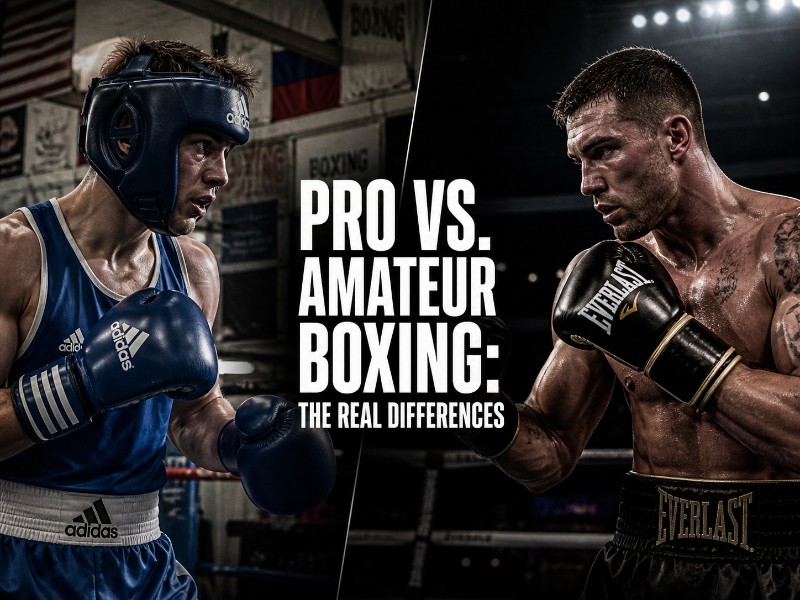

Boxing looks simple from the outside—two fighters, gloves, a ring—but the moment you spend time around gyms or watch different levels, the split becomes obvious. Amateur boxing and professional boxing operate as two distinct systems with different goals, rules, and outcomes.
That distinction shapes everything: how fighters train, how judges score bouts, how fans interpret action, even how money flows through the sport. In the United States, that divide shows up clearly between Olympic programs, Golden Gloves tournaments, and major pro promotions on ESPN or Showtime.
Understanding the gap changes how you watch fights. It also changes how you bet, train, or even pick a path into the sport.
What Is Amateur Boxing?
Amateur boxing builds fighters through structured competition focused on technique, speed, and scoring efficiency. It prioritizes clean punches over damage.
Most amateur bouts feel fast—almost rushed at times. Fighters throw combinations in bursts, then reset quickly. Judges reward accuracy, not intimidation.
Organizations like USA Boxing and the International Boxing Association (AIBA) govern this level, especially in Olympic competition.
Key traits stand out:
- Short fights: typically 3 rounds of 3 minutes
- Point-based scoring: clean, visible punches score
- Protective focus: historically included headgear (removed in elite men’s Olympic bouts since 2016 [1])
- High punch volume: flurries matter more than single power shots
From experience observing regional tournaments, the pace surprises newcomers. Exchanges look chaotic, but they’re actually calculated attempts to rack up points quickly before the round ends.
What Is Professional Boxing?
Professional boxing shifts the entire objective. It rewards damage, control, and long-term dominance across rounds.
Fighters compete for money, rankings, and championship belts under sanctioning bodies like the WBC, WBA, IBF, and WBO.
The rhythm changes immediately. Slower. Heavier. More deliberate.
Key characteristics include:
- Longer bouts: 4 to 12 rounds
- Knockouts matter: fights can end suddenly
- No headgear: increased impact visibility
- Smaller gloves: typically 8–10 oz, depending on weight class
A pro fight often feels like a story unfolding over time. Early rounds might look quiet, but that pacing becomes important later. Fighters conserve energy, set traps, and break opponents down gradually.
Differences in Rules and Scoring Systems
Judging criteria creates one of the sharpest divides between the two formats.
Amateur Scoring
Amateur boxing uses a point system focused on clean, scoring punches.
Judges look for:
- Straight, accurate shots
- Clear contact on scoring areas
- Technical execution over force
Professional Scoring
Professional boxing uses the 10-point must system, where the round winner gets 10 points and the opponent receives 9 or fewer.
Judges evaluate:
- Effective aggression
- Ring control
- Defensive skill
- Punch impact
The difference shows up in close fights. A flashy combination might win an amateur round. In a pro fight, a single heavy body shot can outweigh it.
Fight Duration and Structure
Fight length changes everything about strategy.
| Format | Rounds | Round Length | Pacing Style |
|---|---|---|---|
| Amateur | 3 | 3 minutes | Fast bursts, high output |
| Professional | 4–12 | 3 minutes | Measured, strategic buildup |
Short amateur fights reward urgency. Fighters often sprint from the opening bell. There’s little time to recover from a slow start.
Professional fights demand patience. Energy management becomes critical, especially after round 6 when fatigue starts reshaping decisions.
A common observation: fighters transitioning to pro levels often struggle not with skill, but with pacing. The body reacts differently after 20+ minutes of fighting.
Protective Gear and Safety Standards
Safety equipment reflects each format’s priorities.
Amateur Equipment
- Headgear (in many competitions historically)
- Larger gloves (12 oz or more)
- Emphasis on reducing visible damage
Professional Equipment
- No headgear
- Smaller gloves (8–10 oz)
- Increased focus on entertainment and impact
In the U.S., state athletic commissions regulate professional bouts, enforcing medical checks and suspensions after knockouts.
Interestingly, studies show headgear reduces cuts but does not fully prevent brain trauma [2]. That nuance often surprises casual fans.
Career Path and Financial Differences
Money draws a clear line between amateur and professional boxing.
Amateur Path
- No direct pay
- Limited stipends or sponsorships
- Reputation built through tournaments like Golden Gloves
Professional Path
- Fighters earn per bout: $500 to $10M+, depending on level
- Revenue streams include:
- Pay-per-view sales
- Sponsorships
- Endorsements
The jump feels dramatic. A fighter might go from unpaid tournaments to negotiating purses and contracts within a year.
That shift introduces business pressure. Promoters, managers, and rankings suddenly matter as much as skill.
Training Style and Strategy
Training reflects the demands of each format.
Amateur Training Focus
- Speed and combinations
- High punch output
- Quick recovery between exchanges
Professional Training Focus
- Power development
- Endurance over 10–12 rounds
- Tactical sparring and fight IQ
Gyms often separate these styles subtly. Amateur sessions feel intense but short. Professional camps stretch longer, with controlled sparring rounds designed to simulate late-fight fatigue.
Skill Development and Fighting Style
Styles evolve differently.
Amateur fighters rely on:
- Quick combinations
- Straight punches
- Constant movement
Professional fighters develop:
- Body attacks
- Power shots
- Ring control and positioning
A noticeable shift happens in how punches are thrown. Amateur punches snap and retract quickly. Professional punches sit down with weight behind them.
Transitioning from Amateur to Professional Boxing
Most elite professionals start as amateurs. Fighters like Floyd Mayweather Jr. and Oscar De La Hoya built Olympic pedigrees before turning pro.
The transition isn’t seamless.
Common challenges include:
- Adjusting to longer fights
- Handling increased physical punishment
- Navigating contracts and promotions
The mental shift often proves tougher than the physical one. Amateur success doesn’t always translate directly when pacing, pressure, and financial stakes change.
Popularity and Audience Differences in the U.S.
Audience exposure varies sharply.
Amateur boxing:
- Limited TV presence
- Peaks during Olympic cycles
Professional boxing:
- Broadcast on ESPN, Showtime, DAZN
- Generates millions in PPV revenue
Casual fans usually connect with professional boxing first. Amateur boxing tends to attract purists and those closely following Olympic development.
Risks and Long-Term Health Considerations
Risk increases as fights get longer and more punishing.
Amateur Risks
- Lower cumulative damage
- Shorter exposure time
Professional Risks
- Higher knockout rates
- Greater risk of conditions like Chronic Traumatic Encephalopathy (CTE) [3]
The trade-off becomes clear over time. Longer fights and repeated impacts carry consequences that don’t always show immediately.
Which Path Is Right for You?
The choice depends on priorities.
Amateur boxing fits best when you:
- Want Olympic competition
- Focus on technical development
- Prefer structured progression
Professional boxing fits best when you:
- Pursue a full-time career
- Accept financial risk and reward
- Handle long-term physical demands
In practice, many fighters experience both. Amateur boxing builds the foundation. Professional boxing tests how far that foundation holds under pressure.
Closing Thoughts
Amateur and professional boxing differ in rules, scoring, safety, and financial structure, yet both shape the sport’s identity. One builds precision and discipline. The other tests endurance, resilience, and marketability.
Watching both formats changes how each punch gets interpreted. Fast combinations in amateur bouts carry intention. Slower exchanges in professional fights carry consequence.
That contrast keeps boxing layered, sometimes messy, but always compelling.