
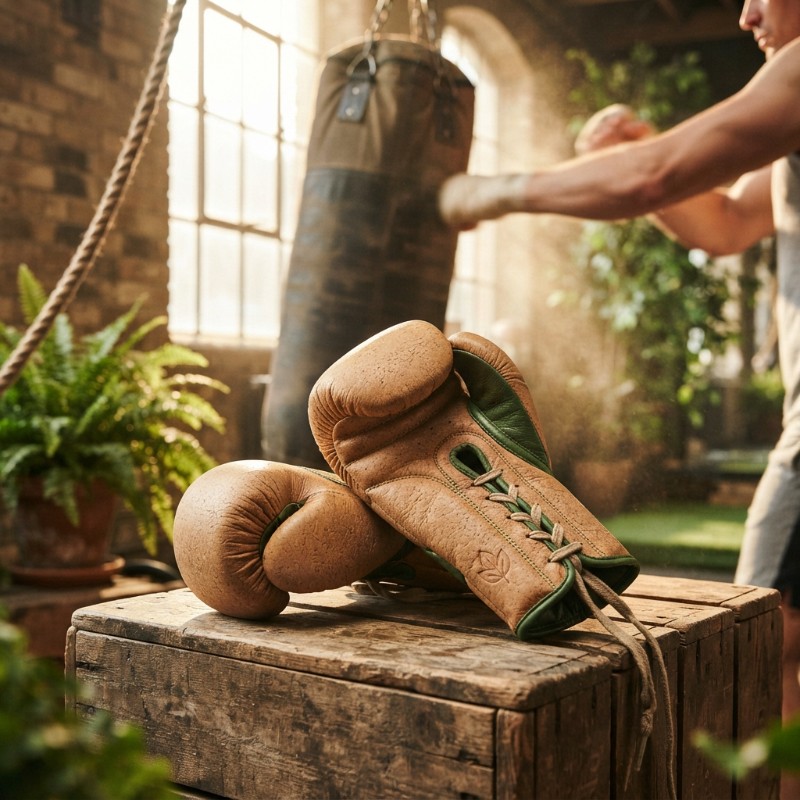

There’s a shift happening in combat sports, and it’s not subtle anymore. Walk into any serious boxing gym in the U.S. right now and you’ll start noticing it — athletes asking questions about where their gear comes from, coaches researching vegan leather options, gym owners swapping out synthetic bags for more sustainable setups. The fitness industry as a whole has been trending greener for years, but combat sports took a little longer to catch up. Now it’s catching up fast.
Conventional boxing gloves — the kind made with PVC outer shells, chemically treated synthetic leather, and petroleum-based foam padding — carry an environmental footprint that most buyers never think about. They’re manufactured in bulk, often with limited transparency around labor conditions, and they end up in landfills after a year or two of heavy use. For a market segment that prides itself on discipline and intention, that’s a pretty significant blind spot.
Eco-friendly boxing gloves aim to close that gap. And here’s the part that surprises most people: they don’t ask you to sacrifice performance to do it.
What Makes Boxing Gloves Eco-Friendly?
The term gets thrown around loosely, which is frustrating. A brand slapping “sustainable” on a product that just swapped out its plastic packaging isn’t the same as one that’s rethought its entire supply chain. Knowing the difference matters — especially when you’re spending $80 to $200+ on a pair of gloves.
Genuinely eco-friendly boxing gloves share a few core characteristics. The outer shell uses plant-based or recycled materials instead of virgin PVC or chrome-tanned leather. The internal padding draws on natural latex, recycled EVA foam, or other low-impact alternatives. Adhesives tend to be water-based rather than solvent-based. And the manufacturing process itself operates under some level of environmental accountability — whether that’s ISO 14001 certification, low-emission facilities, or fair labor standards that reduce social harm alongside environmental harm.
Certifications to watch for:
- OEKO-TEX Standard 100 — confirms no harmful chemicals in textiles
- Global Recycled Standard (GRS) — verifies recycled content claims
- FSC certification — relevant for any cork or wood-fiber-based materials
- B Corp status — broader measure of a brand’s overall ethical and environmental performance
What you want to avoid is greenwashing — brands that market “eco” primarily as a sales angle without backing it up. Check for specifics: what percentage of materials are recycled or bio-based, where the gloves are manufactured, and whether the brand publishes any life cycle assessment data.
Sustainable Materials Used in Eco-Friendly Boxing Gloves
Plant-Based Leather Alternatives
This is where it gets genuinely interesting. The vegan leather category has exploded in the past five years, and the options available to boxing equipment manufacturers now go way beyond basic synthetic microfiber.
Cactus leather (Desserto is the most recognized brand) comes from nopal cactus harvested without irrigation from wild-growing plants in Mexico. It’s durable, flexible, and requires dramatically less water than animal leather production. A few boutique glove brands have started using it, and the feel during training is closer to genuine leather than most alternatives.
Cork leather is another standout. It’s naturally antimicrobial, moisture-resistant, and harvested without cutting down trees — cork oak bark regenerates every nine years. For gloves, it performs especially well on exterior panels where abrasion resistance and sweat exposure are factors.
Apple leather uses the pulp and skin byproduct from the Italian juice industry — waste that would otherwise go to landfill. It’s softer than cork, takes color well, and has solid mid-range durability. Mushroom leather (Mylo, developed by Bolt Threads) and pineapple fiber (Piñatex) round out the high-end options, though they’re mostly still in premium and experimental territory for combat sports equipment.
The honest take: cactus and cork are the most practical right now for boxing gloves specifically. They hold up under heavy bag work, clean well, and don’t break down prematurely with regular use.
Recycled and Renewable Internal Padding
The outer shell gets most of the attention, but the padding is where hand protection actually happens. Traditional gloves use virgin EVA foam or polyurethane layers, both petroleum-derived. Sustainable alternatives are gaining ground quickly.
Recycled EVA foam uses post-industrial waste from shoe and equipment manufacturing — the off-cuts and scraps that used to go straight to landfill. When properly processed and layered, it delivers comparable shock absorption to virgin foam. The key is density consistency, which has improved significantly as manufacturing processes have matured.
Natural latex foam comes from rubber tree sap, making it a genuinely renewable resource when sourced responsibly. It has excellent energy return properties, meaning it compresses under impact and rebounds quickly. For sparring, that responsive feel is noticeable. Some fighters actually prefer it over synthetic foams once they’ve trained with it long enough to notice the difference.
Multi-layer padding designs — where different foam densities are stacked for targeted impact dispersion — are increasingly using blended sustainable materials across layers. This approach doesn’t require any single material to do all the work, which makes the eco-friendly foam substitutions more viable without compromising wrist or knuckle protection.
Performance Comparison: Eco-Friendly vs Traditional Boxing Gloves
The performance myth worth addressing directly: that sustainable gloves are softer, less protective, or built for casual training only. That’s outdated. The gap has closed considerably in the last three to four years.
Here’s a practical breakdown:
| Feature | Eco-Friendly Gloves | Traditional Leather Gloves | Traditional Synthetic Gloves |
|---|---|---|---|
| Outer Durability | Good to excellent (cork, cactus) | Excellent with proper care | Moderate — cracks over time |
| Padding Protection | Comparable; natural latex performs well | Industry standard | Varies widely by price |
| Breathability | Often better — mesh palm designs common | Depends on construction | Often poor |
| Break-in Period | Shorter for most plant-based leathers | Longer; leather softens over months | Minimal, but quality plateaus early |
| Odor Resistance | Higher — natural materials resist bacteria | Moderate | Lower — synthetic traps sweat |
| Environmental Impact | Significantly lower | High — tanning process is chemical-intensive | High — petroleum-based throughout |
| Price Range (USD) | $70–$200+ | $100–$300+ | $30–$120 |
The honest commentary: for heavy bag training and general conditioning work, eco-friendly gloves perform on par with — and in some cases better than — mid-range synthetic gloves. For competitive sparring, the premium end of the eco market (think $150+) genuinely holds up against comparable leather options. Where traditional leather still has an edge is at the ultra-premium professional level, but that’s a narrow category most buyers will never need.
Breathability is one area where eco gloves often surprise people. Plant-based outer materials combined with mesh palm panels manage sweat better than sealed synthetic leather, which matters during longer sessions.
How to Choose the Best Eco-Friendly Boxing Gloves
Selecting the Right Weight
Glove weight affects both protection and training application. Getting this wrong — in either direction — is a common mistake.
10 oz gloves are for speed bag and light pad work, or smaller athletes in competition settings. They don’t offer enough padding for regular sparring.
12 oz gloves work well for pad work and bag training for lighter athletes (roughly under 130 lbs). Some use them for light sparring, but 14 oz is safer.
14 oz gloves are the versatile middle ground — good for bag work and technical sparring for athletes in the 130–160 lb range.
16 oz gloves are the standard sparring glove for most adult athletes. USA Boxing recommends them for amateur competition sparring at most weight classes. The extra padding protects both you and your training partner.
18 oz and above show up mostly in heavy training contexts for larger athletes or when maximum protection is the priority.
For beginners, 14 oz or 16 oz is usually the right starting point — enough padding to build technique without risking hand injuries.
Features Worth Paying For
At the $70–$100 entry point, eco-friendly gloves cover the basics. Move up to $130–$200 and you start seeing features that genuinely matter over the long term.
Wrist support is the big one. A reinforced, structured cuff with a wide hook-and-loop closure keeps the wrist aligned during impact. This isn’t a luxury — it’s injury prevention. Cheap gloves cut corners here first.
Moisture-wicking antimicrobial lining matters more than most buyers realize until they’ve trained through a hot summer. A quality inner liner keeps gloves from becoming a bacterial environment that shortens their lifespan and, frankly, makes them unpleasant for everyone in the gym.
Double stitching on stress points — the thumb attachment, knuckle line, and wrist panel — is a simple durability indicator. Check it before buying.
Ergonomic hand alignment affects how natural a fist feels inside the glove. Better-designed gloves hold the hand in a slight curve that reduces fatigue over longer sessions.
Best Eco-Friendly Boxing Glove Brands in the United States
A few brands stand out for combining genuine sustainability commitments with product quality that holds up under real training conditions.
Hayabusa has made meaningful moves toward sustainable manufacturing transparency, with several models using recycled materials and ethical sourcing. Their T3 and Ikusa lines are broadly respected for durability and wrist support.
Fairtex isn’t purely an eco brand, but their commitment to ethical labor practices in production and the longevity of their gloves (which reduces replacement frequency and waste) earns them a place in this conversation.
Ringside has introduced recycled-content options at accessible price points, making eco-friendly choices available to gym owners and budget-conscious athletes.
Everlast, as one of the largest names in the U.S. market, has faced pressure to improve its sustainability practices — and has made some incremental moves, though it’s not leading the category.
Revgear is worth watching for newer eco-focused product lines with above-average construction quality for the price.
Caring for Eco-Friendly Boxing Gloves to Maximize Lifespan
Maintenance is sustainability in practice. A pair of $150 gloves that lasts four years has a smaller environmental footprint than a pair of $60 gloves replaced every year. That math matters.
After every session, wipe down the exterior with a damp microfiber cloth and let the gloves air dry with the opening facing down or with a glove dog insert to maintain airflow. Never seal them in a gym bag while still damp — that’s how mildew starts.
For deeper cleaning, a diluted antibacterial spray (or a natural alternative like diluted tea tree oil) applied inside and outside every week or two handles odor and bacteria effectively without degrading plant-based materials. Avoid harsh alcohol-based cleaners on cork or cactus leather — they’ll dry out and crack the surface over time.
Store gloves in a cool, dry location with ventilation. A mesh bag works better than a closed compartment. When the padding starts to feel compacted or uneven, or the wrist support noticeably loosens, that’s the signal to replace.
Environmental Impact of Sustainable Boxing Equipment
Putting eco-friendly gloves in context: the conventional sporting goods industry generates significant waste and emissions. Traditional leather tanning is one of the most chemically intensive manufacturing processes in consumer goods, involving chromium salts and other compounds that contaminate water supplies near production facilities. PVC production releases dioxins. And most boxing gloves end up in landfills, where synthetic materials persist for centuries.
Sustainable boxing equipment participates in a broader shift toward circular economy thinking — where materials are designed with their end-of-life in mind. Some brands are beginning to offer take-back programs for worn gloves. Recycled EVA foam closes a material loop. Cork and plant-fiber materials biodegrade on realistic timescales.
The U.S. sporting goods market crossed $50 billion in annual sales, and consumer demand for sustainable products within that market has grown steadily since 2020. Boxing is a small slice of that, but the direction is clear — and the brands investing in genuine sustainability now are building real differentiation for the next decade.
Frequently Asked Questions About Eco-Friendly Boxing Gloves
Are eco-friendly boxing gloves as durable as leather gloves?
For most training applications, yes — especially at the $130+ price point. Premium cactus leather and cork leather constructions match mid-range genuine leather in durability. Ultra-premium leather still has an edge at the professional level, but it’s a marginal one for most athletes.
Are vegan boxing gloves suitable for professional training?
Absolutely. Several professional fighters train in plant-based or recycled-material gloves without any performance compromise. The padding technology has matured enough that the material origin doesn’t limit the protection level.
What certifications indicate genuine sustainability?
OEKO-TEX Standard 100, Global Recycled Standard (GRS), and B Corp status are the most credible. FSC certification applies specifically to wood-fiber or cork materials. Be skeptical of vague claims like “eco-conscious” without certification backing.
How long do sustainable boxing gloves typically last?
With proper care, a quality pair lasts 18 months to 3+ years depending on training frequency and intensity. Heavy daily use compresses padding faster; recreational training extends lifespan considerably.
Are eco-friendly gloves worth the higher price?
For regular training, the cost-per-use calculation usually favors quality eco gloves over cheap synthetics that need frequent replacement. The $130–$180 range hits the sweet spot of durability, performance, and environmental value.
Can recycled materials provide adequate hand protection?
Yes. Recycled EVA foam and natural latex meet the same impact absorption requirements as virgin materials when properly engineered. Construction quality matters more than material origin.
Which glove weight is best for beginners?
14 oz or 16 oz for most adults. 16 oz is the safer default for anyone planning to spar.
How should eco-friendly boxing gloves be recycled or disposed of?
Check with the brand first — some offer take-back programs. For gloves with natural or bio-based materials, some components may be compostable. For mixed-material gloves, local specialty recyclers that handle composite sporting goods are the best option. Donating worn but functional gloves to community gyms extends their useful life before disposal.
Eco-friendly boxing gloves have cleared the performance bar. What’s left is a straightforward decision: whether the environmental and ethical dimensions of the purchase matter to you, and how much you’re willing to invest in gear that reflects that. For most serious athletes and coaches, the answer is increasingly clear