

Walk into almost any boxing gym in the United States—doesn’t matter if it’s a gritty basement setup in Brooklyn or a polished facility in Los Angeles—and the same thing shows up again and again. Not flashy knockouts. Not viral combinations. Just repetition. Endless, almost boring repetition.
That’s where everything starts.
You might expect advanced drills right away. Most people do. But what actually happens is slower, more deliberate, and honestly… a little frustrating at first. Because before anything exciting takes shape, your body has to learn four punches so well that they stop feeling like “moves” and start feeling automatic.
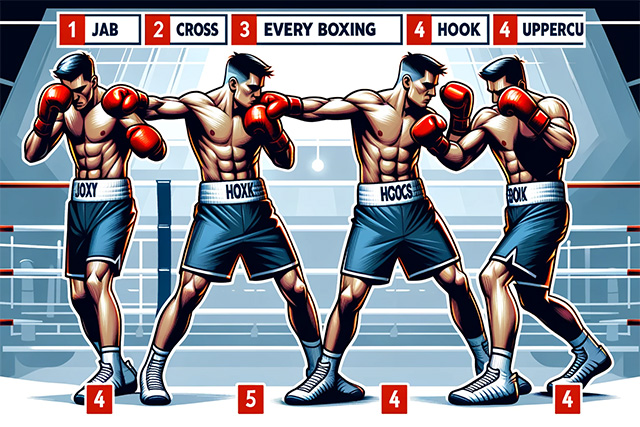
Those four punches—jab, cross, hook, and uppercut—aren’t just techniques. They quietly shape how you think, react, and survive in the ring. Everything else grows from them.
The Jab: The Foundation of Boxing
The jab is the fastest, most frequently used punch in boxing, thrown with the lead hand to control distance and tempo.
At first glance, the jab doesn’t look impressive. It’s not supposed to. That’s kind of the point.
In practice, what tends to happen is this: beginners throw jabs like they’re trying to push something away. The arm lingers. The shoulder stays relaxed. And the punch just… hangs there. Easy to see, easy to counter.
But a proper jab snaps. It lands and comes back before the opponent fully processes it.
Why the Jab Matters
A sharp jab does several things at once:
- Controls distance by keeping opponents at the end of your reach
- Sets up combinations, especially the cross and hook
- Disrupts rhythm, forcing reactions and mistakes
- Scores points, particularly in amateur scoring systems
In American amateur boxing, clean jabs often decide rounds. Judges consistently reward fighters who land first and stay active. Over 3 rounds of 3 minutes each, that adds up quickly.
And then there’s the energy factor.
A consistent jab lets you work without burning out. Over 8–12 rounds, that matters more than most beginners expect.
Training the Jab (What Actually Works)
Heavy bags help, sure. Brands like Everlast and TITLE Boxing produce solid equipment that holds up under daily rounds. But here’s the thing—power isn’t the priority early on.
What shows results is repetition with intent:
- 3-minute rounds focused on speed
- Full extension with quick recoil
- Slight shoulder lift to protect the chin
And yeah, it feels repetitive. That’s because it is.
But after a few weeks, something shifts. The jab starts landing without thought. That’s when it becomes useful.
The Cross: Power from the Rear Hand
The cross is the primary power punch, thrown from the rear hand with full-body rotation.
Now, this is where things usually get interesting.
You’ll notice that most beginners love the cross immediately. It feels strong. It sounds loud on the bag. There’s a sense of impact that the jab doesn’t quite deliver.
But here’s what often goes wrong…
The punch becomes all arm. No base. No rotation. Just force without structure.
Key Elements of an Effective Cross
A proper cross pulls power from the ground up:
- Back foot pivots to initiate rotation
- Hips turn first, followed by shoulders
- Chin stays tucked, avoiding counters
- Hand returns quickly to guard
That sequence matters more than raw strength. Fighters who ignore it often hit hard—but get hit harder.
Deontay Wilder’s right hand is a strong example. The knockout power isn’t just arm strength; it’s timing, positioning, and full-body mechanics working together.
When the Cross Lands Best
The cross rarely works in isolation. Timing makes it dangerous:
- After a jab creates an opening
- During counterattacks when opponents overcommit
- When the opponent drops their guard
And here’s something that becomes obvious over time—accuracy beats power more often than expected.
A clean cross landing consistently wins rounds. A wild cross that misses drains energy and opens you up.
The Hook: The Game-Changer
The hook is a short, explosive punch thrown from the side, targeting areas the straight punches can’t reach.
This is where boxing starts to feel… tactical.
Straight punches travel directly. Hooks don’t. They curve. They find angles. And they punish predictable movement.
Joe Frazier’s left hook remains one of the clearest examples. It didn’t look complicated. But it landed with precision and timing that broke elite opponents down.
Types of Hooks
You’ll see a few variations in most gyms:
- Lead hook to the head
- Lead hook to the body
- Rear hook in close range exchanges
Each serves a slightly different purpose, but the mechanics stay consistent.
Why Hooks Work So Well
Hooks thrive at mid-range. Not too far. Not too close.
That in-between space is where many fighters get uncomfortable. Guards tighten. Vision narrows. That’s when hooks slip through.
But here’s the catch…
Hooks demand balance.
Too wide, and you lose control. Too tight, and the punch loses impact. Weight transfer—subtle but critical—decides the outcome.
You’ll notice that effective hooks don’t look forced. They rotate naturally with the body. Almost casual. Until they land.
The Uppercut: The Inside Weapon
The uppercut is an upward punch designed for close-range exchanges, often targeting the chin or body.
This one tends to confuse people early on.
The motion feels less intuitive. There’s a dip, a drive upward, a twist—all happening quickly. And without proper timing, it either misses or leaves you exposed.
Mike Tyson built entire sequences around the uppercut. Not just throwing it randomly, but setting it up with head movement and positioning.
How the Uppercut Works
Execution relies on coordinated movement:
- Slight knee bend to lower your level
- Upward drive from the legs
- Torso rotation for added force
- Balanced stance throughout
It’s not a big motion. In fact, the best uppercuts are compact and almost hidden.
When It Becomes Dangerous
Uppercuts shine in specific moments:
- When an opponent leans forward
- During breaks from clinches
- After slipping punches
What makes the uppercut effective is surprise. It travels where the opponent isn’t looking.
And when it lands clean, momentum shifts fast. Sometimes too fast to recover.
How These Punches Work Together
Boxing doesn’t reward isolated punches. It rewards sequences.
A simple combination like:
- Jab
- Cross
- Lead hook
…appears in nearly every gym across the United States. Not because it’s basic—but because it works.
Each punch sets up the next. The jab creates distance. The cross drives through. The hook finishes from an angle.
But combinations aren’t just about offense.
Timing, spacing, and rhythm tie everything together. Without those, combinations feel forced. Predictable.
And predictable fighters don’t last long.
Defensive Awareness While Punching
Here’s where things get uncomfortable.
Throwing punches feels good. Getting hit while throwing them does not.
What tends to happen early on is this: punches go out, hands drop, and counters sneak in. It happens fast. Sometimes before you even realize the mistake.
Defensive Habits That Change Everything
Consistent fighters develop a few habits:
- Hands return to guard immediately
- Head moves slightly off the centerline
- Feet stay positioned for balance
- Breathing stays controlled
Organizations like the World Boxing Council (WBC) showcase fighters who blend offense with defense seamlessly. That balance wins titles.
Because landing punches matters—but avoiding them matters just as much.
Common Mistakes American Beginners Make
Spend a few weeks in any U.S. boxing gym, and patterns start to show.
Beginners often:
- Drop hands after combinations
- Overcommit to power shots
- Ignore foot positioning
- Skip conditioning work
And conditioning—this one surprises people—is often the biggest gap.
Three-minute rounds don’t sound long until fatigue sets in. Then everything changes. Punches slow down. Defense slips. Decision-making fades.
Roadwork, jump rope, and strength training build endurance that carries through rounds. Without it, technique breaks down under pressure.
Building a Training Routine Around the Four Essential Punches
Consistency drives progress. Not intensity. Not occasional bursts of effort.
A typical weekly structure looks like this:
| Training Component | Frequency per Week | Example Activities |
|---|---|---|
| Heavy Bag Work | 3 days | Jab drills, combinations, endurance |
| Mitt Training | 2 days | Accuracy, timing, coach-led sequences |
| Conditioning | 2 days | Running, jump rope, strength circuits |
Equipment matters too—but not in the way most expect.
Spending $80–$150 USD on gloves and wraps provides enough protection for consistent training. Brands like Everlast and TITLE Boxing offer reliable options that last through repeated sessions.
Protecting your hands isn’t optional. Injuries slow everything down.
Final Thoughts
Mastering the jab, cross, hook, and uppercut creates a complete technical foundation for boxing at every level.
From amateur tournaments in local U.S. gyms to championship fights under the WBA and WBC, these four punches keep showing up. Not as flashy highlights—but as the structure behind every effective fighter.
And here’s the part that usually catches people off guard…
Progress doesn’t feel dramatic.
It’s subtle. Repetitive. Sometimes frustrating. Weeks pass where nothing seems different—until suddenly, timing clicks. Distance makes sense. Punches land cleaner.
That’s when the basics stop feeling basic.
They start feeling like control.


