
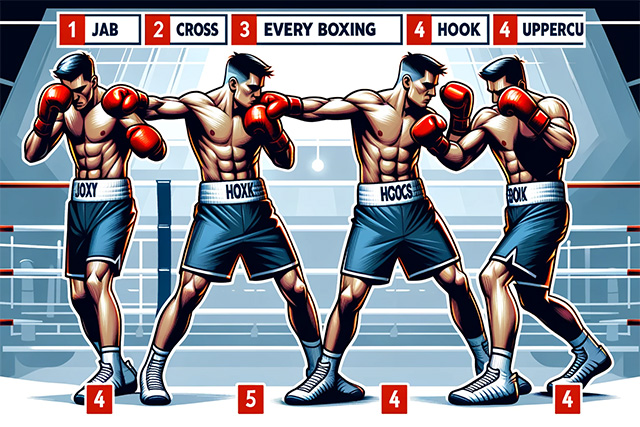

Walk into a serious boxing gym in Las Vegas, Brooklyn, or Philadelphia and the pattern becomes obvious fast. Beginners throw wild combinations. Experienced fighters drill the same four punches for rounds that feel endless.
That contrast explains boxing better than most highlight reels ever could.
Elite boxing performance rarely comes from flashy movement alone. It comes from mastering the essential boxing punches that create control, damage, efficiency, and composure under pressure. Athleticism matters, sure. Fast hands and explosive reflexes help. But technical precision wins rounds consistently in amateur circuits, under bright lights at Madison Square Garden, and during brutal late rounds on premium PPV cards.
American boxing culture revolves around repetition. USA Boxing coaches build entire systems around boxing fundamentals because neuromuscular coordination improves through thousands of technically correct reps. Floyd Mayweather Jr. built a defensive empire around centerline control and timing. Muhammad Ali weaponized the jab. Mike Tyson generated terrifying torque generation through compact mechanics and explosive weight transfer.
The financial side of boxing reinforces the point. Entry-level professional purses in the U.S. often land between $1,500 and $8,000 per fight, while elite champions earn millions through PPV revenue and sponsorships. Technical mistakes become expensive quickly. One defensive lapse can erase months of training camp income.
And honestly, that reality changes how serious fighters approach core boxing techniques.
1. The Jab – The Most Important of the 4 Essential Punches Every Boxer Must Know
The jab controls everything.
Distance. Tempo. Rhythm. Vision. Defensive positioning. Even conditioning.
Most American boxing systems teach the lead hand punch before any power shot because the jab acts like a steering wheel for the entire fight. Larry Holmes built a Hall of Fame career around it. Muhammad Ali used it to break rhythm and frustrate opponents psychologically before physical damage even started.
A clean boxing jab technique depends on snap extension, fast recoil speed, and immediate recovery guard positioning. Elite fighters don’t push the jab. They fire it sharply, retract it instantly, and reset stance alignment before counters arrive.
CompuBox punch analytics consistently show that high-level fighters with superior jab volume dictate pace more effectively over 10- and 12-round fights. That pattern appears constantly in Top Rank main events and Olympic boxing tournaments.
Now, here’s the interesting part. The jab also protects your gas tank.
Heavy hooks and crosses drain energy through larger rotational force demands. The jab uses less energy while disrupting the opponent’s timing repeatedly. In practice, fighters with elite lead-hand dominance often look fresher in championship rounds because the punch output remains economically efficient.
Biomechanics of an Elite Jab
An elite jab starts from the floor, not the shoulder.
Ground reaction force travels upward through the ankles, hips, torso, scapular movement, and finally through the fist. That kinetic chain creates force production without sacrificing defensive structure.
USA Boxing coaching manuals emphasize four technical details repeatedly:
| Technical Element | Performance Benefit | Common Mistake |
|---|---|---|
| Hip rotation | Improves reach and force transfer | Over-rotating shoulders |
| Stance alignment | Maintains balance during recoil | Squared stance |
| Snap extension | Increases speed and disguise | Pushing the punch |
| Recovery guard | Reduces counter exposure | Dropping lead hand |
Floyd Mayweather Jr. perfected proper jab form through minimal wasted motion. Olympic boxing coaches often teach the same principle: shorter movement equals faster recovery timing.
That detail sounds small. Inside real exchanges, it changes everything.
2. The Cross – Power Generation and Fight-Changing Impact
The cross ends fights.
The rear hand straight remains boxing’s primary knockout punch because rotational velocity and weight transfer combine into maximum linear force. Deontay Wilder built one of the highest knockout ratios in modern heavyweight boxing almost entirely through devastating rear-hand mechanics.
A proper straight right punch begins with hip torque and rear-foot drive. Force travels through the core engagement sequence before exploding forward along a direct punch trajectory.
Mike Tyson approached the cross differently than Wilder. Tyson compressed distance aggressively and launched compact crosses from close range. Wilder often extends from mid-range with long-lever acceleration. Different systems. Same principle.
Efficient torque generation.
Nevada State Athletic Commission records across major Las Vegas cards show that straight punches consistently produce higher knockdown percentages than looping shots at elite levels. Straight lines simply arrive faster.
Southpaw versus orthodox dynamics also matter here. Open-stance matchups create direct centerline access for rear-hand counters, which explains why timing and defensive anticipation become critical during elite exchanges.
Maximizing Cross Power Without Losing Balance
Most fighters chase power too early.
That habit creates overextension, weak recoil positioning, and defensive vulnerability. Everlast and Ringside coaching systems used in many U.S. gyms prioritize stance stability before raw punching force because balance determines recovery speed.
Here’s what tends to happen after several months of training: fighters realize that 70% power with clean mechanics lands harder than wild 100% swings.
National Golden Gloves coaches frequently use progression drills like these:
- Controlled shadowboxing rounds
- Rear-hand resistance band drills
- Pivot alignment footwork circuits
- Heavy bag rotational sequences
- Defensive reset combinations
The goal isn’t just impact. The goal is returning safely into defensive guard after the punch lands or misses.
And honestly, fighters who understand that distinction usually last longer competitively.
3. The Hook – Close-Range Domination and Angle Creation
The hook changes momentum fast.
Joe Frazier turned the left hook into a pressure-fighting weapon that still influences American gym culture today. Canelo Alvarez modernized body hook technique through brutal liver targeting and angle manipulation.
Unlike the cross, the hook relies heavily on lateral torque and rotational force. The elbow elevation stays compact while the pivot foot drives rotation through the hips and core.
Inside fighting becomes dangerous without proper hook mechanics because space disappears quickly. Short-range exchanges demand excellent centerline control and defensive head movement integration.
Golden Boy Promotions fighters often train hook sequences through tight-range mitt work because close-distance combat requires instinctive reactions more than visual processing.
That distinction matters more than casual fans realize.
The Hook to the Body vs. The Hook to the Head
Body hooks and head hooks look similar initially, but the tactical risks differ significantly.
| Hook Type | Primary Target | Tactical Advantage | Main Risk |
|---|---|---|---|
| Body Hook | Liver strike, rib cage targeting | Drains conditioning | Counter uppercut exposure |
| Head Hook | Jawline, temple | Immediate scoring impact | Wider punch arc |
CompuBox statistics frequently show body shots reducing opponent punch volume during later rounds. Liver shot boxing works because rib cage targeting disrupts breathing rhythm and muscular tension simultaneously.
Canelo Alvarez demonstrates this beautifully. Body-head transitions create guard break reactions that expose defensive openings upstairs.
Madison Square Garden crowds react loudly to clean head shots. Experienced coaches often react more strongly to clean body work because cumulative damage changes fights gradually.
Different reactions. Same scoring value most of the time.
4. The Uppercut – The Inside Power Equalizer
The uppercut punishes pressure.
Vertical punch boxing mechanics rely on knee bend, explosive extension, and upward force generation through clinch range exchanges. Mike Tyson used the uppercut to split high guards brutally during heavyweight combinations.
The punch becomes especially effective against opponents leaning forward aggressively. That forward pressure creates natural guard opening opportunities.
A technically sound uppercut technique depends on compact movement. Large looping motions expose defensive gaps immediately. Elite fighters generate vertical force through subtle hip drive and short-range acceleration.
Top Rank heavyweights drill uppercuts constantly because inside fighting exchanges happen fast and often unpredictably.
And honestly, few punches change momentum faster than a clean uppercut landing through the middle.
Timing the Uppercut Against Aggressive Opponents
Counter uppercuts require reaction speed more than brute force.
Floyd Mayweather Jr. mastered defensive anticipation through slip angle positioning and counter window recognition. While Mayweather wasn’t known primarily for uppercuts, the timing principles remain identical.
Premier Boxing Champions broadcasts regularly break down these mechanics during replay analysis:
- Slip outside the jab
- Create inside angle
- Recognize guard separation
- Fire compact vertical punch
- Exit defensively
CompuBox tracking often reveals that successful counter punchers throw fewer total punches while maintaining higher accuracy percentages.
That efficiency separates experienced professionals from emotionally reactive fighters.
5. Combining the 4 Essential Punches Every Boxer Must Know into Elite Combinations
Single punches start exchanges. Combinations finish them.
USA Boxing amateur systems emphasize punch sequencing because rhythm disruption creates scoring opportunities rapidly. Professional boxing shifts slightly toward damage accumulation and positional control.
Still, the same foundational combinations appear everywhere:
- 1-2 combination
- Jab-cross-hook
- 3-2-3 sequence
- Body-head transitions
- Jab-uppercut-hook chains
Olympic boxing rewards clean touches and activity. Professional scoring values visible impact more heavily. That difference changes combination flow dramatically.
A quick comparison helps explain it:
| Amateur Style | Professional Style |
|---|---|
| Higher punch volume | Higher damage emphasis |
| Faster tempo variation | More measured pacing |
| Touch scoring | Power scoring |
| Frequent movement resets | Sustained pressure exchanges |
In practice, amateur fighters often look busier while professionals look calmer and more selective.
Neither approach is wrong. Context changes the strategy.
6. Training Systems Used in Top American Gyms
Elite gyms repeat basics obsessively.
Heavy bag rounds build anaerobic conditioning and force endurance. Pad drills sharpen timing and visual reactions. Sparring develops adaptation under stress. Strength programs from the National Strength and Conditioning Association improve durability and explosive performance.
Typical U.S. boxing gym memberships range from roughly $80 to $300 monthly depending on location and coaching level. Competitive fighters spend far more once travel, equipment, coaching fees, USA Boxing registration, and recovery protocols enter the picture.
A common weekly structure looks something like this:
- 3 technical boxing sessions
- 2 sparring days
- 2 strength and conditioning workouts
- Daily mobility and recovery work
What surprises many newer fighters is how repetitive elite training feels.
Basic punches in boxing never disappear from advanced camps. They become sharper, tighter, and more energy-efficient over time.
7. Common Technical Errors That Limit Punch Effectiveness
Most punching problems come from predictable mechanical breakdowns.
Dropping the rear hand during hooks creates defensive lapse openings. Poor hip rotation kills force production. Overreaching damages stance integrity. Telegraphing cues warn opponents before punches even launch.
Fatigue makes everything worse.
National Strength and Conditioning Association research consistently shows that exhausted athletes lose kinetic efficiency rapidly during repeated high-output efforts. Punches widen. Footwork slows. Guard discipline fades.
Olympic boxing coaches often correct these issues immediately:
- Chin lifting during exchanges
- Flat-footed movement
- Inconsistent recoil speed
- Excessive shoulder tension
- Weak centerline control
And honestly, small flaws become massive problems under real pressure.
8. Building a Long-Term System Around the 4 Essential Punches Every Boxer Must Know
Boxing development takes years, not months.
The American competition ladder usually moves from local smokers to Golden Gloves tournaments, USA Boxing regional events, national amateur competition, and eventually professional licensing through commissions like the Nevada State Athletic Commission.
That process demands structured skill acquisition.
A realistic progression includes:
- Fundamental mechanics
- Controlled sparring adaptation
- Competition experience
- Tactical specialization
- Advanced performance analytics
Professional-level training camps often cost thousands of dollars once coaching, nutrition, sparring travel, and lodging enter the equation. Las Vegas camps become especially expensive during high-profile preparation periods.
Still, the foundation remains surprisingly simple.
The jab. The cross. The hook. The uppercut.
Every elite combination, every defensive adjustment, and every championship-level exchange traces back to those four punches and the boxing fundamentals underneath them.
Conclusion
The 4 essential punches every boxer must know create the entire framework of elite boxing performance.
The jab controls range and tempo. The cross delivers fight-changing power. The hook dominates angles and inside exchanges. The uppercut punishes pressure and defensive mistakes.
Everything else builds from there.
American boxing history proves the point repeatedly. Muhammad Ali, Joe Frazier, Floyd Mayweather Jr., Mike Tyson, and Canelo Alvarez developed wildly different styles, yet each fighter mastered the same core boxing techniques first.
That consistency says a lot.
Fancy combinations look great on social media clips. Real success in competitive boxing usually comes from cleaner mechanics, smarter sequencing, sharper timing, and relentless repetition of the must-know punches for boxers.
And after enough rounds in enough gyms, that truth becomes impossible to miss.